This guide explains the practical difference between the two, so you understand what your doctor's prescription actually means when it's time to arrange the equipment.
What Does "Litres" Actually Mean?
The litre rating on an oxygen concentrator refers to its maximum oxygen output capacity, measured in litres per minute (LPM). A 5-litre machine can deliver up to 5 litres of concentrated oxygen per minute, while a 10-litre machine can deliver up to 10 litres per minute. This is a measure of the machine's capacity, not a recommendation for what any specific patient should actually be set to.
The actual flow rate a patient uses — whether that's 1 litre per minute or 8 — comes entirely from their doctor's prescription, based on their specific oxygen saturation levels, diagnosis, and clinical assessment. The machine simply needs to be capable of delivering whatever that prescribed rate is.
5 Litre Oxygen Concentrator: General Use Case
A 5-litre concentrator is generally suited to patients whose prescribed oxygen requirement falls within that machine's output range. These units also tend to be somewhat smaller, lighter, and quieter than higher-capacity machines, which some families find more practical for a typical home setting.
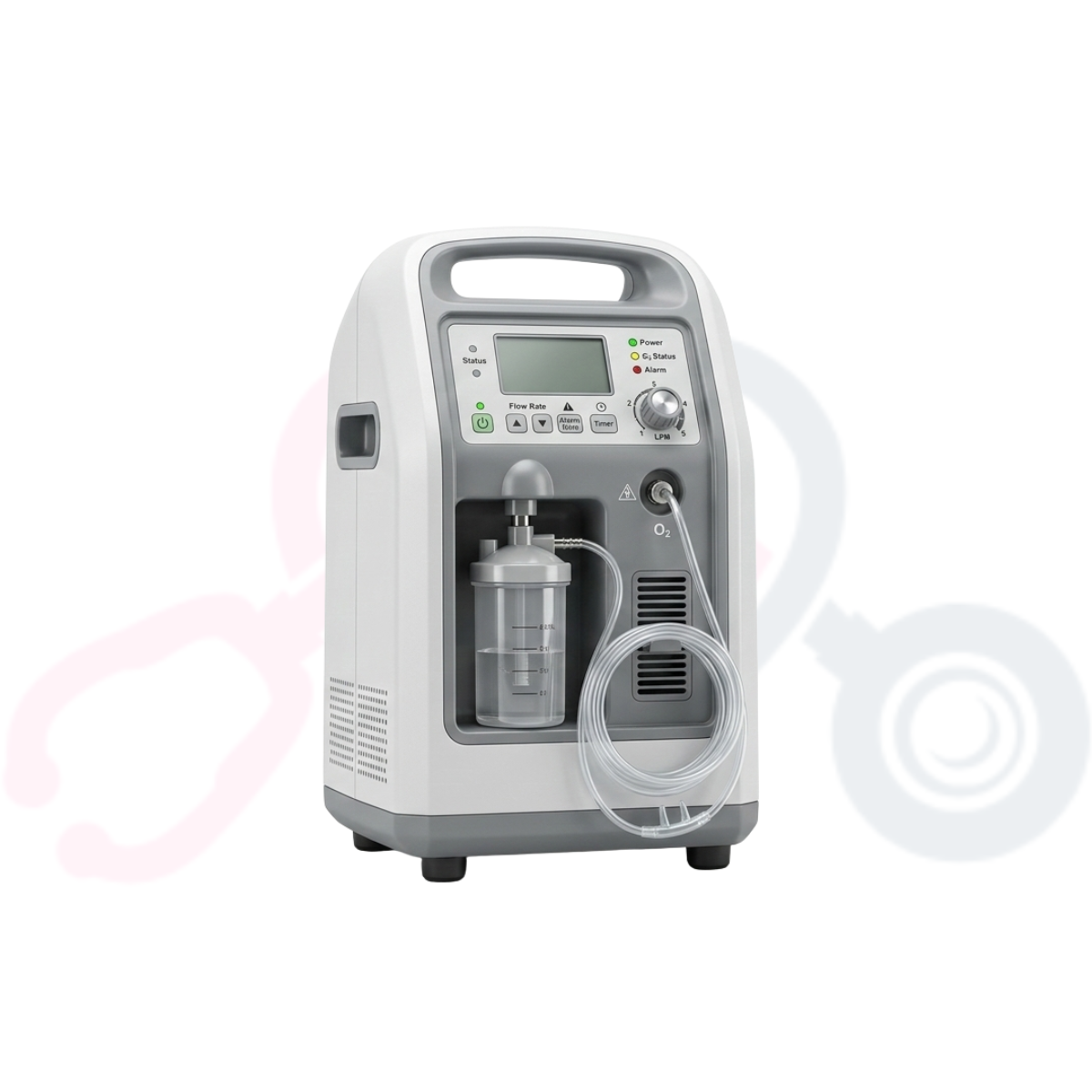
Oxygen Concentrator (5 Liters)
Reliable electric oxygen machine producing up to 5LPM continuous oxygen. Designed for low noise operation in home environments.
10 Litre Oxygen Concentrator: General Use Case
A 10-litre concentrator offers a higher maximum output, generally relevant for patients whose prescribed requirement is higher than what a 5-litre unit can reliably provide. These units also tend to be more capable of maintaining consistent output over extended, continuous use, which matters for patients requiring oxygen support for many hours at a time.
Oxygen Concentrator (10 Liters)
High-capacity medical concentrator designed for patients requiring heavy, continuous oxygen support up to 10LPM.
So Which One Do You Actually Need?
This isn't something to determine by comparing specifications alone — it comes down to your doctor's specific prescription.
A Note on Oxygen Prescriptions
According to the FDA's consumer guidance on home oxygen therapy, oxygen therapy should always be based on a doctor's prescription, since using supplemental oxygen without proper medical guidance can mean receiving too much or too little oxygen, either of which carries real risk.
In practice, this means the right approach is simple: take your doctor's prescribed flow rate to whoever is arranging your equipment, and let that prescription determine which machine is actually appropriate — not a general guess about which capacity "sounds about right."
What to Confirm Before Renting Either Type
- The prescribed flow rate from the patient's doctor
- Whether the prescription requires continuous or intermittent oxygen delivery
- Current availability of the specific capacity needed
- Rental duration matched to the expected treatment timeline
- Delivery and setup arrangements for your specific location
- Full rental terms before committing to anything
Renting Instead of Buying
For many patients, particularly those with a temporary or recovery-related oxygen need, oxygen concentrator rent options make more practical sense than an outright purchase. This avoids a large upfront cost for equipment that may only be needed for a defined period, and allows the machine to be exchanged if the prescribed flow rate changes as the patient's condition evolves.
If the patient's respiratory needs are part of a broader transition home, families often coordinate oxygen support alongside other medical equipment rentals, such as a BiPAP machine or an electric hospital bed.
Frequently Asked Questions
This page is for general information regarding equipment rental options and does not constitute medical advice. Always consult with a qualified healthcare professional regarding oxygen therapy prescriptions and equipment requirements.