
Syringe Pump on Rent & Sale in Lahore, Islamabad & Rawalpindi
Some medicines must be delivered in very small amounts and at a carefully controlled rate. In critical care, even a small change in dose or delivery speed may affect the patient’s treatment.
A Syringe Pump is designed to deliver prescribed medication or fluid from a syringe with controlled speed and precision.
At Shine Medical Equipment, we provide Syringe Pumps on Rent and Sale in Lahore, Islamabad, and Rawalpindi for hospitals, ICUs, home ICU arrangements, medically supervised patient care, and specialized treatment requirements.
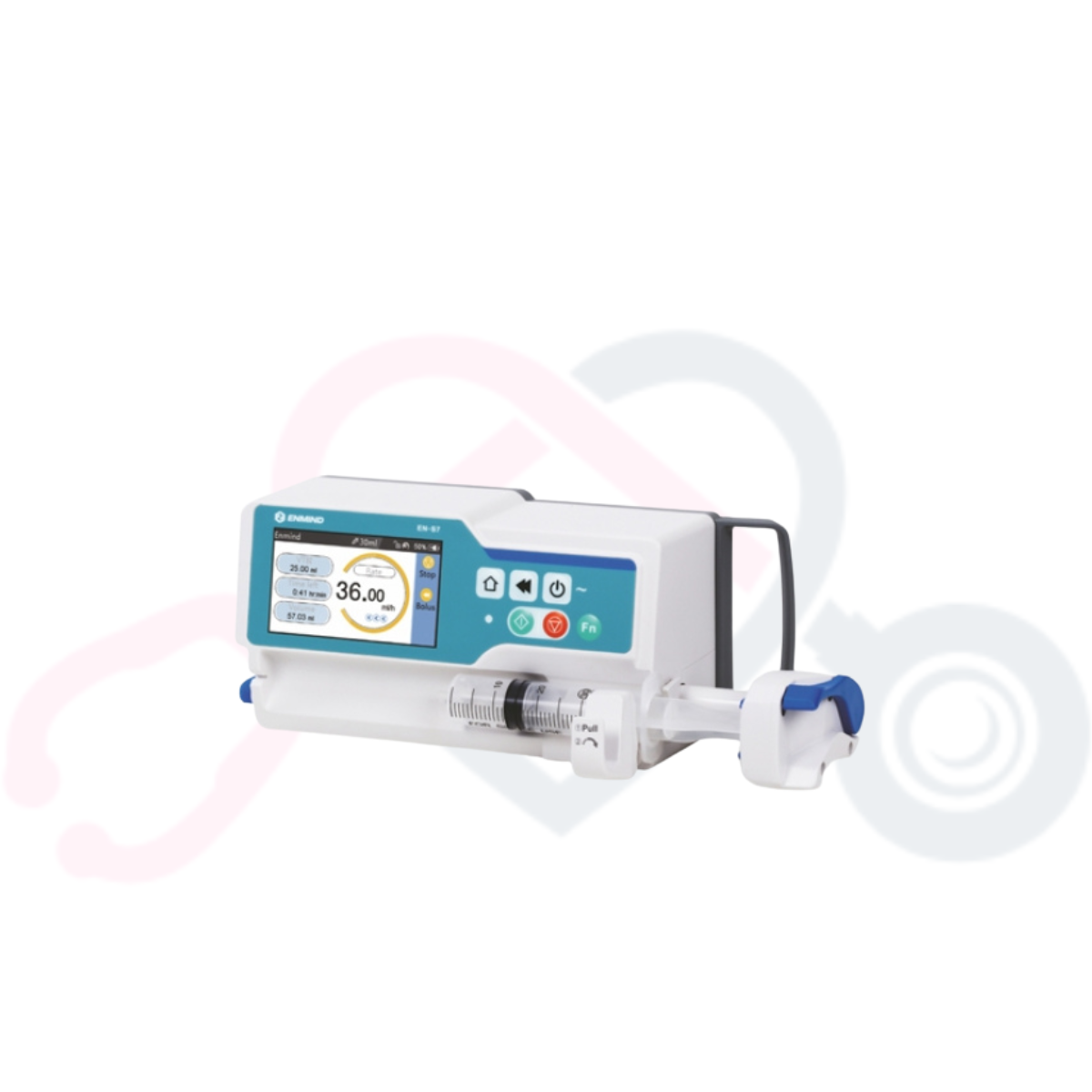
Medical Syringe Pump
Micro-infusion device designed for precise and slow administration of critical drugs safely.
Important Medical Notice
A syringe pump is a professional medical device. It should be set up, programmed, and monitored by a qualified doctor, nurse, or trained healthcare professional. Never change the syringe size, medicine concentration, flow rate, dose, or pump settings without authorization from the responsible healthcare professional. Incorrect programming can result in under-delivery or overdose.
What Is a Syringe Pump?
A syringe pump is an electronic medical device that gradually pushes the plunger of a loaded syringe at a programmed rate. Unlike a standard syringe that is manually pushed, a syringe pump can provide controlled delivery over a selected period.
Why Is a Syringe Pump Used?
It is commonly used when a standard IV drip may not provide the required level of precision for the prescribed therapy. A syringe pump may be selected when a patient needs:
Where Are Syringe Pumps Commonly Used?
A syringe pump does more than move a syringe slowly. Accurate delivery depends on proper clinical setups in various environments.
Intensive Care Units
Commonly used in ICU settings where patients may require continuous, closely controlled medication delivery.
Pediatric & Neonatal Care
Children and newborns require precise medication doses based on body weight. Accurate programming is essential.
Emergency & Critical Care
Used when continuous medication delivery is required urgently during critical patient treatment.
Home ICU & Post-Hospital
Selected patients may continue prescribed infusion treatments at home with a qualified nurse or healthcare team.
Syringe Pump Alarms
An alarm should not be ignored. The patient should be checked first, followed by the pump, syringe, and infusion line. A syringe pump may produce an alarm because of:
- Occlusion or blockage
- Empty or nearly empty syringe
- Incorrect syringe placement
- Low battery or power interruption
- Completion of programmed delivery
Syringe Pump vs Infusion Pump
Both devices may be used in patient care, but they serve different clinical purposes.
| Feature | Syringe Pump | Infusion Pump |
|---|---|---|
| Main Delivery Method | Pushes a syringe plunger | Uses an IV fluid bag or infusion set |
| Typical Volume | Small and precise volumes | Larger fluid or medication volumes |
| Flow Rate | Very low and highly controlled rates | Wider range depending on the model |
| Common Use | Precise medication delivery | IV fluids, medicines and longer infusions |
| Critical Care | Commonly used | Commonly used |
| Programming | Requires accurate syringe selection | Requires compatible infusion-set setup |
Flexible Plans: Rent or Sale
Whether you need temporary specialized treatment or ongoing clinical care, we offer flexible options.
Syringe Pump Rental
A Syringe Pump on Rent may be useful when a patient requires controlled medication delivery for a limited period.
- Temporary home ICU care
- Post-hospital treatment
- Short-term critical care
- Temporary nursing support
- Prescribed continuous medication therapy
Syringe Pump for Sale
Purchasing may be more suitable for long-term clinical, hospital, or healthcare use.
- Hospitals and Clinics
- Home healthcare providers
- Nursing services
- Long-term medically supervised care
- Healthcare facilities requiring regular use
Important Syringe Pump Safety Rules
When a syringe pump is used at home, the care environment should be organized and medically supervised.
- Only trained healthcare professionals should program the pump.
- Confirm the medicine and concentration before setup.
- Use a compatible syringe.
- Do not change the flow rate without authorization.
- Keep the pump stable and secure.
- Keep tubing free from bends and pressure.
- Do not ignore alarms.
- Check the patient directly; do not rely only on the pump display.
* If the patient experiences severe breathing difficulty, chest pain, loss of consciousness, seizures, sudden swelling, or rapidly worsening symptoms, seek urgent medical assistance.
Areas We Serve
We provide Syringe Pump Rental and Sales with prompt delivery across major cities.
- DHA Lahore
- Bahria Town
- Johar Town
- Gulberg
- Model Town
- Valencia Town
- Wapda Town
- Faisal Town
- Askari
- Cantt
- Bedian Road
- Barki Road
- F-6, F-7, F-8
- F-10, F-11
- G-6 to G-11
- I-8, E-11
- DHA Islamabad
- Bahria Town ISB
- Gulberg Greens
- Gulberg Residencia
- Bahria Town
- DHA Rawalpindi
- Saddar
- Chaklala
- Satellite Town
- Askari
- Peshawar Road
- Adiala Road
Frequently Asked Questions
Find quick answers to common queries regarding syringe pumps.