
Prices
| Item | Rent per month | Purchase | Buying pays off after |
|---|---|---|---|
| Commode chair | PKR 5,500 | PKR 12,000 | About 2 months |
| Walker | PKR 3,000 | PKR 6,500 | About 2 months |
| IV stand | PKR 1,500 | PKR 4,500 | About 3 months |
All three are delivered and set up at your home in Lahore, Islamabad or Rawalpindi. Rental requires a copy of the renter's CNIC and the first month's advance, with no heavy security deposit.
The arithmetic families skip
Look at that last column again. For all three items, buying costs less than renting from roughly the second or third month onward.
That is unusual. A hospital bed takes around nine months to break even, and a ventilator far longer — which is why renting is genuinely the sensible choice for most equipment. These three are different because they are simple, inexpensive items with no motor, no electronics and nothing to service.
So the honest advice:
- Recovery expected within about two months? Rent. There is nothing to store afterwards
- Longer than that, or open-ended? Buy. By month three you are paying more in rent than the item costs
We would rather say this than take six months of rent for a walker you should have bought in week one.
Commode chair
Usually the single item that makes the difference between a household coping and not coping — because in most Pakistani homes, the bathroom is the hardest place for a weak patient to reach.
Who needs one: patients recovering from hip or knee surgery, stroke patients, elderly patients who cannot walk far or safely at night, and anyone whose bathroom has a squat toilet or a raised threshold they can no longer cross.
Why it works here. A squat toilet is impossible for most post-surgical and elderly patients, and even a Western toilet is often too low. A commode chair placed in or beside the patient's room removes the night-time journey down a corridor entirely — and night-time bathroom trips are when most falls happen.
Before you order, check:
- Seat height — feet should rest flat on the floor with hips level with or slightly above the knees
- Armrests, which the patient needs to push up from
- Whether it will fit in the bathroom if that is where it will sit, or over an existing pan
- Stability — non-slip feet, and a frame that does not flex when weight goes on the armrests
Safety: the patient never pulls themselves up on the commode — they push up from the armrests. And whoever empties and cleans it should wear gloves and wash their hands afterwards, every time.
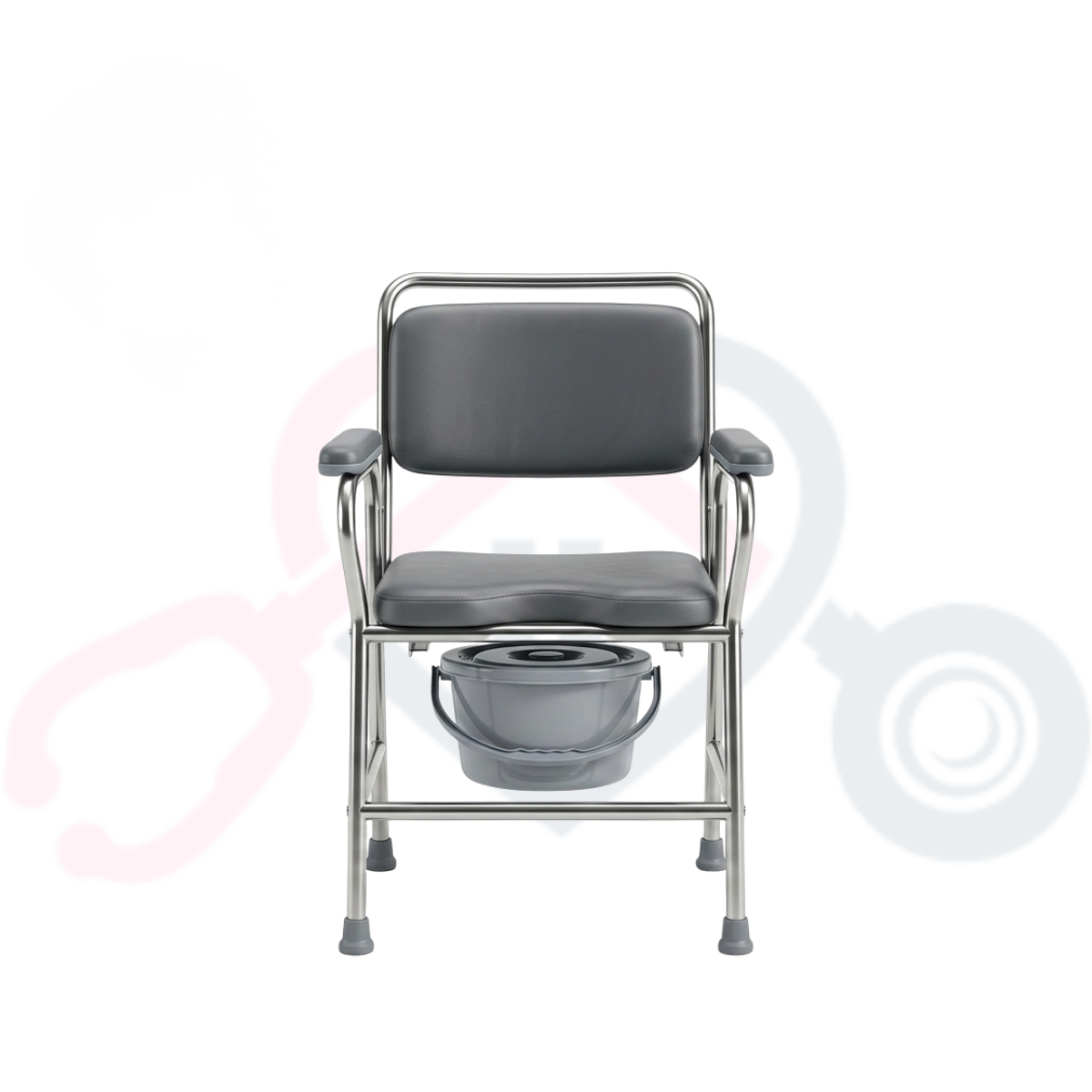
Commode Chair
2-in-1 mobility and bathroom assist chair. Designed with hygiene and patient dignity in mind.
Walker
Simple, cheap, and more often set up wrongly than any other item on this page.
The height is not a preference
NHS guidance from Guy's and St Thomas' on using a walking aid is specific: the aid must be the correct height for the user — level with the wrist crease when the arm hangs by the side.
Set too high and the patient's shoulders hunch and they lose control. Set too low and they stoop forward, which pushes their weight ahead of their feet — the position from which people fall.
Measure it with the shoes the patient will actually wear. Slippers and outdoor shoes have different sole heights, and that difference is enough to matter.
This is the most useful thing on this page and it costs almost nothing.
The same NHS guidance explains that a walking stick or frame should have a rubber end in contact with the floor, called a ferrule, which stops the aid slipping — and that ferrules wear out quickly and need to be checked regularly.
A worn ferrule is smooth, shiny or flattened in the middle. On a polished floor or wet bathroom tile, that is a fall waiting to happen — and the patient will not notice the grip fading, because it fades gradually.
Check the rubber tips every month. Replace them when they look smooth. They are inexpensive and they are the cheapest fall prevention available.
The same guidance also advises checking that handles and connecting parts are not loose or wobbly.
Which type
A standard frame is lifted and placed, giving maximum stability, and suits patients with significant weakness. A wheeled frame is easier to move and helps preserve a normal walking pattern, which NHS guidance notes suits people with moderate balance problems — but the same guidance is clear that a wheeled indoor frame is not suitable for outdoor use, because uneven surfaces make it unsteady.
That matters in Lahore, where courtyards, broken tiles and uneven footpaths are the norm. Ask the physiotherapist which type suits the patient rather than choosing on price.
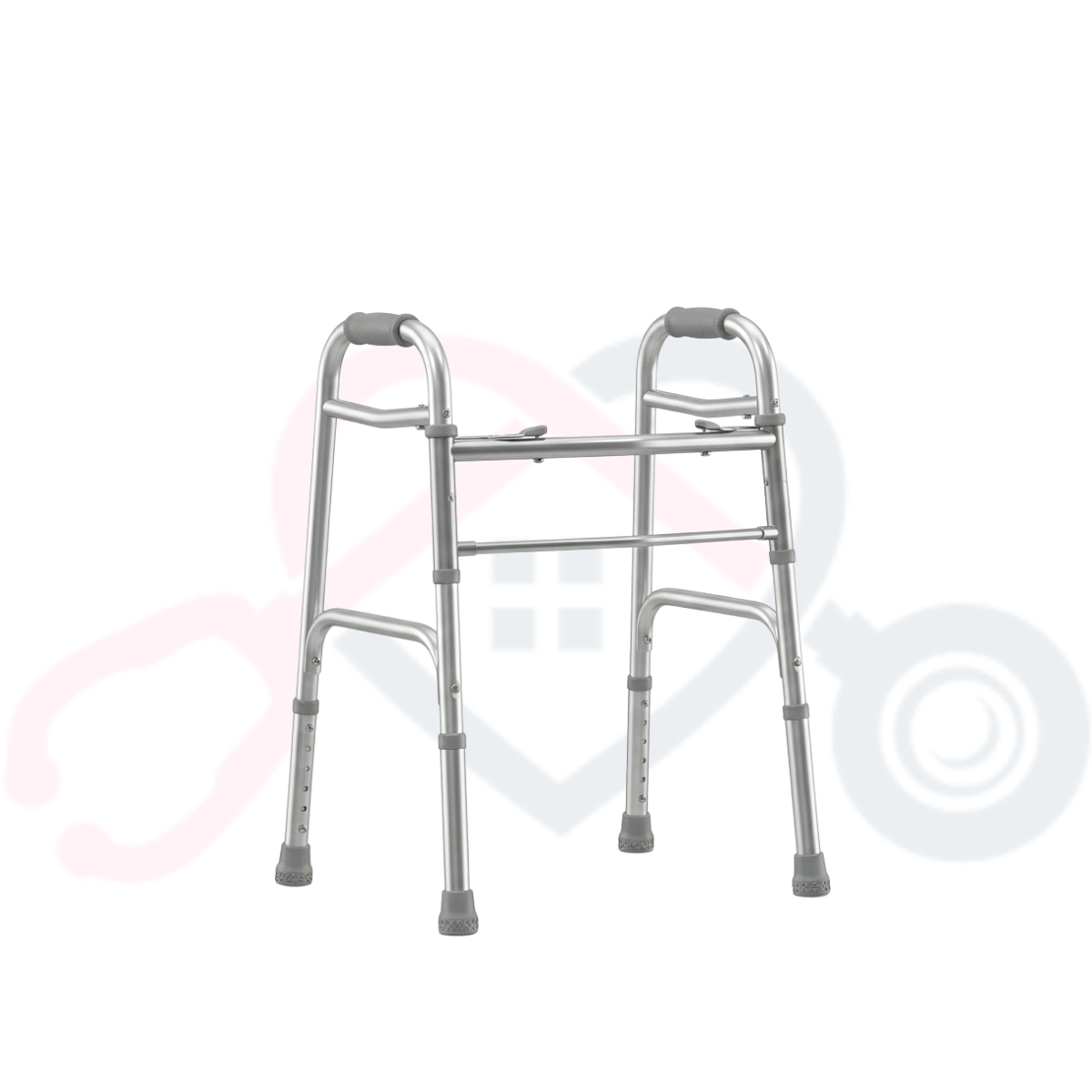
Adjustable Patient Walker
Sturdy aluminum walking frame with anti-slip rubber tips for stability during rehabilitation.
IV stand
The least glamorous item here and the one that quietly prevents problems.
A proper IV stand holds a fluid bag at the correct height and keeps the line running cleanly. Families improvising with a nail in the wall, a curtain rail or a hook on a cupboard door end up with tubing at the wrong angle, lines pulled during transfers, and infusions that stop and start.
What to check:
- A wide, weighted base — five wheels rather than four is considerably more stable
- Smooth height adjustment that locks properly
- Working wheel locks, so it does not roll away when a patient leans on it
- Enough hooks if more than one bag will hang
- Whether it needs to carry a pump — a pump adds weight high up, and a light stand becomes unstable
The safety point: never let a patient use an IV stand as a walking aid. It has wheels, no brakes under load, and it will roll. If the patient needs support to walk, they need a walker.
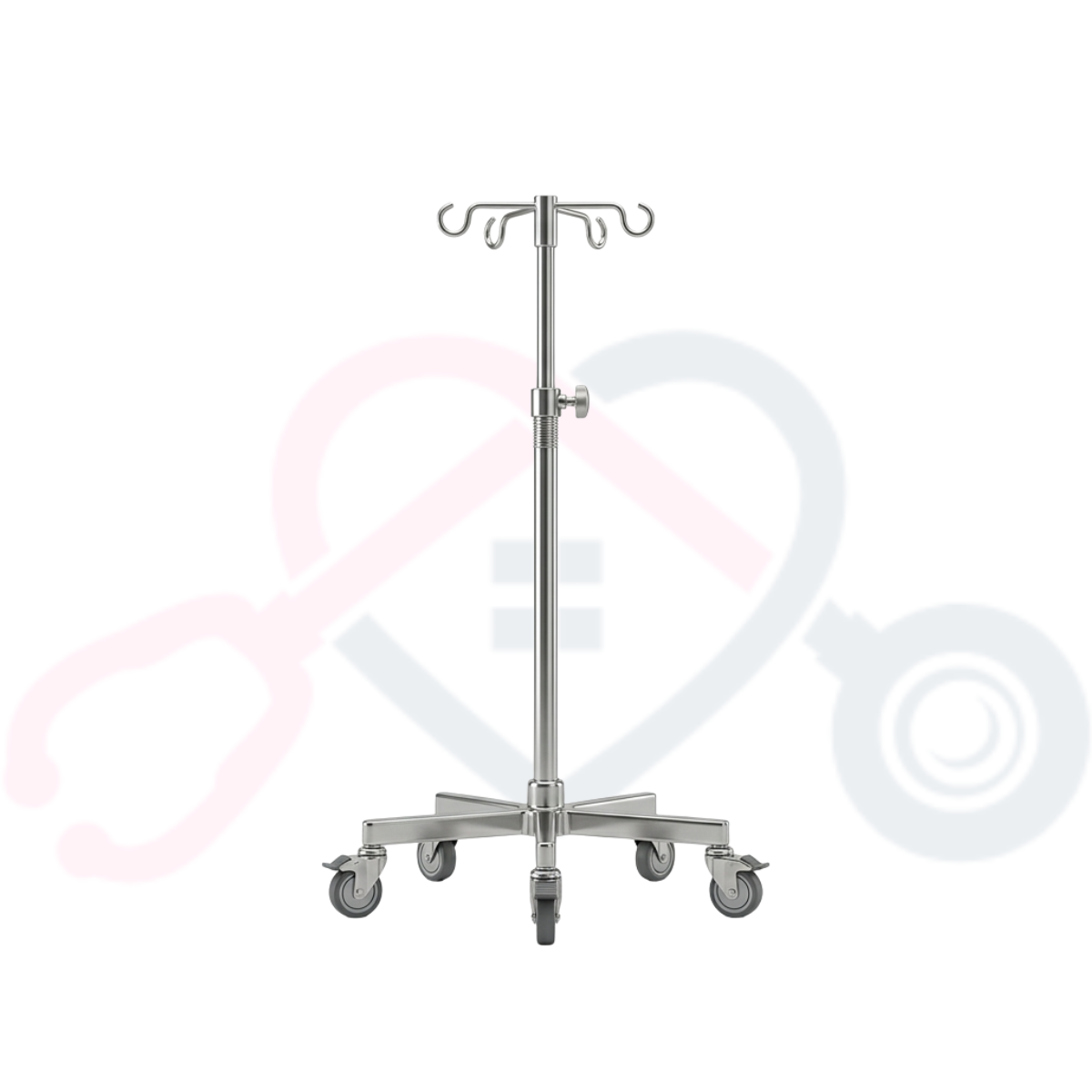
IV Stand
Strong IV stand for secure fluid and medication administration.
Keeping them clean
- Commode chair — empty and clean the bucket after every use, with gloves. Wipe the seat and frame daily. In summer, more often
- Walker — wipe the handles regularly; they are handled constantly and rarely cleaned
- IV stand — wipe the pole and hooks, and keep the base free of dust and hair, which stops the wheels turning smoothly
Delivery
Same-day delivery across Lahore, Islamabad and Rawalpindi where items are in stock, with setup and a demonstration. All three fold or dismantle, so access is rarely an issue.
Coverage includes DHA, Gulberg, Johar Town, Model Town, Bahria Town, Askari, Wapda Town and Cantt in Lahore; the F, G, E, I and H sectors, DHA, Bahria Town and PWD in Islamabad; and Saddar, Satellite Town, Chaklala, Bahria Town and DHA in Rawalpindi. Cantonment addresses need a gate pass arranged in advance.
Frequently asked questions
This page is general information about equipment supply and is not medical advice. Which walking aid a patient needs, and whether they are safe to walk with one, should be decided by their doctor or physiotherapist. Check walking aid height, rubber tips and loose fittings regularly. If a patient has fallen, or is becoming unsteady on an aid they previously managed, seek medical advice.