
BiPAP mask fitting is one of the most under-taught aspects of home respiratory equipment in Pakistan. A well-fitted mask is comfortable, sealed, and used consistently. A badly fitted mask causes leaks, skin damage, and abandonment. This guide walks families through BiPAP mask leak problem realities — why leaks happen, how to fix them, when to consider a different mask type, and how to get the best from a BiPAP machine that only works if it is actually worn. Nothing here replaces the sleep specialist's or pulmonologist's specific guidance; this covers the practical mask-fitting side.
Understanding BiPAP and Mask Types
BiPAP delivers pressurised air at two different levels — higher pressure when the patient breathes in, lower when they breathe out. The pressures push air into the lungs, keeping airways open. The whole system depends on a properly sealed connection between the machine and the patient's airway. That connection is the mask.
Common mask types:
Nasal Mask
Covers the nose only. Common first choice for most patients. Requires nose breathing during use — mouth breathers may lose pressure through open mouths.
Nasal Pillow Mask
Small soft pillows insert into the nostrils. Minimal facial contact. Good for patients who feel claustrophobic in larger masks or want to wear glasses.
Full-Face Mask (Oronasal)
Covers both nose and mouth. For patients who breathe through the mouth, have nasal blockage, or need higher pressures.
Hybrid Masks
Various designs combining features. Some cover mouth with nasal pillows inside.
Total Face Mask
Covers the entire face. Used in some specific hospital situations, less commonly at home.
The pulmonologist or sleep technician usually recommends the initial mask type based on the patient's breathing pattern, facial structure, and prescribed pressure levels.
Who Decides on the Mask
- Pulmonologist / Sleep Specialist: Prescribes the BiPAP therapy and initial mask type. Adjusts pressures based on titration or response.
- Sleep Technician / Respiratory Therapist: Where available, does the initial mask fitting and troubleshooting. In Pakistan often the equipment supplier's technician handles this.
- Registered Nurse: For patients receiving home nursing, monitors mask use and reports problems to the treating team.
- Equipment Supplier: Provides the machine and mask, offers mask alternatives if the first does not fit well.
- Family: Notices problems, encourages consistent use, cleans the mask, replaces components on schedule.
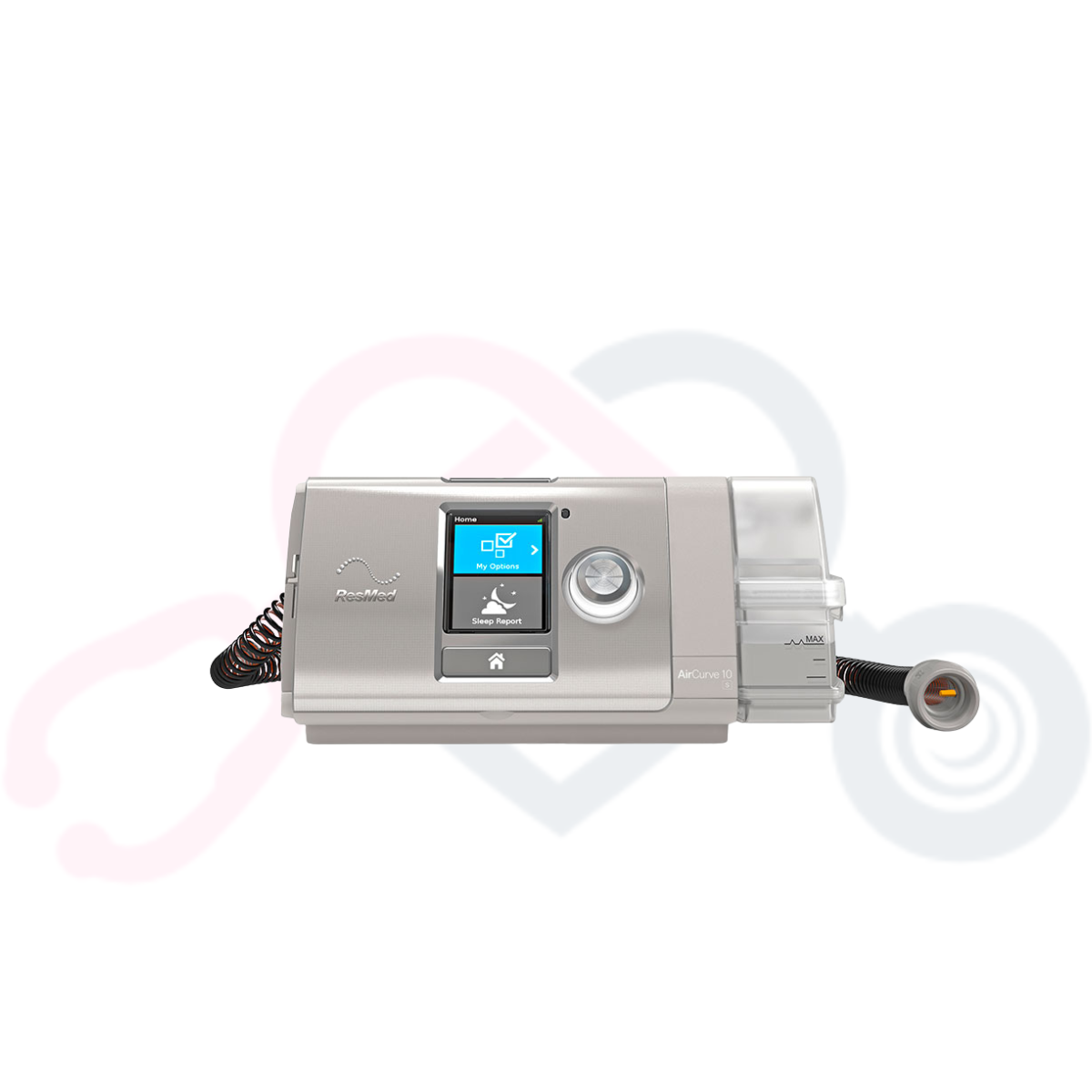
BiPAP Machine (Non-Invasive)
Advanced respiratory support device providing bilevel positive airway pressure for sleep apnea and COPD patients at home.
Renting a BiPAP machine for a defined trial period lets the patient and family confirm the setup and mask fit works before committing to purchase for long-term use.
Why Masks Leak
Wrong Size
Most common issue. Masks come in small, medium, and large — sometimes with additional sizing options. A mask fitted by eye rather than by measurement is often the wrong size.
Wrong Type for the Face
A nasal mask for a mouth breather leaks through the mouth. A full-face mask that does not fit the chin shape leaks around the jaw. Match the type to the person.
Incorrect Strap Tension
Too loose — leaks around edges. Too tight — deforms the mask and causes leaks anyway, plus damages skin. Correct tension is snug but not tight.
Facial Hair
Beards prevent proper sealing on the cheeks and chin. Options include trimming, using beard-friendly mask types, or applying a barrier cream that helps sealing (only if the mask instructions allow it).
Skin Oils and Cosmetics
Face cream, oil, or make-up under the mask breaks the seal and shortens mask life.
Worn or Damaged Silicone
Mask cushions degrade over months. What was a good seal at delivery may not be one six months later. Replace on schedule.
Air Pressure Too High for the Mask
High pressures blow past inadequately sealed edges. May need a different mask type, or the strap and cushion optimised for the pressure.
Sleeping Position
Side sleeping and stomach sleeping change how the mask sits against the face. Small position changes affect seal.
Different Face Shapes
Not every mask fits every face. Sometimes the third or fourth mask type is the right one.
Fixing Common Leak Problems
Air Blowing Into Eyes
Leak from the top of the mask near the bridge of the nose. Adjust the top strap slightly tighter. Check the mask is not sitting too low on the nose. Try a mask with a better nose bridge fit — some masks have adjustable bridges.
Leak Around Cheeks
Straps may be uneven. Confirm both sides are equally tightened. Check if the mask cushion is worn or has lost shape. Consider a different mask type.
Leak Around Mouth
For nasal mask users, mouth is opening during sleep. Chin strap can help keep mouth closed. If not, switching to a full-face mask often solves the problem.
Leak Under Chin
Full-face mask fitting issue. Check chin cushion. Try a different mask size or type.
Leak at Sides When Turning
Position-dependent leak. Softer or more flexible mask type may help. Consider a mask designed for side sleepers.
Whistling Sound
Small leak at a specific point. Trace by feel to find where air is escaping. Adjust or seal that area.
Fixing Common Discomfort Problems
Red Marks and Pressure Sores
Strap too tight, or mask edges digging in. Loosen slightly. Try a barrier gel pad. If persistent, switch to a mask with different contact points.
Nose Bridge Ulcer
Common with nasal masks. Nasal pillows may be a better option. Barrier dressings help while ulcer heals.
Feeling of Suffocation or Claustrophobia
Common with full-face masks. Try nasal pillows if clinically appropriate. Gradual acclimatisation during waking hours helps.
Dry Nose and Mouth
Common. Heated humidifier attached to the machine helps significantly. Confirm humidifier is used and water is topped up nightly.
Stuffy Nose or Runny Nose
Cold or dry air irritation. Adjust humidifier settings. Saline nasal spray before bed. Sometimes need to treat underlying nasal problems.
Bloating and Aerophagia
Swallowing air. Sometimes reduces with time. Discuss with the doctor if persistent — pressure or mask adjustment may help.
Skin Irritation
Detergent residue, oil buildup, or allergy to mask material. Clean the mask more thoroughly. Try a different mask material.
Getting the Fit Right
- Measure Rather Than Guess: Most mask brands provide a sizing template. Measure and match. Do not choose by "looks about right".
- Fit at the Pressure You'll Use: A mask that seals at 5 cm H2O may leak at 15 cm H2O. Test fit at the actual therapy pressure.
- Fit in the Position You'll Sleep In: Test seal lying down, not just sitting up.
- Head Straps Even and Gently Snug: Both sides of the head straps at equal tension. Snug enough to hold seal, loose enough to slide two fingers under.
- Cushion Pushed Firmly Against Face: Not smashed against, but firm even contact all around the seal.
- Test With the Machine On: Feel around the edges of the mask with your hand while the machine is running. Any air stream escaping indicates a leak.
- Adjust Rather Than Endure: If uncomfortable, adjust. A mask that hurts will be pulled off during sleep.
When to Try a Different Mask
If leaks and discomfort persist despite good fitting technique:
- Try a different size of the same model
- Try the same model in a different design (some manufacturers offer variations)
- Try a different mask type — nasal to full-face, or vice versa
- Try a different manufacturer's mask
- Consult the equipment supplier or specialist about custom or specialised masks
Many BiPAP patients try 2–3 mask types before finding one they can wear consistently. This is normal.
Cleaning and Maintenance
Daily
- Wipe the cushion with a soft damp cloth
- Remove face oils that break the seal
Weekly
- Hand wash the mask with mild soap and water
- Rinse thoroughly
- Air dry completely before use
- Wash straps
- Clean humidifier tank with warm soapy water
Monthly
- Inspect for wear — cushion cracks, strap fraying, damaged clips
- Replace any component showing wear
Every 6–12 Months
- Replace mask cushion
- Replace headgear if worn
- Replace tubing if discoloured or cracked
- Replace filters as per manufacturer's schedule
Not cleaning the mask breeds bacteria, and skipping component replacement means gradual seal degradation. Both are common causes of "sudden" leak problems that are actually months in the making.
Encouraging Consistent Use
Even a perfectly fitted mask does nothing if the patient does not wear it. Strategies:
- Wear During Waking Hours First: Some patients acclimate better by wearing the mask (with the machine on) for short periods during the day — watching TV, reading — before trying to sleep with it.
- Ramp Feature: Most BiPAP machines have a ramp function that starts at low pressure and gradually increases. Helps patients fall asleep before full therapeutic pressure kicks in.
- Consistent Bedtime Routine: Same time every night. Mask on before turning off the light. Consistency builds habit.
- Track Use: Most machines record hours of use. Family aware of usage patterns notices when compliance is slipping.
- Feedback on Benefit: Patients who feel better (more daytime energy, less morning headache, less snoring) are more motivated. Positive feedback from family about the changes reinforces the effort.
- Address Problems Quickly: A leak or discomfort tolerated silently becomes a reason to abandon therapy. Fix problems as they appear.
- Family Support: Patients whose families understand and support the therapy stick with it longer than those whose families view it as an inconvenience.
Related Equipment and Setup
BiPAP therapy at home often sits alongside other respiratory equipment. Common companions:
- An oxygen concentrator for patients needing supplemental oxygen with BiPAP
- An oxygen cylinder as backup
- A nebulizer for prescribed inhaled medications
- A suction machine for patients with weak cough or secretion issues
- An adjustable electric hospital bed for optimal head-up positioning
- A pulse oximeter for monitoring
Coordinated setup with a single supplier reduces mismatches.
Common Situations at Home
- Newly Diagnosed Sleep Apnoea Patient: Adjustment period. Multiple mask trials often needed. Support from family and the equipment supplier during first weeks is what determines whether therapy sticks.
- COPD Patient on Nocturnal BiPAP: Higher pressures often needed. Mask fit becomes more critical. Full-face masks often better tolerated than nasal at higher pressures.
- Post-COVID Patient: Temporary BiPAP during recovery. Fit still matters — even a few weeks of poor therapy is a few weeks lost.
- Neuromuscular Disease Patient: Long-term BiPAP for respiratory support. Specialist input on mask selection important.
- Elderly Patient with Multiple Conditions: Comfort and simplicity of the setup matter — complex mask systems that are hard to put on independently may go unused.
- Overweight Patient: Facial fat pads affect mask fit. May need larger or specifically designed masks.
Common Mistakes Families Make
- Tolerating Leaks: "He always has some leak, we ignore it." Leaks reduce therapy effectiveness. Fixable and worth fixing.
- Not Cleaning the Mask: Face oils and dust build up rapidly. Weekly cleaning is minimum.
- Not Replacing Components: Cushions and straps have limited life. Continuing with worn components means poor seals.
- Giving Up After One Mask: Many patients need to try multiple masks. Persistence pays off.
- Not Using the Humidifier: Dry BiPAP air is uncomfortable long-term. Humidifier compliance is standard.
- Cranking Down Straps to Stop Leaks: Excessively tight straps cause skin damage without solving leaks. The issue is usually mask size or type, not strap tension.
- Not Wearing the Mask Long Enough: Some patients wear the mask only briefly at night. Full-night use is what produces therapeutic benefit.
- Not Reporting Problems to the Doctor: Persistent problems mean the therapy needs adjustment — different pressures, different mask, additional accessories. Doctor input.
Red Flags: When to Seek Help
Contact the doctor or the equipment supplier for any of the following:
- Persistent leaks not resolved despite good fitting technique
- Skin breakdown, ulcers, or wounds from mask use
- New difficulty breathing while on BiPAP
- The patient is not using the machine because of comfort issues
- Machine alarms that cannot be resolved
- New symptoms — daytime fatigue, morning headaches — despite continued use suggesting therapy is not effective
- Suspected allergy to mask material — persistent rash or itching
Contact the doctor or take to the emergency room / call 1122 for any of the following:
- Sudden severe shortness of breath
- Bluish colour around lips or fingertips
- Chest pain
- Sudden severe drop in oxygen saturation
- Aspiration during BiPAP use
- Choking
For patient-friendly background on BiPAP therapy and mask use, the NHS guide to sleep apnoea treatment is a reliable reference. For your specific therapy plan, always follow the treating doctor.
Frequently Asked Questions
This page is general information about equipment hygiene and use and is not medical advice. Always follow the manufacturer's instructions and the specific clinical guidance provided by your healthcare team.