This guide walks through what equipment every stroke patient at home typically needs, what add-ons are required if the stroke is more severe, and how pricing works for rental in Lahore, Islamabad, and Rawalpindi. The goal is to help families arrange exactly what matters and avoid spending on what does not.
Why Stroke Equipment Is Different
Stroke patients have specific physiological needs that general illness equipment does not fully cover. Setting up a stroke patient's room correctly on day one is the difference between a smooth home recovery and a chaotic one that ends in rehospitalization.
- One-Sided Weakness (Hemiplegia): The patient's balance, swallowing, and physical positioning are heavily affected on one side of the body.
- High Bedsore Risk: Sudden immobility, changes in sensation, and poor initial nutrition all contribute to rapid skin breakdown.
- Swallowing Difficulty (Dysphagia): Many stroke patients require safe feeding techniques, elevated positioning, or direct tube feeding.
- High Fall Risk: Balance is completely unreliable initially, making the first few weeks at home the most dangerous for secondary injuries.
Core Equipment Every Stroke Patient Needs
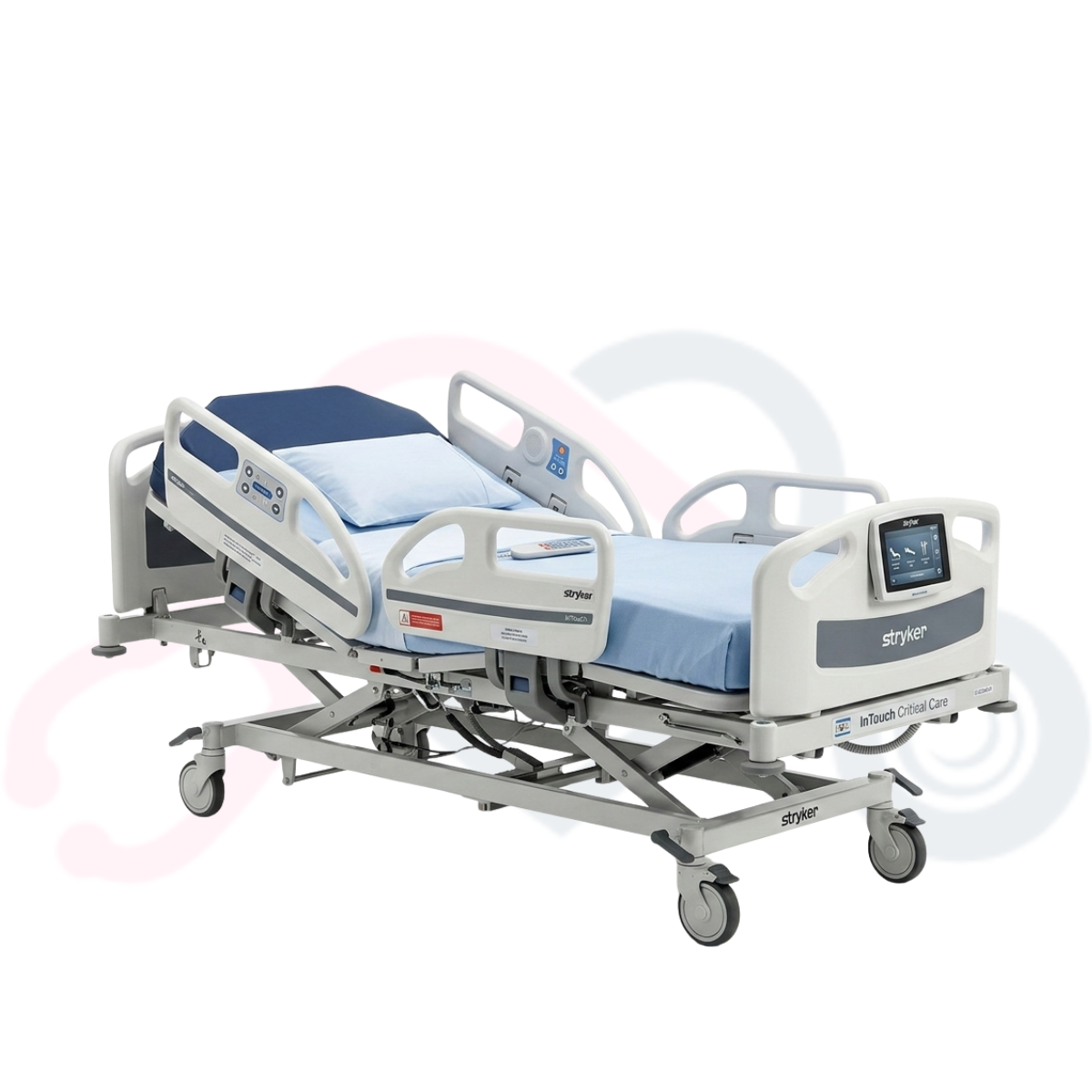
Electric / Manual Hospital Bed
A hospital bed makes everything else possible — head elevation to prevent aspiration during feeding, knee elevation for comfort, and side rails to prevent falls. For patients spending significant time in bed, this is the single most important rental.
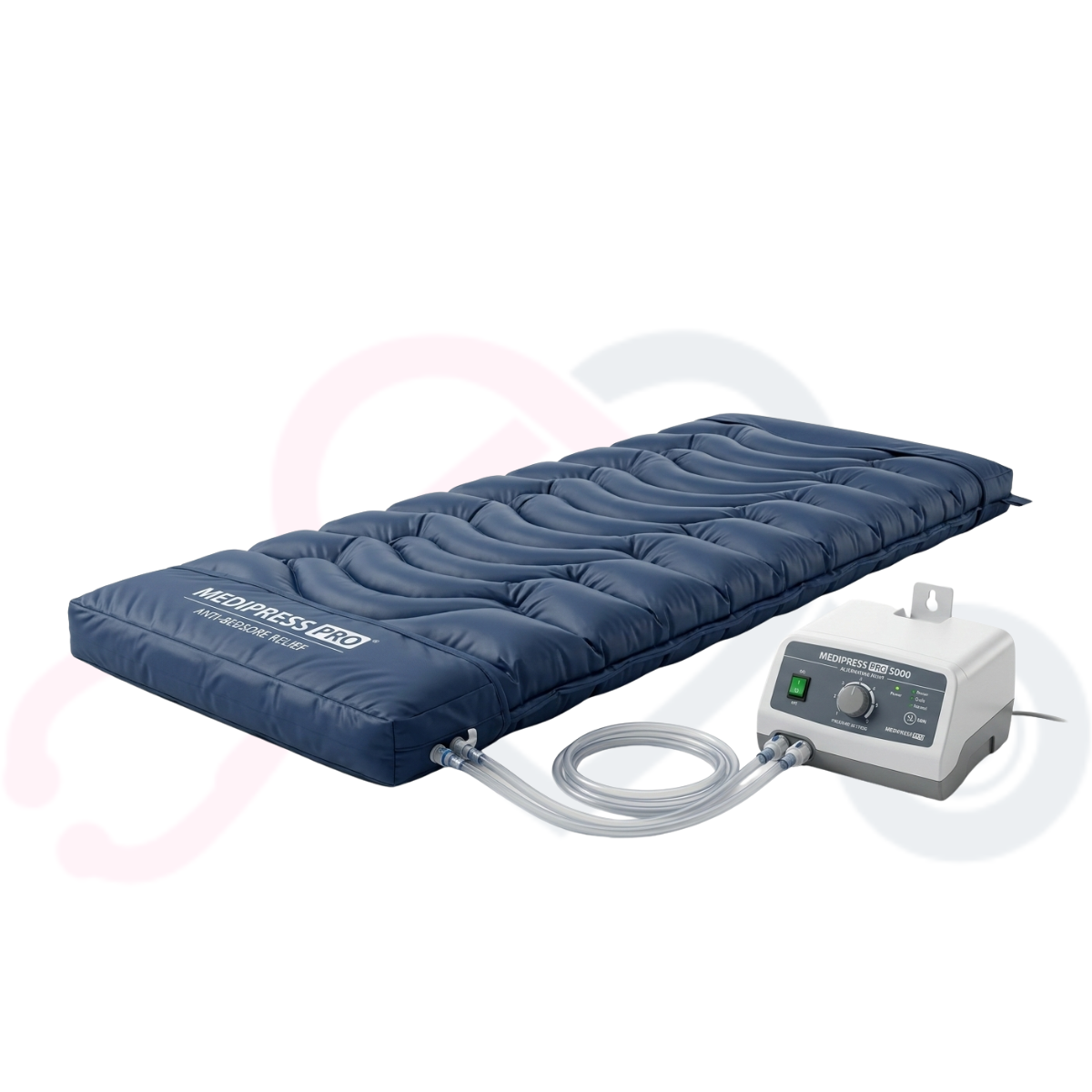
Alternating Pressure Air Mattress
Pressure injury is the most common preventable complication of stroke. An alternating air mattress continuously shifts pressure points to protect the skin.
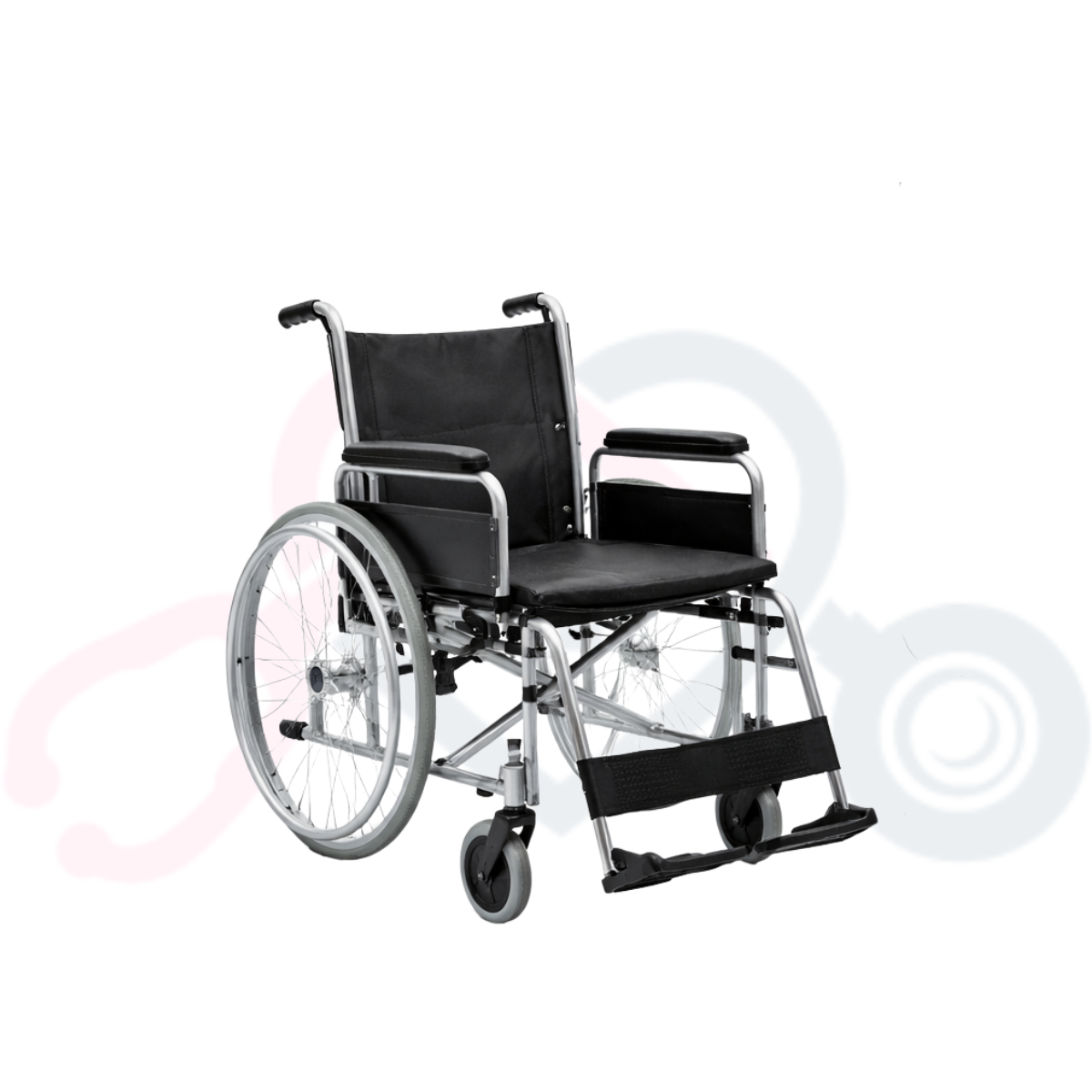
Patient Wheelchair
Required in the early weeks for mobility outside the bed, and later for longer distances while walking is retrained. Reclining models available for poor trunk control.
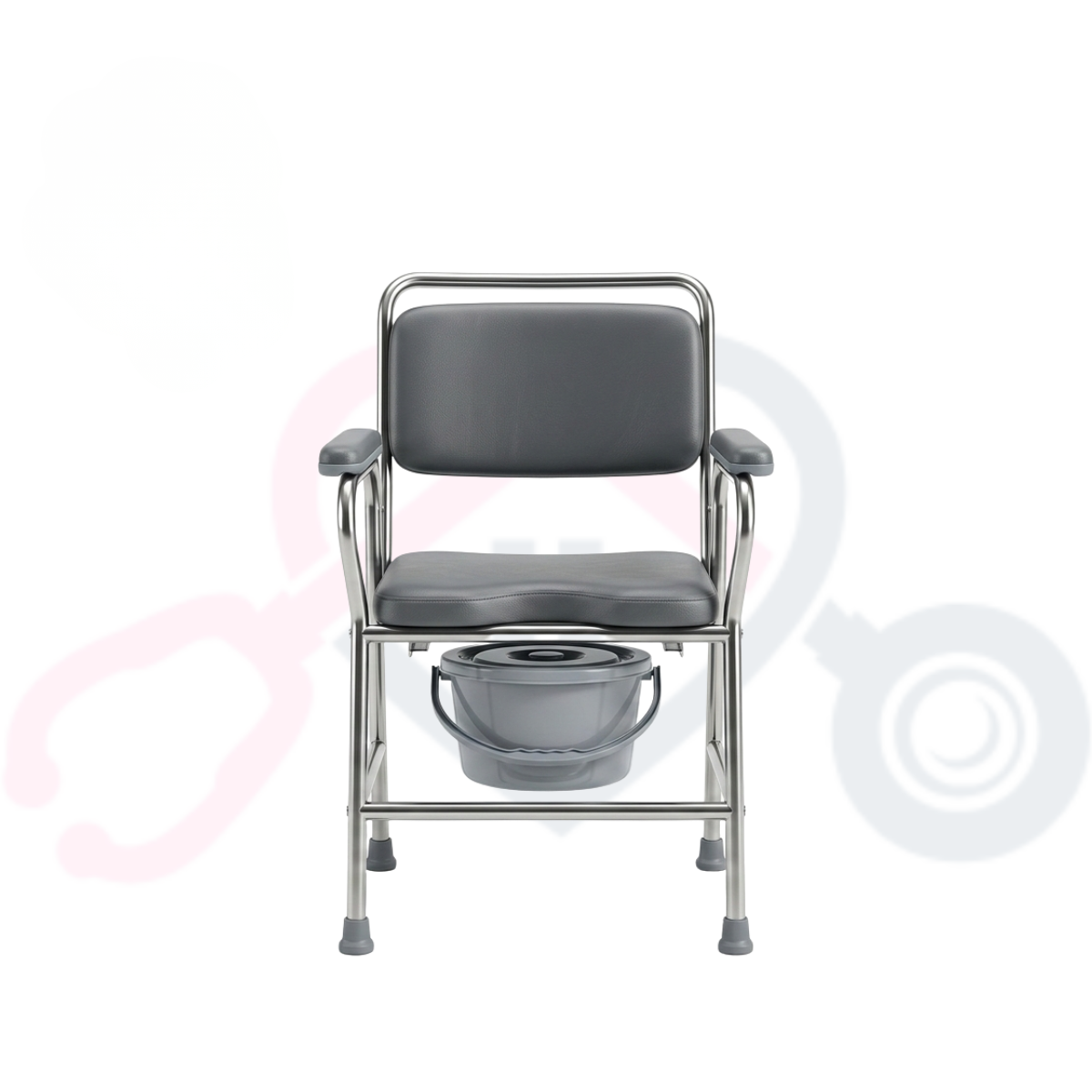
Commode Chair
Bathroom trips are highly dangerous for a new stroke patient. A bedside commode allows safe, dignified toileting without risking a devastating fall in a wet washroom.
Add-On Equipment for More Severe Strokes
Suction Machine
Stroke patients with swallowing difficulty often cannot clear their own secretions. A home suction machine keeps the airway safe and prevents aspiration pneumonia.
Oxygen Concentrator
Not every stroke patient needs oxygen — but those with reduced consciousness or chest complications often do. Paired with a cylinder for load-shedding.
Enteral Feeding Pump
For patients unable to swallow safely, a PEG or NG tube is used. A feeding pump controls the delivery rate, preventing dangerous aspiration into the lungs.
Patient Lift (Hoist)
Essential for completely bedridden patients where the family cannot safely transfer them to a chair without risking back injuries or dropping the patient.
Nebulizer
Useful for patients with respiratory complications, chest physiotherapy needs, or helping loosen thick pooled secretions before suctioning.
Walker & Mobility Aids
As the patient rehabilitates, a wheeled walker becomes vital for early walking attempts, helping them regain independence safely.
Equipment by Stroke Stage
Equipment needs shift dynamically from month to month. A staged approach saves significant money over renting everything blindly.
1-2
The patient is mostly in bed. Needs continuous positioning, feeding, and airway support.
- Electric or semi-electric hospital bed
- Alternating pressure air mattress
- Suction machine (if swallowing is affected)
- Feeding pump & Oxygen (if prescribed)
- Pulse Oximeter & BP Monitor
3-8
Patient begins transferring out of bed, early walking attempts, and spends more time in a wheelchair.
- Continue hospital bed and air mattress
- Reclining wheelchair for out-of-bed time
- Commode chair with grab bars
- Walker as mobility progresses
- Downgrade feeding pump/suction if condition improves
3+
Focus shifts to walking retraining, upper-body work, and regaining daily independence.
- Standard wheelchair for longer distances
- Walker, cane, or quad stick
- Continue BP monitoring long-term
- Return clinical equipment (oxygen/suction) if fully recovered
Full Stroke Home Equipment Packages
For most stroke patients, renting a bundled package in the first two months is the easiest and most cost-effective way to arrange everything.
| Package Level | Approximate Monthly Rent | Suits Patients Who... |
|---|---|---|
| Basic Stroke Package | PKR 18,000 – 25,000 | Had a mild stroke, are bedbound for 1-2 weeks, and become mobile after that. |
| Standard Stroke Package | PKR 35,000 – 50,000 | Had a moderate stroke, longer bed stage, and need suction/airway management. |
| Full Stroke Care Package | PKR 55,000 – 85,000 | Suffered a severe stroke, are fully bedridden, and require tube feeding and oxygen. |
| Home ICU Stroke Package | PKR 80,000 – 120,000 | Very severe stroke requiring a ventilator or BiPAP support. |
Equipment + Nursing: The Right Combination
Equipment is only half the picture. A stroke patient at home requires trained human hands. We strongly recommend coordinating our Home Nursing Services alongside the equipment. Our nurses are briefed on the machinery before arrival, ensuring your loved one receives seamless, professional care from day one.
Coverage and Delivery Windows
We provide same-day delivery across most areas. For hospital-discharge cases, call us while the discharge is being prepared — the bed is usually in the room before the ambulance arrives.
| City / Area | Typical Response Window |
|---|---|
| Lahore — DHA, Gulberg, Cantt, Model Town | 2 – 4 hours |
| Lahore — Johar Town, Bahria, Askari, Faisal Town | 3 – 5 hours |
| Islamabad — F, G, E, I Sectors, DHA, Bahria | 2 – 5 hours |
| Islamabad — Outer sectors (B-17, PWD) | 4 – 6 hours |
| Rawalpindi — Saddar, Westridge, DHA, Chaklala | 3 – 5 hours |
Frequently Asked Questions
Stroke Patient Coming Home Today?
Call or WhatsApp us with the hospital discharge summary. We will instantly confirm the equipment list and dispatch it to your home within hours.