
What Is a Cardiac Monitor?
A cardiac monitor is a device that tracks a patient's heart activity, typically measuring things like heart rate and rhythm. In a home setting, it allows a nurse, caregiver, or family member to keep an eye on specific readings a doctor has asked them to watch, without needing the patient to remain in a hospital.
It's worth being clear from the start: a cardiac monitor observes and records information — it doesn't treat or diagnose anything on its own. Any concerning readings should always be reported to the patient's doctor rather than acted on independently.
Who May Need a Cardiac Monitor at Home?
Home cardiac monitoring is generally recommended by a doctor for patients recovering from a cardiac event, those managing a diagnosed heart condition, or patients recovering from surgery where heart activity needs to be tracked during the recovery period. It may also be used for elderly patients with an existing heart condition who need closer observation at home.
Not every patient needs continuous monitoring — this is a decision that should come from the treating doctor based on the patient's specific condition, not a general assumption about age or diagnosis.
Cardiac Monitor Rental Price in Lahore
Rental pricing for a cardiac monitor in Lahore isn't a single fixed number — it depends on the specific device, monitoring features required, and how long you need it. However, families can typically expect standard rental packages to be available to suit different recovery timelines.
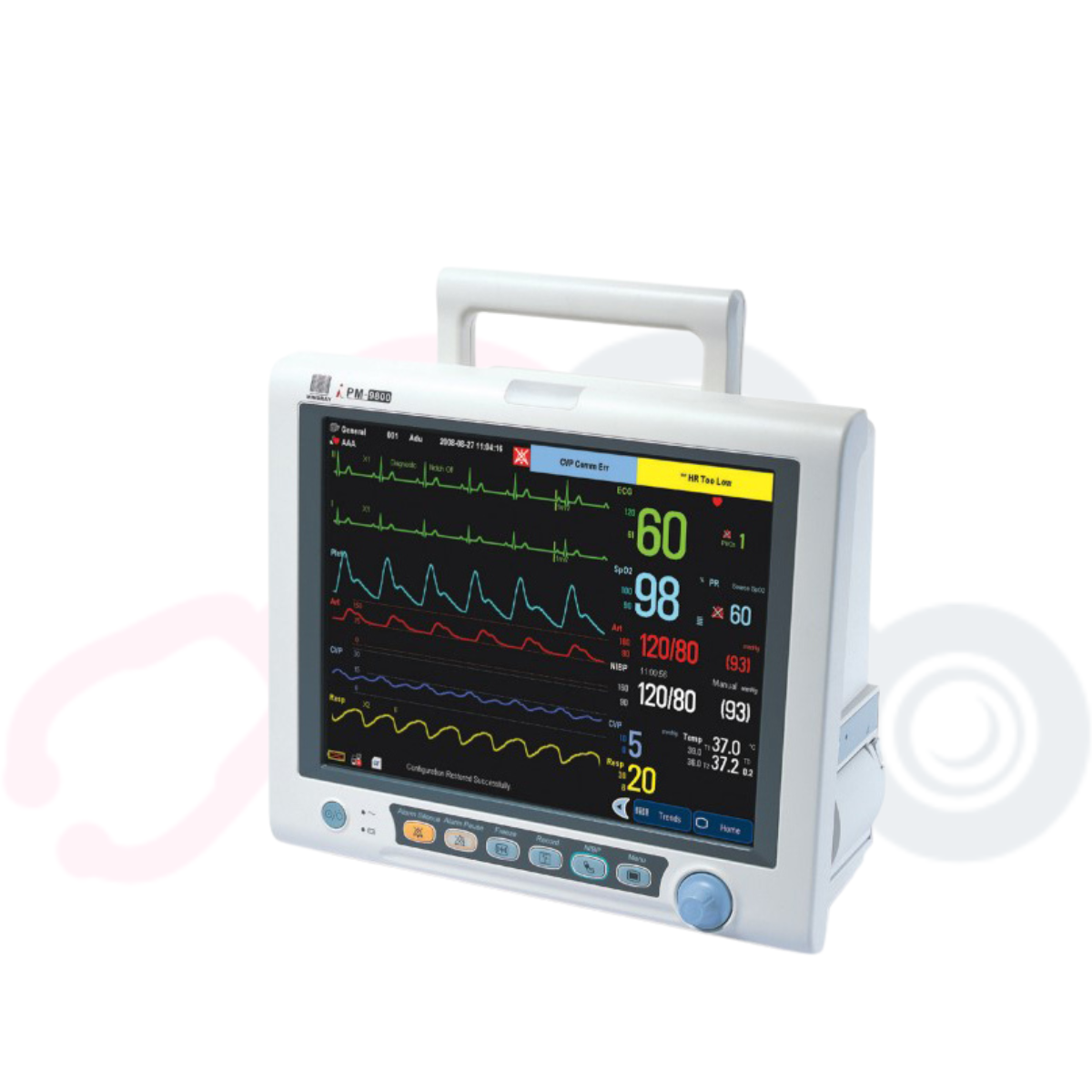
Cardiac Patient Monitor
Reliable multi-parameter cardiac monitoring system for real-time tracking of ECG, SpO2, NIBP, and heart rate at home.
Rental Duration Options
Cardiac monitors are typically available for rent across a few different duration options, depending on the patient's needs:
- Daily rental — suited for very short-term monitoring needs
- Weekly rental — common for patients monitoring recovery over a week or two
- Monthly rental — generally more practical for longer recovery periods or ongoing monitoring
Longer rental periods often work out more cost-effective on a per-day basis compared to very short-term rentals, though exact terms should be confirmed directly.
What Affects the Rental Price?
Several factors influence what a cardiac monitor rental actually costs, and understanding these can help you ask the right questions when getting a quote.
| Factor | How It Affects Price |
|---|---|
| Device type | Different monitor models come with different capabilities and rental rates |
| Monitoring features | More advanced monitoring features may affect the rental cost |
| Rental duration | Daily, weekly, and monthly rentals are typically priced differently |
| Accessories | Additional accessories or attachments may affect the total cost |
| Delivery and setup | Delivery distance and setup requirements can influence the final price |
| Equipment availability | Current stock and demand can affect pricing and availability |
Because of these variables, two families renting a cardiac monitor in Lahore around the same time might end up with somewhat different quotes — this is normal, and worth clarifying upfront rather than assuming a flat rate applies to everyone.
What Is Included With Cardiac Monitor Rental?
What's included can vary by provider and by the specific rental arrangement, so this is worth confirming directly rather than assuming. Generally, families should ask whether the rental includes:
- The monitor unit itself
- Necessary cables or attachments for the device to function
- Delivery to your location
- Basic setup guidance
- Instructions on reading and using the device correctly
Confirming exactly what's included — and what isn't — before the rental begins helps avoid confusion once the equipment is in your home.
Rental Duration: Daily, Weekly and Monthly
Choosing the right rental duration mostly comes down to how long the doctor has recommended monitoring. A patient being observed for a few days after a procedure may only need a daily or short-term rental, while someone managing an ongoing condition over several weeks may find a monthly rental more practical.
If there's uncertainty about how long monitoring will be needed, it's worth asking whether the rental period can be extended later, rather than committing to a longer term than necessary upfront.
Before finalizing a rental, a few practical checks can save time and confusion later:
- Confirm the monitor is functioning correctly before accepting delivery
- Ask whether basic operating instructions will be provided
- Confirm the rental duration and what happens if you need to extend it
- Ask about delivery and pickup arrangements
- Clarify what's included in the rental price
- Confirm who to contact if the device shows a technical issue
- Ask whether setup guidance is provided at your location
Difference Between Renting and Buying a Cardiac Monitor
Whether renting or buying makes more sense usually depends on how long monitoring is actually needed. Renting tends to suit short-term or recovery-based monitoring, since it avoids a large upfront cost and the responsibility of long-term equipment maintenance. Buying may be more practical for patients who need ongoing, long-term monitoring as part of managing a chronic condition.
Neither option is universally better — the right choice depends on the expected duration of use, budget, and whether the patient's monitoring needs are likely to continue over time.
How Home Cardiac Monitoring Can Support Patients Recovering at Home
For patients recovering at home after a cardiac event or surgery, having a cardiac monitor available can make it easier for family members or a home nurse to keep track of the specific readings a doctor has asked them to watch, without requiring the patient to stay in a hospital setting. This can make the recovery period feel more manageable for both the patient and the family.
That said, home monitoring supports recovery — it doesn't replace regular follow-up with the treating doctor, and any concerning changes in the patient's readings should be reported promptly rather than managed independently at home.
Basic Safety and Usage Considerations
A cardiac monitor should always be used according to the instructions provided with the device and any specific guidance given by the patient's doctor. Family members or caregivers using the device should understand how to read the basic display correctly and know who to contact — the treating doctor or emergency services — if a reading looks concerning or if the patient's condition changes.
The device itself doesn't replace clinical judgment, and readings should be interpreted with the patient's overall condition and medical history in mind, ideally in consultation with a healthcare professional.
How to Choose a Reliable Medical Equipment Rental Provider in Lahore
A dependable provider generally offers clear information about the equipment itself, transparent rental terms, and straightforward communication rather than vague reassurances. Worth looking for:
- Clear explanation of what's included in the rental
- Transparent pricing information provided directly, rather than estimated guesses
- Willingness to explain the device's basic operation
- Reliable delivery and setup arrangements
- Clear point of contact if a technical issue comes up during the rental
Families across areas like DHA Lahore, Gulberg, Model Town, Johar Town, Bahria Town, Wapda Town, Valencia Town, Cantt, Askari, Bedian Road, and Barki Road can generally arrange cardiac monitor rental, though exact delivery coverage and availability should always be confirmed directly for your specific location.
Frequently Asked Questions
Conclusion
Cardiac monitor rental price in Lahore depends on several factors — the specific device, monitoring features, rental duration, and what's included with the rental. Rather than relying on a guessed figure, the most accurate way to plan is to get a current quote based on your actual situation.
If you're considering cardiac monitor rental in Lahore, contact Shine Medical Equipment to discuss the patient's monitoring needs and get an accurate rental quote for your location.
Contact via WhatsAppThis page is for general information only and does not replace medical advice. Monitoring equipment should be selected and used according to a doctor's prescription, the manufacturer's instructions, and guidance from a qualified healthcare professional.