
This guide is written for that moment. It lists the equipment a bedridden patient actually needs, in the order most families should arrange it, with honest notes on rent vs sale and what each item is really for. Nothing here replaces the doctor's advice — if your discharge summary specifies a device or setting, follow that.
The Short Answer: Priority Order for Equipment
Most bedridden patients in Lahore, Islamabad, and Rawalpindi need the same core setup. The order below is what we suggest to families who are starting from zero.
| Priority | Item | Why It Comes First | Rent or Buy |
|---|---|---|---|
| 1 | Hospital bed (electric or manual) | Head-up angle prevents aspiration; height helps caregiver's back; side rails prevent falls | Rent for short stay, buy for long-term |
| 2 | Pressure-relief (air) mattress | Prevents bed sores within the first week of immobility | Rent |
| 3 | Commode chair | Bedside toileting with dignity; safer than dragging patient to bathroom | Buy (low cost) |
| 4 | Wheelchair | Movement to washroom, for doctor visits, out of the room for sunlight | Rent short-term, buy long-term |
| 5 | Overbed / bedside table | Food, medicine, water within reach; work surface for the nurse | Buy |
| 6 | Suction machine | Only if patient has secretions, tracheostomy, or swallowing problems | Rent if temporary, buy if long-term |
| 7 | Oxygen concentrator or cylinder | Only if prescribed; do not self-start oxygen | Rent |
| 8 | Patient monitor / pulse oximeter | Track SpO2, pulse, and BP at home | Buy pulse oximeter; rent full monitor |
Items 1 to 5 apply to almost every bedridden patient. Items 6 to 8 depend on the medical condition.
1. Hospital Bed: The First Purchase
A regular bed cannot be raised at the head end. This matters because most bedridden patients need to sit up at 30 to 45 degrees for feeding, breathing comfort, and medication. Lying flat after a meal increases the risk of food going into the lungs (aspiration).
A hospital bed also raises to caregiver height. Lifting, turning, and cleaning a patient on a low domestic bed will destroy the caregiver's back within a month.
Electric vs manual: An electric hospital bed is easier for the family and the nurse, especially at night. A manual hospital bed costs less and works fine when a caregiver is always present. Both come with side rails.
Rent or buy: If the patient is recovering from surgery and expected to walk again in a few weeks, rent. If the condition is long-term (stroke with poor recovery, advanced Parkinson's, end-stage cancer), buying often works out cheaper within four to six months.
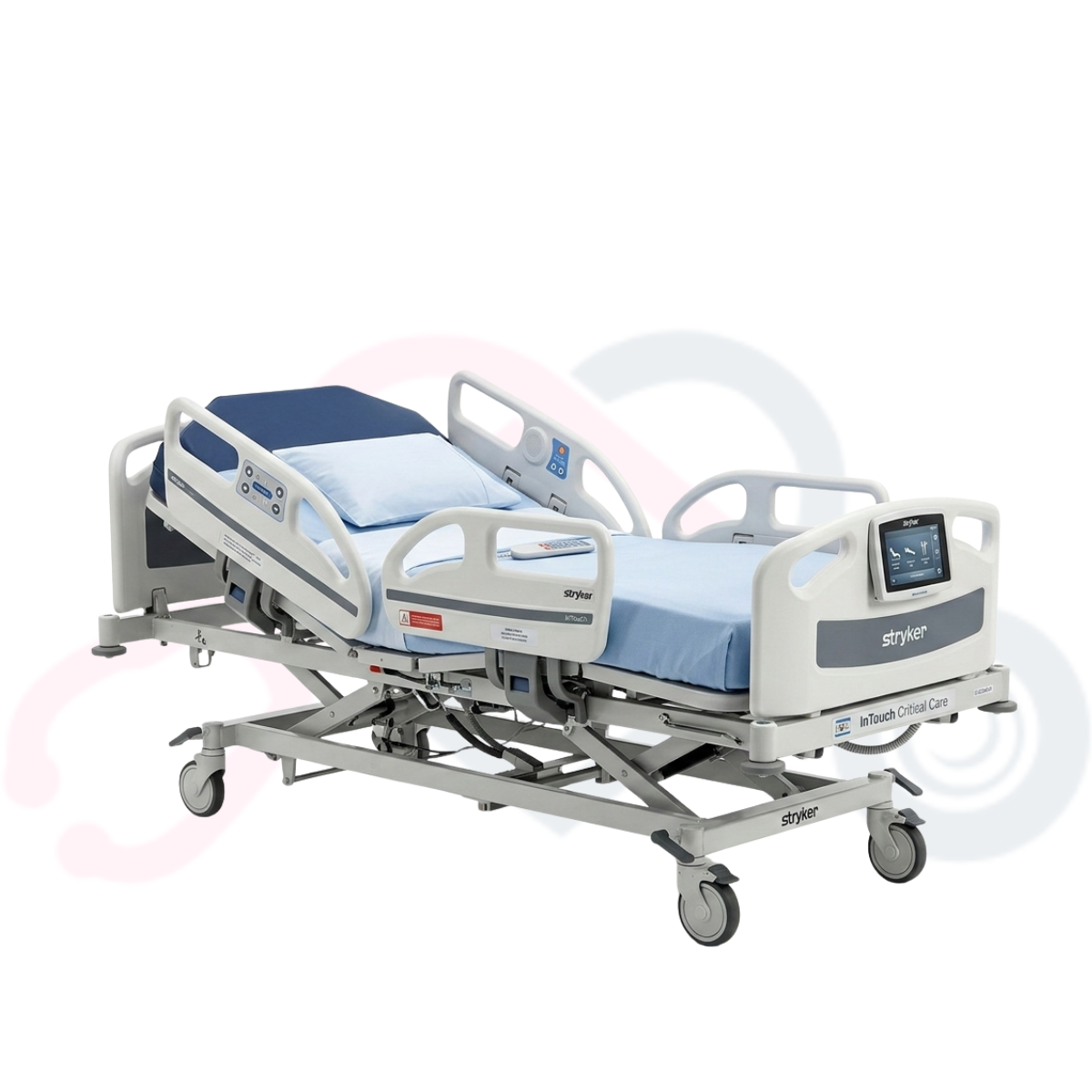
Electric Hospital Bed
Imported electric ICU bed providing automated positioning via remote control. Ideal for patients requiring frequent repositioning without physical strain.
2. Air Mattress: The Bed Sore Prevention
This is the item families most often skip and later regret. Skin over the tailbone, heels, hips, and shoulders breaks down within days when a patient cannot shift weight. A bed sore that starts as a red patch can become a deep wound needing surgery within two weeks.
An air mattress has cells that inflate and deflate in turns, moving pressure across the skin. It is not a luxury — for anyone bedridden more than a week, it is basic care. Rent one; you do not need to own it.
An air mattress does not replace turning. The nurse still turns the patient every two hours. It reduces risk; it does not eliminate it.
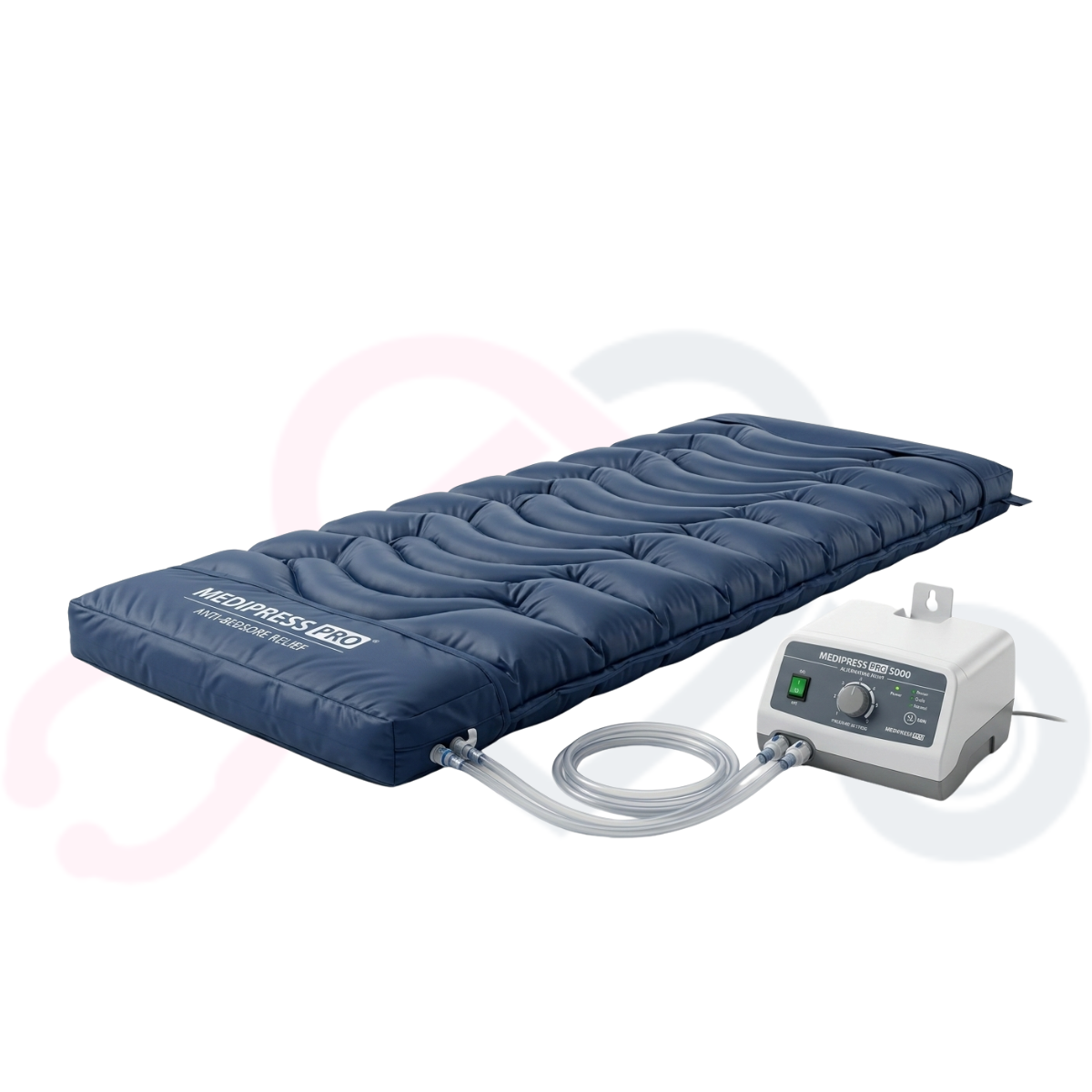
Medical Air Mattress (Anti-Bedsore)
Alternating pressure pad and pump system designed to prevent and treat bedsores for bedridden patients.
3. Commode Chair: Dignity and Safety
A patient who cannot walk to the bathroom needs a solution beside the bed. Diapers are one option but skin problems build up quickly if the patient can still control when they need to go.
A commode chair beside the bed lets the patient use a proper toilet position with help. It is cheap, worth buying outright, and often the difference between a patient who feels human and one who feels like a burden.
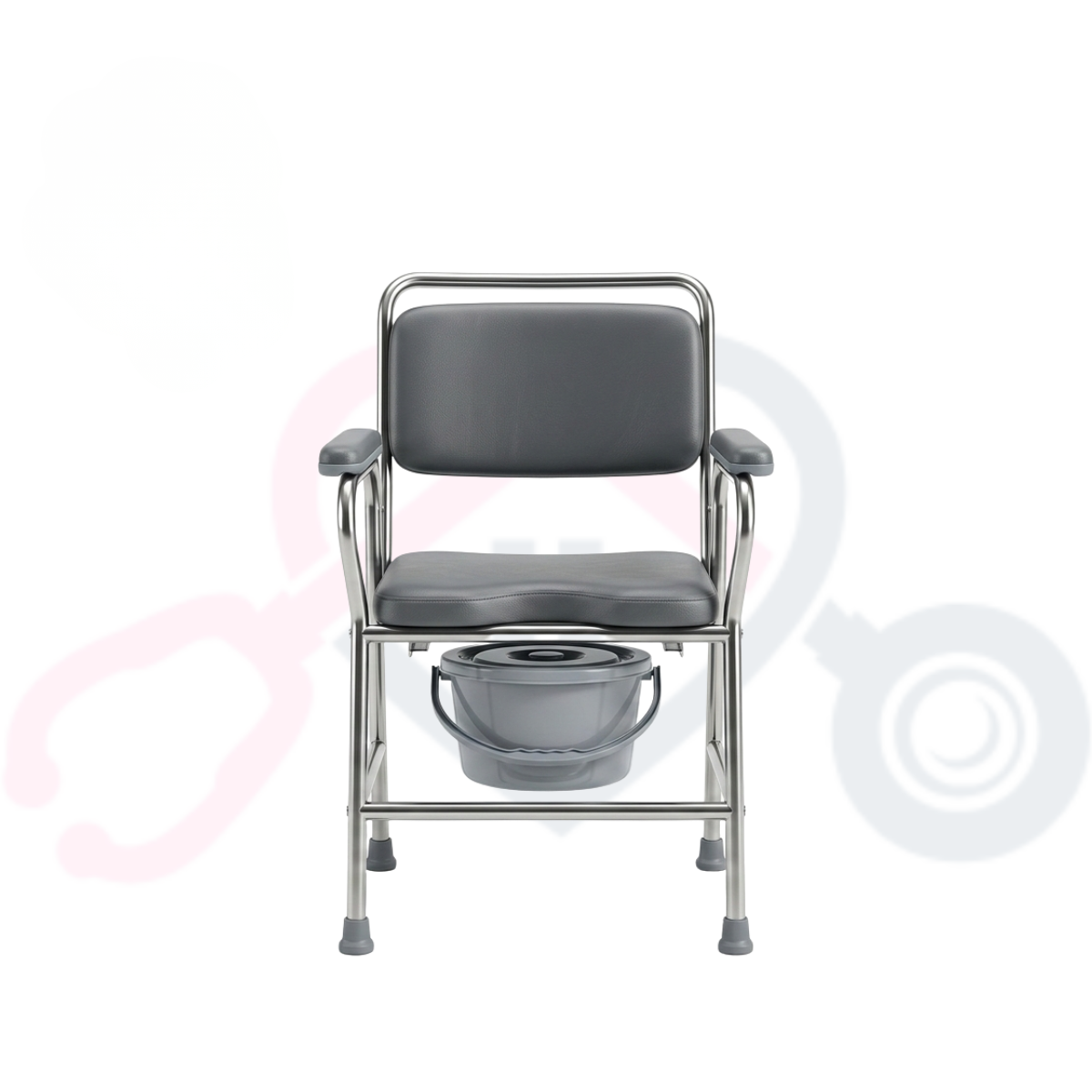
Commode Chair
2-in-1 mobility and bathroom assist chair. Designed with hygiene and patient dignity in mind.
4. Wheelchair: Getting Out of the Room
Even a fully bedridden patient benefits from being moved to a different room, into the sunlight, or taken for a follow-up appointment. A wheelchair makes this possible without lifting the patient into a car repeatedly.
For short-term needs after surgery, rent. For long-term use, buying a mid-range wheelchair often costs less than six months of rent. If the patient will use it every day, spend on cushioning — a hard seat causes its own pressure sores.
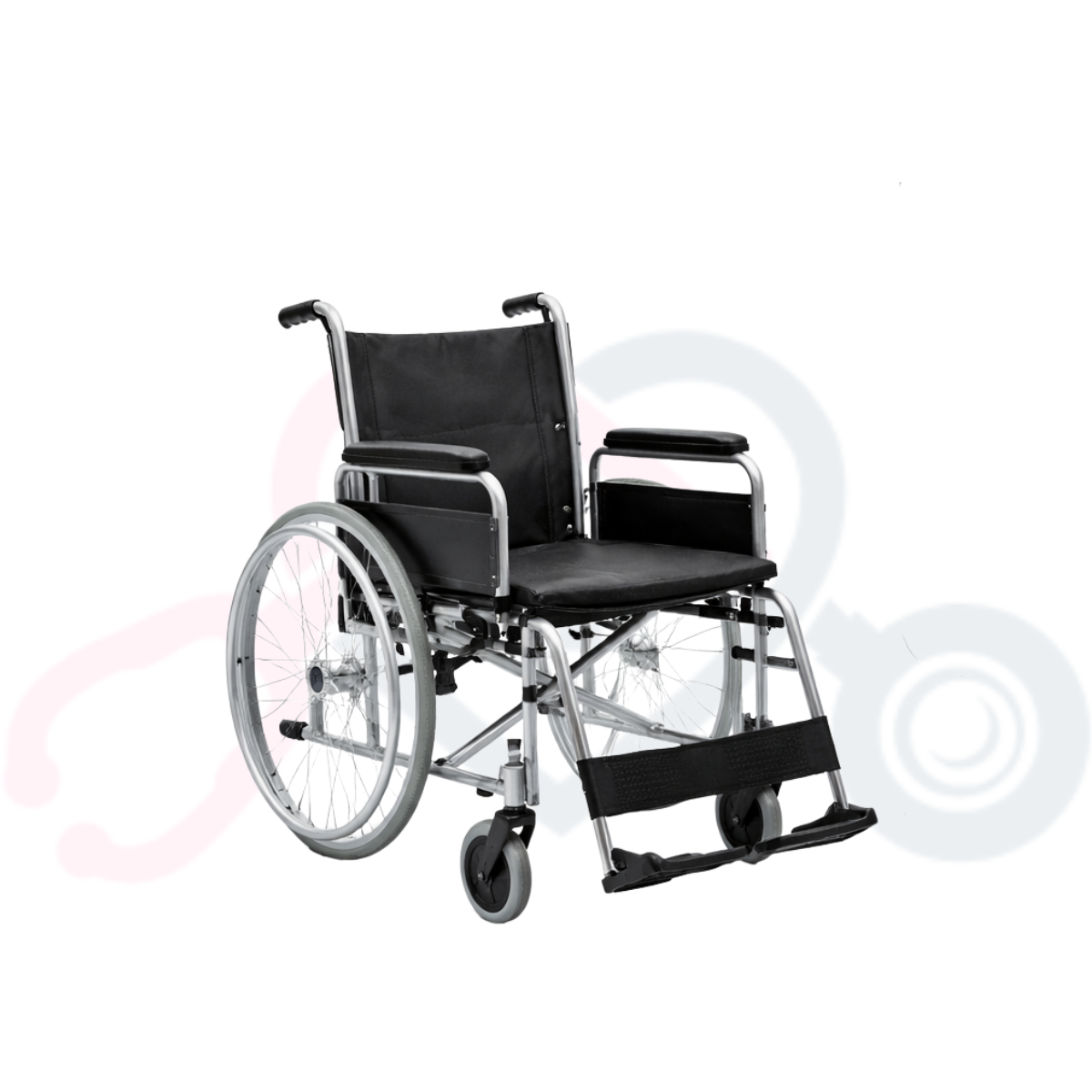
Standard Manual Wheelchair
Lightweight, foldable wheelchair with comfortable seat and durable tires. Easy to transport and store.
5. Bedside / Overbed Table
Meals, water, medicines, phone, oximeter, tissue — all of this ends up on the floor or the bed if there is no surface. A bedside table keeps essentials within the patient's reach and gives the nurse a clean surface for medications and dressings.
This is cheap. Buy one. You will use it every day for as long as the patient is in bed.
6. Suction Machine: Only If Needed
A suction machine clears secretions from the mouth and throat. It is essential for patients with tracheostomy, unable to swallow safely, or with heavy chest secretions.
Do not buy one "just in case." A suction machine used wrongly can damage the airway. Get it only if the discharge team or doctor tells you to, and get a nurse to show the family how to use it.
7. Oxygen: On Prescription Only
Oxygen is a medicine. It has a dose. Some patients (severe COPD, certain heart conditions) can actually be harmed by too much oxygen. Do not start oxygen at home because the patient "looks tired."
If the doctor has prescribed oxygen, you have two options. An oxygen concentrator takes room air and concentrates the oxygen — good for continuous, long-term use because there is nothing to refill. An oxygen cylinder holds compressed oxygen — better as a backup during power cuts and for short-term needs.
For most long-term bedridden patients on continuous oxygen, one concentrator plus one small backup cylinder is the safest setup.
8. Monitoring: Pulse Oximeter First
Every family with a bedridden patient should own a pulse oximeter. It costs little, clips on a finger, and shows oxygen level and pulse in seconds. It is the single most useful monitoring device at home.
A full patient monitor (SpO2, ECG, BP, temperature on one screen) is worth renting only for high-acuity patients — post-ICU, cardiac cases, or patients on ventilators. For most families, an oximeter plus a home BP machine is enough.
Feeding Equipment: For Tube-Fed Patients
If the patient cannot swallow and is on nasogastric or PEG tube feeds, you may also need a feeding pump for controlled feed delivery. Manual gravity feeding works for many patients; the pump is used when the schedule is strict or the patient does not tolerate fast feeds.
What You Do Not Need on Day One
Home care agencies and equipment shops sometimes push families to buy a full ICU setup at home. For most bedridden patients that is overkill and wastes money that should go on the nurse and the mattress. Skip the following unless the doctor specifically asks:
- Ventilator — only for patients who cannot breathe on their own
- BiPAP — only if prescribed for sleep apnoea or specific respiratory failure
- Cardiac monitor — only for unstable cardiac patients
- Syringe pump or infusion pump — only if the patient is on continuous IV medication
Adding these without medical need creates a room that looks like an ICU but does not actually help the patient recover. The money is often better spent on a trained caregiver or nurse who prevents complications in the first place.
Rent vs Buy: The Practical Rule
| Situation | Rent | Buy |
|---|---|---|
| Short-term post-surgery (2–8 weeks) | Bed, wheelchair, air mattress, monitor | Commode, bedside table, oximeter |
| Long-term bedridden (6 months+) | Air mattress, suction, oxygen concentrator | Bed, wheelchair, commode, bedside table, oximeter |
| End-of-life / palliative | Everything — the family should not be stuck with equipment afterwards | Nothing beyond oximeter |
Who Sets This Up at Home
Getting the equipment delivered is one step. Setting it up correctly is another. Roles families often confuse:
- Equipment supplier: Delivers, assembles the bed, demonstrates basic operation. Not a medical role.
- Home nurse: A trained nurse who provides clinical care — medications, wound care, tube feeds, monitoring. This is the person who actually uses the equipment on the patient.
- Caretaker or patient attendant: Non-clinical support — turning, bathing, feeding, keeping the room clean. Works under the nurse's guidance.
- Physiotherapist: Visits for exercises, prevents joint stiffness, teaches the family safe positioning.
- Doctor: Reviews progress, changes medications, decides when equipment can be removed.
Home care agencies package these roles differently. Ask exactly which staff will visit and how often before signing anything, so nobody assumes someone else is doing the wound checks.
Practical Notes for Lahore, Islamabad, and Rawalpindi Homes
A few things that come up repeatedly in local homes:
- Room choice: Ground floor if possible. A bedridden patient upstairs means every doctor visit, ambulance transfer, and equipment delivery becomes harder.
- Doorway width: Measure before the hospital bed is delivered. Most beds are 90–100 cm wide; old Lahore houses sometimes have narrower doors.
- Power backup: A UPS on the air mattress pump and any oxygen concentrator is essential. Load shedding at 3 am should not stop the mattress cycling.
- Bathroom access: If the wheelchair cannot enter the bathroom, plan around the commode chair permanently.
These small planning steps save hours of home help chasing solutions after the equipment arrives.
Red Flags: When to Seek Emergency Help
Even with the right equipment, watch for these and call 1122 or take the patient to the ER:
- Sudden drop in oxygen level below 90% that does not recover
- New confusion, difficulty responding, or loss of consciousness
- Choking or clear signs of aspiration during a feed
- Bleeding from a wound or tube site that does not stop
- Sudden severe chest pain or difficulty breathing
- A pressure sore that suddenly turns black, smells bad, or has fever with it
Equipment supports care. It does not replace judgment about when the patient needs a hospital.
Frequently Asked Questions
Bringing It Together
Setting up a home for a bedridden patient is not about buying every device you see. It is about getting the core five items right — bed, air mattress, commode, wheelchair, bedside table — and adding clinical equipment only when the medical picture demands it.
Spend on the nurse and the mattress before the fancy monitor. Rent what is temporary, buy what will be used for a year or more, and skip what the doctor has not asked for. The patient's comfort and recovery depend more on the daily care around the equipment than on the equipment itself.