
Arranging equipment before hospital discharge is not just administrative convenience — it is what allows the transition home to be safe rather than chaotic. This guide walks families through equipment needed after discharge realities — what to order, when to order it, and how to build the equipment setup that supports the patient from hour one at home. Nothing here replaces the discharging team's specific prescription; this covers the practical equipment side of the transition.
Why Ordering Before Discharge Matters
The first 48 hours after hospital discharge are the highest-risk period. Equipment gaps during this window cause preventable problems:
- Patient placed in unsuitable bed causing skin issues or transfer injuries
- No pressure-relief mattress causing bedsores to start within days
- Missing wheelchair delaying essential mobility
- No commode chair causing bathroom accessibility problems
- Missing oxygen equipment for patients discharged on supplemental oxygen
- Missing suction for patients with airway needs
- No monitoring equipment for patients needing observation
- Caregivers struggling with unsuitable furniture leading to injuries
- Family scrambling to arrange equipment while trying to provide care
Every one of these is preventable with equipment ordered ahead — usually 24 to 48 hours before discharge.
Who Decides What Equipment Is Needed
- Discharging Consultant / Physician: Prescribes any specific medical equipment needed based on the patient's condition — oxygen, ventilator, monitors, specialised beds.
- Discharge Nurse or Care Coordinator: Advises on practical care equipment — appropriate bed, mattress, wheelchair, commode.
- Physiotherapist: Advises on mobility equipment — appropriate wheelchair type, walker, transfer aids.
- Occupational Therapist: Where available, does a home assessment identifying equipment needed for daily activities.
- Equipment Supplier: Provides equipment options within the prescribed categories. Not clinical — do not accept a supplier telling you what your patient medically needs.
- Family: Coordinates the ordering, delivery, and setup before the patient arrives home.
Reputable equipment suppliers coordinate with home care providers so that when discharge is planned, the equipment setup gets moving simultaneously.
The Core Equipment List
Hospital Bed
For any patient who will be bedridden or spend most of their time in bed. Manual, semi-electric, or fully electric depending on care duration and family capacity. Renting a bed for defined recovery periods is common; long-term users may find purchase economical.
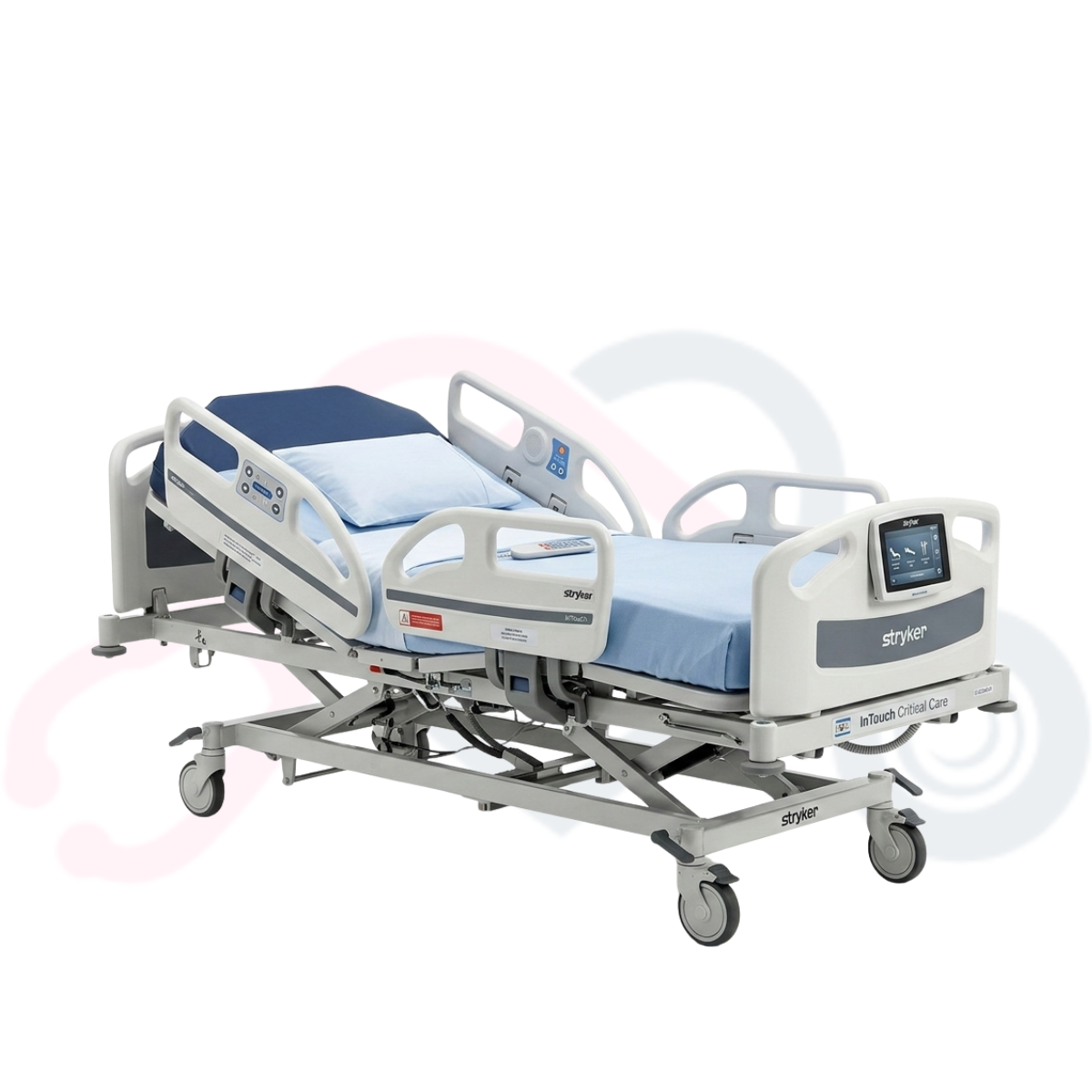
Electric Hospital Bed
Imported electric ICU bed providing automated positioning via remote control. Ideal for patients returning from hospital requiring frequent repositioning without physical strain.
Pressure-Relief Mattress
Essential for bedridden patients. Basic foam mattresses that come with beds are usually inadequate for genuinely bedridden patients. Alternating-pressure air mattresses dramatically reduce pressure sore risk. Discuss with the supplier about upgrade at setup, not after the first sore appears.
Wheelchair
For any patient who cannot walk long distances. Renting a wheelchair on rent for recovery periods works well; purchase for long-term users. Type matches need — standard for occasional use, self-propelled for independent users, electric for specific patients, commode wheelchair for combined use.
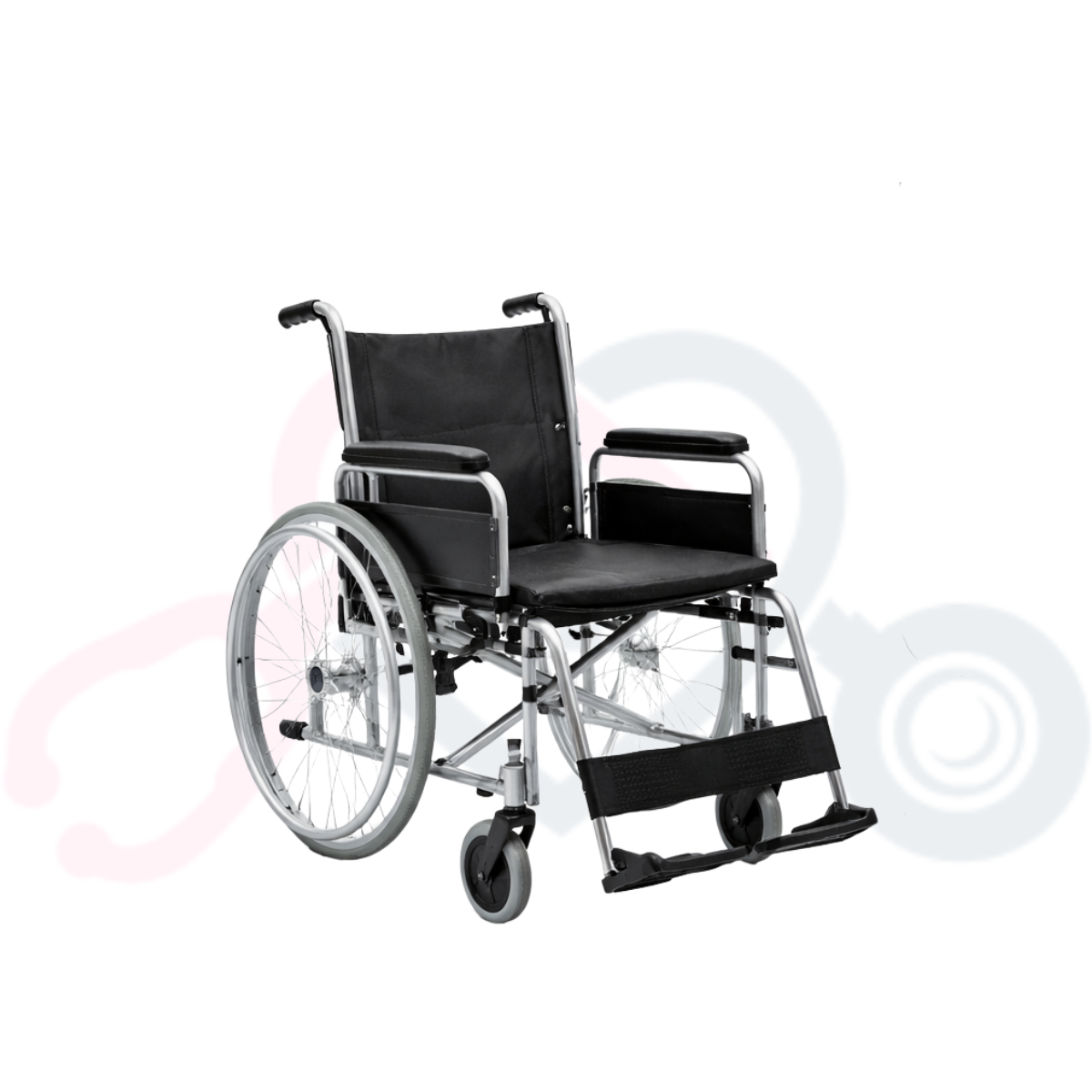
Standard Manual Wheelchair
Lightweight, foldable wheelchair with comfortable seat and durable tires for indoor and outdoor mobility. Easy to transport and store.
Commode Chair
For patients who cannot walk to the bathroom easily. Preserves dignity compared to bedpans and manages the practical challenge of Pakistani squat toilets that many bedridden patients cannot use.
Overbed Table
Adjustable table over the bed for meals and activities. Small investment with big impact on daily quality of life for bedridden patients.
Bedside Table
Within arm's reach for water, medications, phone, tissues, call bell.
Oxygen Concentrator
For patients discharged on continuous oxygen therapy. An oxygen concentrator should be delivered, installed, and tested before the patient arrives.
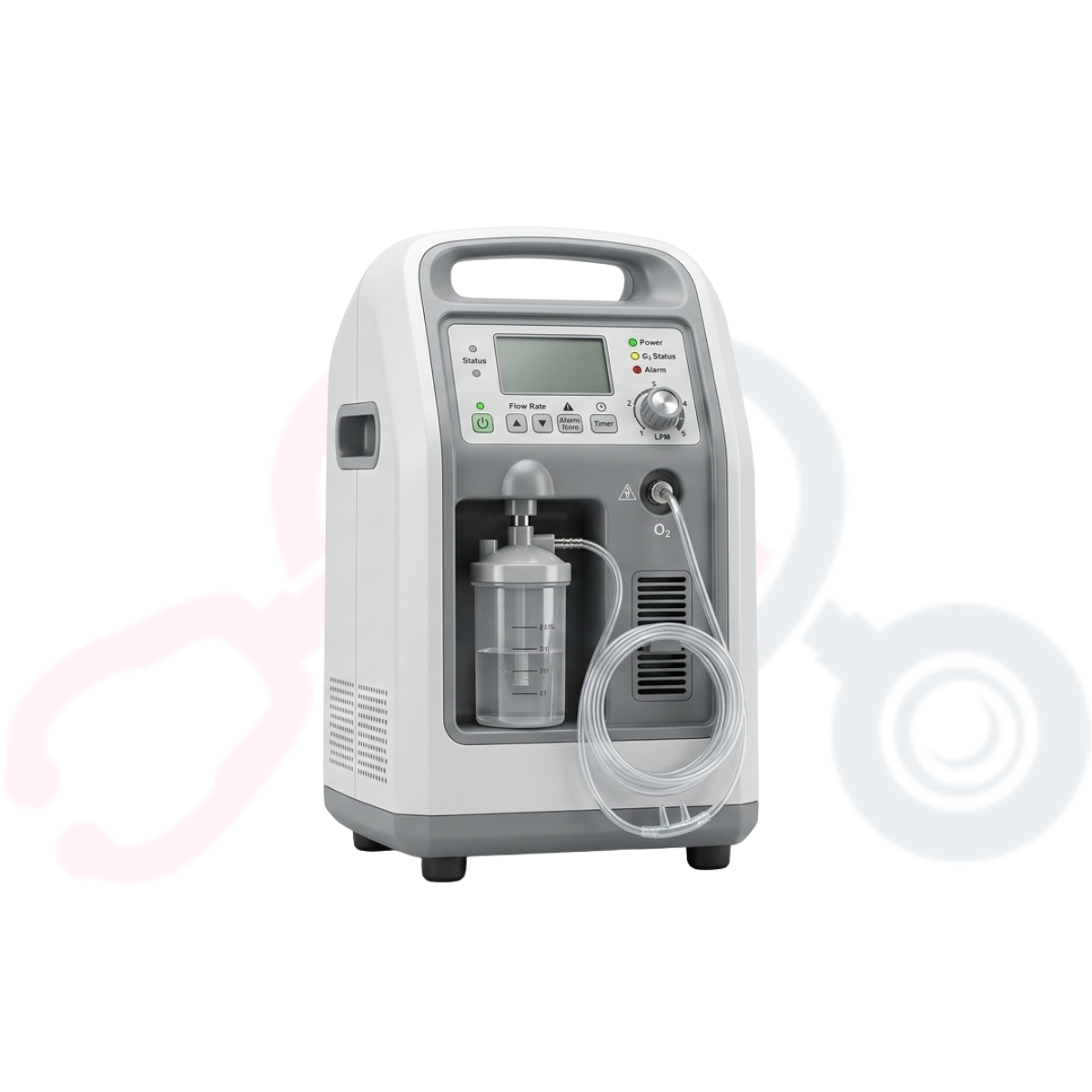
Oxygen Concentrator (5 Liters)
Reliable electric oxygen machine producing up to 5LPM continuous oxygen. Low noise operation for home use.
Oxygen Cylinder Backup
For continuous oxygen users, an oxygen cylinder as backup for load-shedding and equipment failure. Not optional for genuine oxygen-dependent patients.
Suction Machine
For patients with weak cough, tracheostomies, or persistent secretions. A suction machine ready before discharge.
Nebuliser
For patients on prescribed inhaled medications. A nebulizer machine ready with appropriate consumables.
Ventilator
For genuinely ventilator-dependent patients. A ventilator setup requires coordinated home ICU-level nursing alongside — do not arrange equipment without nursing.
BiPAP Machine
For selected patients — sleep apnoea, some respiratory conditions. A BiPAP machine with correctly fitted mask before discharge.
Patient Monitor
For patients requiring continuous vital signs monitoring. A patient monitor as prescribed.
Feeding Pump
For patients on tube feeding, a feeding pump for controlled feed delivery.
IV Stand
For patients receiving IV medications or feeds. An IV stand on rent alongside the bed.
UPS and Backup Power
Not medical equipment per se but essential for any patient on continuous equipment. Ready before the patient arrives.
Matching Equipment to Patient Type
Post-Fracture Recovery (Hip, Knee, or Other)
Hospital bed, pressure-relief mattress, wheelchair, walker, commode chair, overbed table. Duration usually weeks to few months. Rental generally makes sense.
Post-Stroke Discharge
Hospital bed with adjustable positioning, pressure-relief mattress, wheelchair, commode chair, sometimes suction machine for weak cough. Physiotherapy equipment as prescribed.
Post-Cardiac Surgery
Hospital bed, wheelchair for reduced activity period, pulse oximeter, BP monitor, sometimes patient monitor. Recovery over months.
Post-COVID or Post-Pneumonia
Oxygen concentrator with cylinder backup if still needing supplemental oxygen. Nebuliser if prescribed. Pulse oximeter. Hospital bed if bedridden.
Post-ICU Discharge
Complex — depends on ongoing needs. May include ventilator, monitor, suction, oxygen, hospital bed, feeding pump. Coordinated home ICU setup rather than piecemeal equipment.
Elderly After Any Admission
Hospital bed if reduced mobility. Pressure-relief mattress. Wheelchair or walker. BP monitor. Glucometer if diabetic. Commode chair.
Palliative Care at Home
Comfort-focused equipment. Hospital bed with head elevation, pressure-relief mattress, wheelchair, sometimes oxygen for comfort, commode chair, suction if needed.
Timing the Order
Standard Equipment
Hospital bed, wheelchair, mattress, commode chair — order 24 to 48 hours before discharge. Delivery and setup on the day of discharge or the day before.
Complex Equipment
Oxygen concentrator with cylinder, ventilator setup, patient monitor — coordinate with the supplier for delivery and installation before the patient arrives.
Consumables
Suction catheters, oxygen tubing, feeding formulas, dressings — enough for the first weeks stocked at home.
Power Backup
UPS, generator arrangements — in place before the patient arrives, tested.
Room Setup
Physical arrangement of the room to accommodate equipment — cleared and prepared before delivery.
Coordinating With Home Care Providers
Where a home care provider will be involved, coordinate equipment ordering with them. Some providers bundle equipment and nursing services, delivering both simultaneously. Others require families to arrange equipment separately.
Bundled arrangements from a single provider that supplies both equipment and nursing tend to work better than sourcing separately — matched equipment, unified delivery day, coordinated setup.
What Should Arrive Before the Patient
Day Before Discharge (Or Earlier)
- Hospital bed with mattress
- Wheelchair
- Commode chair
- Overbed table
- Bedside table if not already available
- Storage arrangements for supplies
- UPS and power backup
Day of Discharge (Before Patient Arrives)
- Oxygen concentrator installed and tested
- Backup oxygen cylinder in place
- Suction machine ready
- Patient monitor if needed
- Nebuliser if prescribed
- Consumables stocked
- Ventilator or BiPAP if prescribed, installed by supplier's technician
Rent vs Buy Considerations
Rent
Short-term or defined recovery periods. Post-surgery recovery, post-fracture recovery, temporary illness. Rental includes maintenance and consumables in many cases. Return when no longer needed.
Buy
Long-term or permanent use. Chronic conditions requiring equipment indefinitely. Ownership over years often works out cheaper.
Rent Then Buy
Some families rent initially, confirm what suits, then purchase for long-term.
Common Situations Where Equipment Coordination Fails
Discharge Confirmed Too Late
Hospital says patient can go home today at 4 PM. Family gets 6 hours to arrange everything. Better if discharge is planned 24 to 48 hours in advance.
Wrong Equipment Ordered
Family ordered a standard mattress without knowing pressure-relief was needed. Ordered a manual bed for a patient who really needs electric. Consult with the discharging team about specifications.
Equipment That Does Not Fit
Bed too big for the room, doorway too narrow, elevator too small. Measure before ordering.
Missing Consumables
Suction catheters, oxygen tubing, dressings — running out during the first week is easily prevented.
No Backup Power
Load-shedding hits, oxygen concentrator stops, backup cylinder was not filled. Simple planning prevents.
Equipment Delivered But Not Set Up
Boxes arrive, technician does not arrive to install. Confirm installation is part of delivery, not a separate visit.
Working With the Right Supplier
| Supplier Trait | Why It Matters for Home Care |
|---|---|
| Clinical Understanding | Supplier understands the medical requirements, not just product features. |
| Speed of Delivery | Can genuinely deliver within timeframes that match discharge planning. |
| Installation & Demonstration | Not just delivery — professional setup and demonstration before leaving. |
| Service Response | Faults addressed promptly, not days later. |
| Transparent Pricing | Itemised quotes, no surprise fees upon delivery. |
Red Flags: When Equipment Issues Signal Problems
Contact the supplier immediately for any of the following:
- Any equipment failure or malfunction
- Alarms that do not resolve with routine measures
- Consumables running low with no delivery in sight
- Equipment not performing as expected or safety concern
Contact the doctor or take to the ER / call 1122 for:
- Patient in respiratory distress with oxygen equipment failure and no backup
- Ventilator failure without backup
- Any equipment fire or major safety event
For patient-friendly background on home medical equipment, general home care resources like the NHS guide to care at home cover the practical considerations. For your patient's specific equipment needs, always follow the discharging team's prescription.