This guide walks families through how long does an oxygen cylinder last realities — what the numbers on the cylinder actually mean, how flow rate changes duration, how to plan cylinder rotation, and how to build a home oxygen setup that is genuinely reliable rather than just apparently present. Nothing here replaces the doctor's prescription for oxygen therapy; this covers the equipment side.
What "20 Litre Cylinder" Actually Means
Oxygen cylinders in Pakistan are usually described by their physical size — 20-litre cylinders being the standard household portable size, jumbo cylinders being the larger versions used for extended supply. The "20 litres" is the water capacity of the cylinder (how much water it would hold if empty), not the amount of oxygen it delivers.
The actual oxygen available is far more — because the oxygen inside is compressed to high pressure. A full 20-litre cylinder at typical medical pressures holds roughly 3,000 to 4,000 litres of usable oxygen gas at delivery pressure.
Reading the Pressure Gauge
Every oxygen cylinder has a pressure gauge on the regulator. Understanding it prevents surprises:
- A full cylinder typically reads around 2000 psi (or 140 bar)
- Half-full reads around 1000 psi (70 bar)
- Below 500 psi (35 bar) — the reserve zone, refill immediately
- Below 200 psi — nearly empty, do not rely on it
The gauge does not tell you how many hours are left directly — you have to combine pressure reading with your patient's flow rate to estimate remaining time.
The Duration Formula
Roughly:
Duration in hours ≈ (cylinder factor × pressure remaining) ÷ (flow rate in LPM × 60)
For a standard 20-litre cylinder, the cylinder factor is approximately 3.14 litres per psi. Simplified for practical use:
- Full 20L cylinder (2000 psi) at 2 LPM ≈ 52 hours
- Full 20L cylinder (2000 psi) at 4 LPM ≈ 26 hours
- Full 20L cylinder (2000 psi) at 6 LPM ≈ 17 hours
- Full 20L cylinder (2000 psi) at 10 LPM ≈ 10 hours
- Full 20L cylinder (2000 psi) at 15 LPM ≈ 7 hours
These are estimates for continuous flow. Actual duration varies by exact cylinder specification, temperature, and regulator setup. Always add a safety margin.
Head-to-Head: Duration by Flow Rate
| Flow Rate (LPM) | Full 20L Cylinder Duration | Half-Full 20L Cylinder | Full Jumbo (~44L) Cylinder |
|---|---|---|---|
| 1 LPM | Approx 100 hours | Approx 50 hours | Approx 220 hours |
| 2 LPM | Approx 52 hours | Approx 26 hours | Approx 110 hours |
| 3 LPM | Approx 35 hours | Approx 17 hours | Approx 73 hours |
| 4 LPM | Approx 26 hours | Approx 13 hours | Approx 55 hours |
| 5 LPM | Approx 21 hours | Approx 10 hours | Approx 44 hours |
| 6 LPM | Approx 17 hours | Approx 8 hours | Approx 37 hours |
| 8 LPM | Approx 13 hours | Approx 6 hours | Approx 28 hours |
| 10 LPM | Approx 10 hours | Approx 5 hours | Approx 22 hours |
| 15 LPM | Approx 7 hours | Approx 3 hours | Approx 15 hours |
Notice how quickly duration drops as flow rate rises. A patient on 5 LPM continuous oxygen uses through a full 20-litre cylinder in less than a day. Plan accordingly.
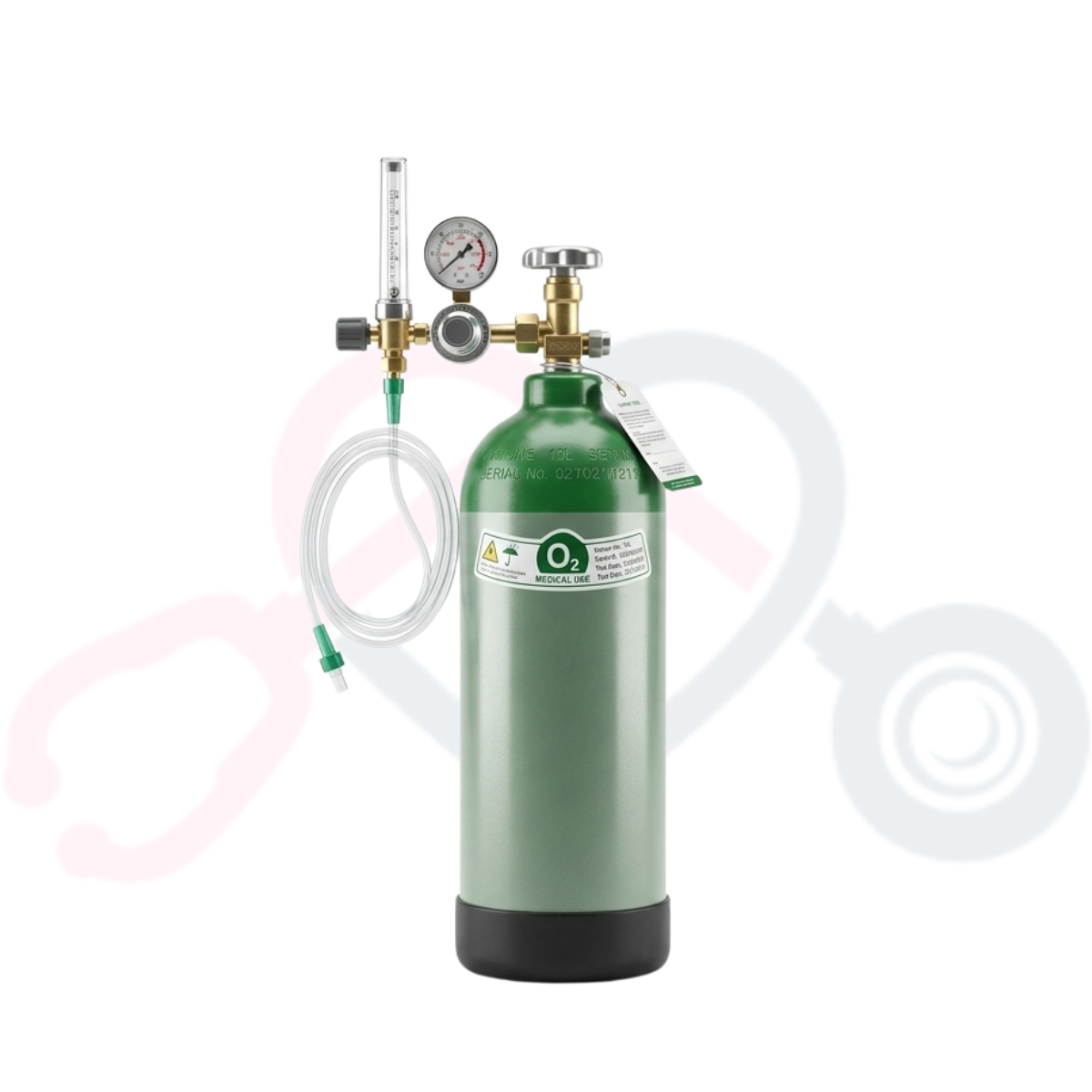
Oxygen Cylinder (10 Liters)
Essential portable 10L oxygen cylinder with flowmeter and mask. Crucial load-shedding and emergency backup for home users.
Who Decides the Flow Rate
- Doctor / Pulmonologist: Prescribes the oxygen flow based on the patient's condition and oxygen saturation targets. Never adjust flow yourself — too little oxygen means the patient is inadequately treated; too much can be dangerous in some patients (particularly some COPD patients).
- Registered Nurse: Verifies the flow at each shift, monitors saturation, and reports back if the prescribed flow is not achieving target saturations.
- Family: Ensures the flow stays at the prescribed setting between nurse visits. Confirms the concentrator or cylinder is delivering what it should.
- Equipment Supplier: Provides cylinders, regulators, and refills — not a clinical role.
Two Different Use Cases
Cylinders serve two very different purposes in home oxygen therapy, and the sizing decisions differ:
Use Case 1: Backup for Concentrator
The patient normally runs on an oxygen concentrator. The cylinder is standing by in case the concentrator fails or power is lost. Duration needed depends on how quickly the concentrator can be restored — usually just a few hours during load-shedding, potentially longer if the concentrator itself has a fault.
For this use case, one full 20-litre cylinder in reserve, refilled promptly after any use, is often adequate for patients on low-to-moderate flow rates. Coordinated oxygen concentrator setups usually include cylinder backup as standard.
Use Case 2: Primary Oxygen Supply
The patient's primary oxygen source is cylinders (no concentrator, or as portable supply for going out). Duration matters much more directly — the family needs to plan refills or cylinder rotation to avoid running out.
For continuous cylinder-only supply at moderate flows, families typically rotate multiple cylinders — one in use, one full ready, one recently emptied being refilled.
Use Case 3: Portable/Travel Use
Cylinders used for going to appointments, family gatherings, or brief outings. Small portable cylinders sized for a few hours of use. Always take a full one, not one that has been sitting partially used.
Cylinder Sizes Commonly Available in Pakistan
- Portable D-size (approximately 415 litres): Small, for very short trips
- E-size (approximately 680 litres): Common portable, several hours at low flow
- Standard 20-litre water capacity (3000+ litres gas): The workhorse household cylinder
- Jumbo cylinders (44+ litres water capacity, 6000+ litres gas): For heavy use or long-term supply
Cylinder sizes and specifications vary between suppliers. Confirm exact specification when renting or purchasing.
Jumbo Oxygen Cylinder (40 Liters)
Heavy-duty 40L cylinder for continuous, high-flow prescribed oxygen therapy at home. Ideal for stationary setups.
Building a Reliable Cylinder Rotation
For patients who depend on cylinders regularly, a rotation prevents surprises:
- Minimum Two Cylinders: One in use, one full in reserve. When the in-use cylinder drops to a set reserve level (usually 500 psi or one-quarter full), switch to the reserve and send the emptied one for refill.
- Three Cylinders for Heavy Users: For patients on higher flow rates or heavy cylinder dependence — one in use, one full ready, one being refilled or transported.
- Track Pressure Daily: Note the pressure reading at a fixed time each day. Predictable drop rates tell you when a refill will be needed before it becomes urgent.
- Refill Contact Ready: Supplier phone number, hours of service, delivery time — all known. Do not discover on a Sunday evening that your supplier only delivers weekdays.
- Never Empty a Cylinder Completely: Cylinders should always be returned for refill with some residual pressure — usually above 200 psi. Completely emptying a cylinder allows contamination of the internal gas volume with air.
Safety Around Oxygen Cylinders
No Naked Flames
No smoking in the room. No candles. No incense. No open gas stoves nearby. Oxygen does not burn, but it dramatically accelerates any fire that starts. A small spark that would be nothing in normal air can become a serious fire in oxygen-enriched air.
No Oils or Grease Near Valves
Petroleum jelly, oil-based creams on the face, cooking oils, machine grease — all can spontaneously ignite in the presence of high-pressure oxygen. Keep them away from cylinder valves and regulators.
Secure Storage
- Store cylinders upright
- Secured with a strap, chain, or stand so they cannot fall
- A falling cylinder that snaps a valve becomes a dangerous projectile
- Away from heat sources — direct sun, heaters, radiators
- Well-ventilated area
Setup Around the Cylinder
- Regulator: The device that reduces high tank pressure to safe delivery pressure. Includes a pressure gauge and a flow control valve. Match the regulator to the cylinder.
- Flowmeter: Sets and displays the delivery flow rate in litres per minute. Match to the patient's flow range.
- Humidifier Bottle: For long-term or higher flow oxygen, a humidifier bottle reduces nasal dryness. Distilled water only. Change and clean regularly.
- Tubing and Cannula: Nasal cannula for most use, mask for higher flows or when higher oxygen concentration is needed. Tubing kept clean, no kinks, no cracks. Replace on schedule.
- Cylinder Stand or Cart: Keeps the cylinder upright and stable. Prevents falls.
What Reduces Duration Beyond the Numbers
- Leaks: Loose regulator connections. Cracked tubing. Damaged mask seals. All quietly waste oxygen. Regular equipment inspection catches these.
- Temperature: Very cold cylinders deliver less oxygen (gas contracts at cold temperatures). Very hot cylinders create safety concerns. Keep cylinders at moderate room temperature where possible.
- Increased Flow: Anyone adjusting the flow up "to give more oxygen" during breathlessness dramatically shortens duration and may not help the patient. Adjust flow only on medical advice.
- Continuous vs Intermittent Use: Continuous flow uses more oxygen than intermittent use. Confirm with the doctor whether continuous use is essential or whether intermittent is enough.
Common Mistakes Families Make
- Not Checking Pressure Regularly: The cylinder is there, so the family assumes it is ready. Then a real emergency reveals it is nearly empty.
- Only One Cylinder: Any single point of failure is a problem for oxygen supply. Two minimum.
- Waiting Until Empty to Refill: By the time the cylinder is empty, the refill is already overdue. Refill at the reserve level (usually one-quarter remaining).
- Not Understanding Flow Rate Impact: Assuming a cylinder will last "for days" without doing the flow-rate math. Higher flows drain cylinders much faster.
- Storing Near Heat Sources: Beside a heater, in direct summer sun, next to a gas stove — all real safety issues.
Red Flags: When to Seek Emergency Help
Contact the doctor or take to the emergency room / call 1122 for any of the following:
- Oxygen saturation dropping below the doctor's set threshold despite oxygen running
- Bluish colour around lips or fingertips despite oxygen
- Sudden severe shortness of breath not improved by oxygen
- Cylinder emergency — leak, damage, fire
- Complete equipment failure with no backup available
- Suspected carbon monoxide or gas exposure alongside oxygen use
- Any burn or injury from oxygen equipment or fire
For patient-friendly background on home oxygen therapy, the US National Heart, Lung, and Blood Institute guide to oxygen therapy is a reliable reference. For your specific setup, always follow the treating doctor's prescription.
Frequently Asked Questions
This page is general information about equipment rental and is not medical advice. Oxygen therapy is prescribed by a doctor, and flow rates are set and changed only by the treating medical team. Always ensure safe storage and use of oxygen cylinders and equipment.