It usually starts with a phone call from the hospital. "You can take them home now, but they'll still need oxygen support for a while." For a lot of families in Islamabad and Rawalpindi, that sentence brings relief and worry in the same breath — relief that their loved one is finally coming home, and worry about how to actually manage oxygen therapy in a house that was never set up for it.
This is a more common situation than people expect. Elderly parents recovering from pneumonia, a father managing COPD flare-ups, a mother recovering from major surgery, a child recovering from a respiratory infection — in each case, a doctor may prescribe supplemental oxygen for a defined period, not forever. Buying a cylinder outright for a short-term or uncertain-length need rarely makes sense, which is exactly why oxygen cylinder rental in Islamabad and oxygen cylinder rental in Rawalpindi has become such a common search for families trying to figure out their next step quickly.
This guide walks through what a medical oxygen cylinder actually is, who typically needs one, how rental compares to buying, what to look for, and how to use one safely at home — so that by the end, you have a clear, calm picture of what to do next.
What Is a Medical Oxygen Cylinder?
A medical oxygen cylinder is a pressurized container that holds oxygen gas purified and processed to a medical-grade standard, meant specifically for human use. It's different from industrial oxygen, which is manufactured for welding, manufacturing, and other non-medical purposes and isn't held to the same purity requirements.
At home, a medical oxygen cylinder is typically connected to a regulator and, when needed, a humidifier bottle and nasal cannula or mask, allowing a patient to breathe supplemental oxygen at a flow rate set by their doctor. The U.S. National Heart, Lung, and Blood Institute explains that supplemental oxygen therapy is delivered through a nasal tube, mask, or tent to help people whose lungs cannot get enough oxygen on their own.
Cylinders used for home oxygen therapy come in a range of sizes — from small portable cylinders that a patient can carry during short trips, to medium cylinders for regular home use, up to larger-capacity cylinders for patients who need oxygen for extended hours each day. The right size depends entirely on the patient's prescribed flow rate and how many hours a day they need oxygen support, which is something a doctor or respiratory specialist should guide.
Who May Need an Oxygen Cylinder at Home?
Home oxygen therapy is prescribed for a range of conditions, and it's always based on a doctor's assessment rather than guesswork. Some of the more common situations where a physician may recommend it include:
- COPD (Chronic Obstructive Pulmonary Disease): Patients with advanced COPD often experience persistently low blood oxygen levels and may need long-term or as-needed supplemental oxygen.
- Low blood oxygen levels (hypoxemia): Confirmed through a pulse oximeter or blood gas test, low oxygen saturation is one of the most direct indicators for oxygen therapy.
- Recovery from pneumonia or chest infections: Lungs recovering from infection sometimes need extra oxygen support for a few weeks.
- General respiratory illness: Conditions affecting normal breathing function can sometimes warrant short-term oxygen use.
- Post-surgery recovery: Some surgical patients, particularly after major procedures, are advised to use supplemental oxygen during the initial recovery period.
- Elderly patients: Older adults recovering from illness or managing chronic conditions may need oxygen support even for routine daily activity.
Doctor-prescribed oxygen therapy: In every case, a physician's assessment and prescription should determine whether oxygen therapy is appropriate, along with the exact flow rate and duration. If you're unsure whether a family member needs supplemental oxygen, that decision should always sit with their treating doctor — not with guesswork based on symptoms alone.
Why Rent Instead of Buying?
For a lot of families, renting simply makes more practical sense than purchasing a cylinder outright. Here's why:
- Temporary recovery periods. Many patients only need oxygen support for a few weeks or months while they recover — not indefinitely. Renting avoids paying for equipment that will sit unused once recovery is complete.
- Short-term treatment plans. When a doctor prescribes oxygen as part of a defined treatment window, rental matches the actual need instead of over-committing.
- Emergency requirements. Sometimes the need for oxygen support arises suddenly, and a rental service can respond faster than sourcing and purchasing new equipment.
- Cost efficiency. Buying a cylinder, regulator, and accessories outright is a significant upfront cost. Renting spreads that cost over the actual usage period, which is far more manageable for most households.
- Equipment maintenance. A rented cylinder is typically inspected, refilled, and maintained by the provider, which takes that responsibility off the family's plate.
- Flexible rental periods. Whether it's needed for a week, a month, or several months, rental plans can usually be adjusted as the patient's condition and doctor's recommendations change.
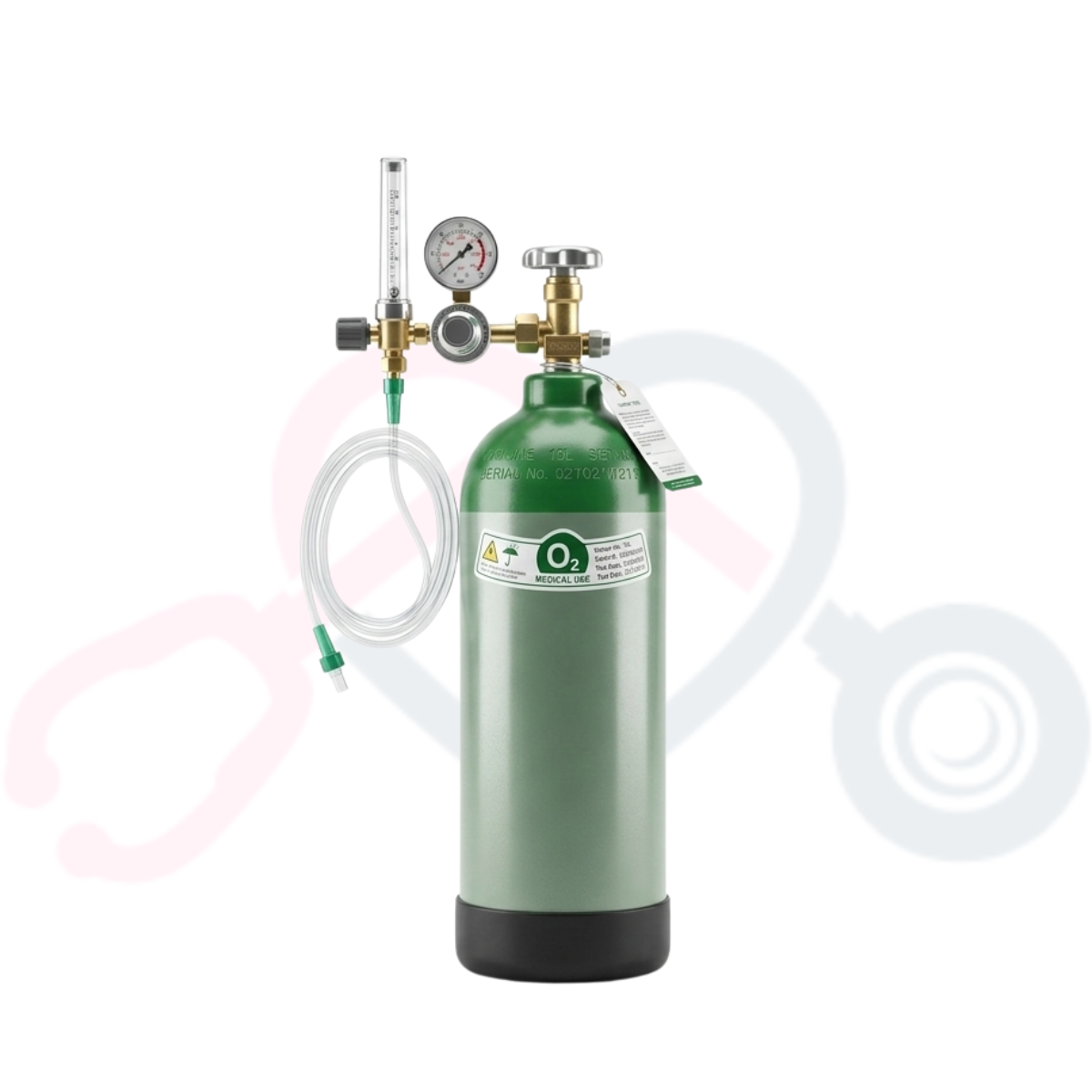
Oxygen Cylinder (20 Liters)
Portable 20L oxygen cylinder provided with a compatible flowmeter and mask. Delivered fully filled for immediate prescribed home use.
Benefits of Oxygen Cylinder Rental in Islamabad & Rawalpindi
Families searching for oxygen cylinder rental in Islamabad or oxygen cylinder rental in Rawalpindi are usually looking for a few specific things: speed, reliability, and equipment they can actually trust. A good local rental service should offer:
- Fast delivery to the home, since oxygen needs often come up on short notice after a hospital discharge.
- Reliable, well-maintained equipment that has been properly inspected and refilled with medical-grade oxygen.
- Medical-grade cylinders rather than repurposed industrial ones.
- Flexible rental options, whether the need is for a few days or several months.
- Professional guidance on setup, usage, and basic safety at the time of delivery.
- Equipment suited for home use, including cylinders sized appropriately for residential settings rather than hospital wards.
Types of Oxygen Cylinders Available
Not every patient needs the same setup. Depending on the prescribed flow rate, mobility needs, and duration of therapy, different cylinder types are used:
- Portable Oxygen Cylinder. Lightweight and compact, designed for patients who need to move around the house or step out for short periods while still receiving oxygen support.
- Standard Cylinder. A mid-sized option commonly used for regular home oxygen therapy, balancing capacity with ease of handling.
- Large Capacity Cylinder. Suited for patients who need oxygen for extended hours daily, reducing how often the cylinder needs to be refilled or swapped.
- Emergency Cylinder. Kept on hand for sudden drops in oxygen saturation or urgent situations where immediate supplemental oxygen is required.
- Medical Grade Cylinder. Refers to any cylinder filled with oxygen that meets medical purity standards, as opposed to industrial-grade oxygen, which should never be used for patient care.
How to Choose the Right Oxygen Cylinder
Picking the right cylinder isn't something to guess at — it comes down to a few key factors, most of which your doctor will already have addressed in the prescription:
- Doctor's recommendation. This is the starting point for everything else. The prescribed flow rate (measured in liters per minute) determines what kind of cylinder and regulator setup is appropriate.
- Flow rate. Different patients need different oxygen flow rates, and this directly affects how long a given cylinder will last before needing a refill or swap.
- Patient's condition. Someone managing a chronic condition like COPD may need a different setup than someone recovering short-term from surgery or infection.
- Home setup. Consider where the cylinder will be placed, how it will be secured, and whether the space allows for proper ventilation around it.
- Duration of oxygen therapy. A short recovery period may only need a standard or portable cylinder, while longer-term therapy may call for a larger-capacity option with a more structured refill schedule.
- Mobility needs. If the patient needs to move between rooms or occasionally leave the house, a portable cylinder or a combination of portable and standard cylinders may work best.
Oxygen itself isn't flammable, but it significantly accelerates combustion, which makes safe handling essential. Keep this checklist in mind:
- Store the cylinder upright and secured so it can't tip over or roll.
- Keep it away from open flames, stoves, heaters, and smoking materials — oxygen-enriched environments make fires spread faster.
- Use a proper, undamaged regulator that's compatible with the cylinder and checked regularly for leaks.
- Keep the room ventilated rather than sealed, especially where the cylinder is in continuous use.
- Schedule regular inspection of the cylinder, regulator, and tubing to catch wear or damage early.
- Use only the prescribed flow rate set by the doctor — never increase or decrease it without medical guidance.
Common Mistakes People Make
A few recurring mistakes tend to put patients at unnecessary risk or lead to poor outcomes:
- Buying industrial oxygen instead of medical-grade oxygen. Industrial oxygen isn't purified to medical standards and should never be used for patient therapy.
- Using damaged or mismatched regulators. A regulator that doesn't seal properly or isn't rated for the cylinder can be a safety hazard and affect flow accuracy.
- Improper storage. Leaving a cylinder lying on its side, near heat sources, or in an unventilated closet increases risk unnecessarily.
- Ignoring maintenance. Skipping regular checks on the cylinder, tubing, and regulator can lead to leaks or equipment failure going unnoticed.
- Self-adjusting the oxygen flow. Changing the flow rate without a doctor's instruction — even with good intentions — can do more harm than good.
Why Choose Shine Medical Equipment?
Shine Medical Equipment provides medical oxygen cylinder rental across Islamabad and Rawalpindi, with a focus on equipment that's properly maintained and support that's easy to reach when families need it. Cylinders are inspected before delivery, rental terms are kept flexible to match how long a patient actually needs oxygen support, and the team is available to guide families through setup and basic safe usage at the time of delivery. The goal isn't to oversell equipment nobody needs — it's to make sure the right cylinder reaches the right home, on time, when it's needed.
Areas We Cover
Islamabad: F-6, F-7, F-8, F-10, F-11, G-8, G-9, G-10, G-11, I-8, I-9, H-8, H-13, DHA Islamabad, Bahria Town Islamabad, Gulberg Greens, Gulberg Residencia
Rawalpindi: Bahria Town Rawalpindi, DHA Rawalpindi, Askari 11, Askari 14, Satellite Town, Saddar, Chaklala
If your home falls outside these listed areas, it's still worth reaching out — coverage is often broader than what's listed here.
Frequently Asked Questions
Conclusion
Bringing a loved one home from the hospital while they still need oxygen support can feel overwhelming at first, but it doesn't have to be complicated. Renting a medical oxygen cylinder is often a practical, flexible option for patients who qualify, as long as it's guided by a doctor's assessment and prescribed flow rate. From choosing the right cylinder size to following basic safety practices at home, a little preparation goes a long way toward a smoother recovery.
If you're looking for oxygen cylinder rental in Islamabad or oxygen cylinder rental in Rawalpindi, Shine Medical Equipment is here to help you get set up quickly, safely, and with equipment you can rely on. Reach out to discuss your family's needs and get the right cylinder to your door.
Contact via WhatsAppThis page is for general information only and does not replace medical advice. Oxygen equipment should be selected and used strictly according to a doctor's prescription, the manufacturer's instructions, and guidance from a qualified healthcare professional.