A father is discharged from the hospital after a bout of pneumonia, and the doctor mentions he'll need supplemental oxygen at home for the next few weeks while his lungs recover. The family, standing in the hospital corridor, has no idea where to even start — buy a cylinder outright, or find one to rent for what's hopefully a short period? This exact scenario plays out for families across Lahore regularly, and oxygen cylinder rental Lahore services exist specifically to solve it, provided the equipment is selected and used according to proper medical guidance.
What Is a Medical Oxygen Cylinder?
A medical oxygen cylinder is a pressurized container holding purified oxygen gas intended specifically for therapeutic use, prescribed by a doctor for patients whose blood oxygen levels need supplemental support. The cylinder delivers oxygen through a regulator and tubing, typically reaching the patient through a nasal cannula or face mask, depending on what's been prescribed.
Medical oxygen is not the same as industrial oxygen used in manufacturing or welding — medical-grade oxygen meets specific purity standards required for safe human use, and industrial oxygen should never be substituted for medical purposes under any circumstances. Cylinders come in various sizes, from small portable units designed for mobility to larger cylinders meant for stationary home use, with the appropriate size depending entirely on the patient's prescribed flow rate and expected duration of need.
Safety matters considerably with this equipment, since oxygen itself doesn't burn but significantly increases how easily other materials ignite, making proper handling and storage genuinely important rather than a minor detail.
Who May Need an Oxygen Cylinder at Home?
Patients managing COPD often require supplemental oxygen as part of their ongoing treatment plan, particularly during flare-ups or as the condition progresses. Recovery from pneumonia frequently involves a temporary period of oxygen support while the lungs heal and blood oxygen levels stabilize.
Patients with low oxygen levels identified through pulse oximetry or clinical assessment may be prescribed oxygen therapy regardless of the underlying cause. Post-hospital recovery, particularly following respiratory illness or certain surgeries, often includes a period of home oxygen use as part of the discharge plan. Various respiratory illnesses beyond COPD and pneumonia can also involve prescribed oxygen support, and elderly patients managing multiple health conditions sometimes need supplemental oxygen as part of their broader care plan.
In every one of these situations, oxygen use should follow doctor-prescribed oxygen therapy specifically — this equipment should never be arranged or used based on a family's own assessment of whether someone "seems like they need more oxygen." That determination requires proper medical evaluation.
Why Rent an Oxygen Cylinder Instead of Buying?
Renting tends to make the most sense for short-term use, particularly when a doctor has prescribed oxygen support for a defined recovery period rather than an ongoing, permanent need. This avoids the larger upfront cost of purchasing equipment that may only be needed for a matter of weeks.
Cost efficiency matters here, though it's worth being realistic — renting isn't automatically cheaper in every situation, and the right choice depends on how long the equipment will genuinely be needed. For emergency or urgent situations, rental can provide faster access to equipment than sourcing a purchase, which matters when a family needs oxygen support quickly after an unexpected discharge.
Temporary recovery situations are where rental offers the clearest advantage, since committing to a purchase before knowing the actual duration of need risks unnecessary expense. Maintenance convenience also factors in, since rental arrangements often include equipment upkeep as part of the service, and flexibility allows families to adjust or return equipment as the patient's needs change over the course of recovery.
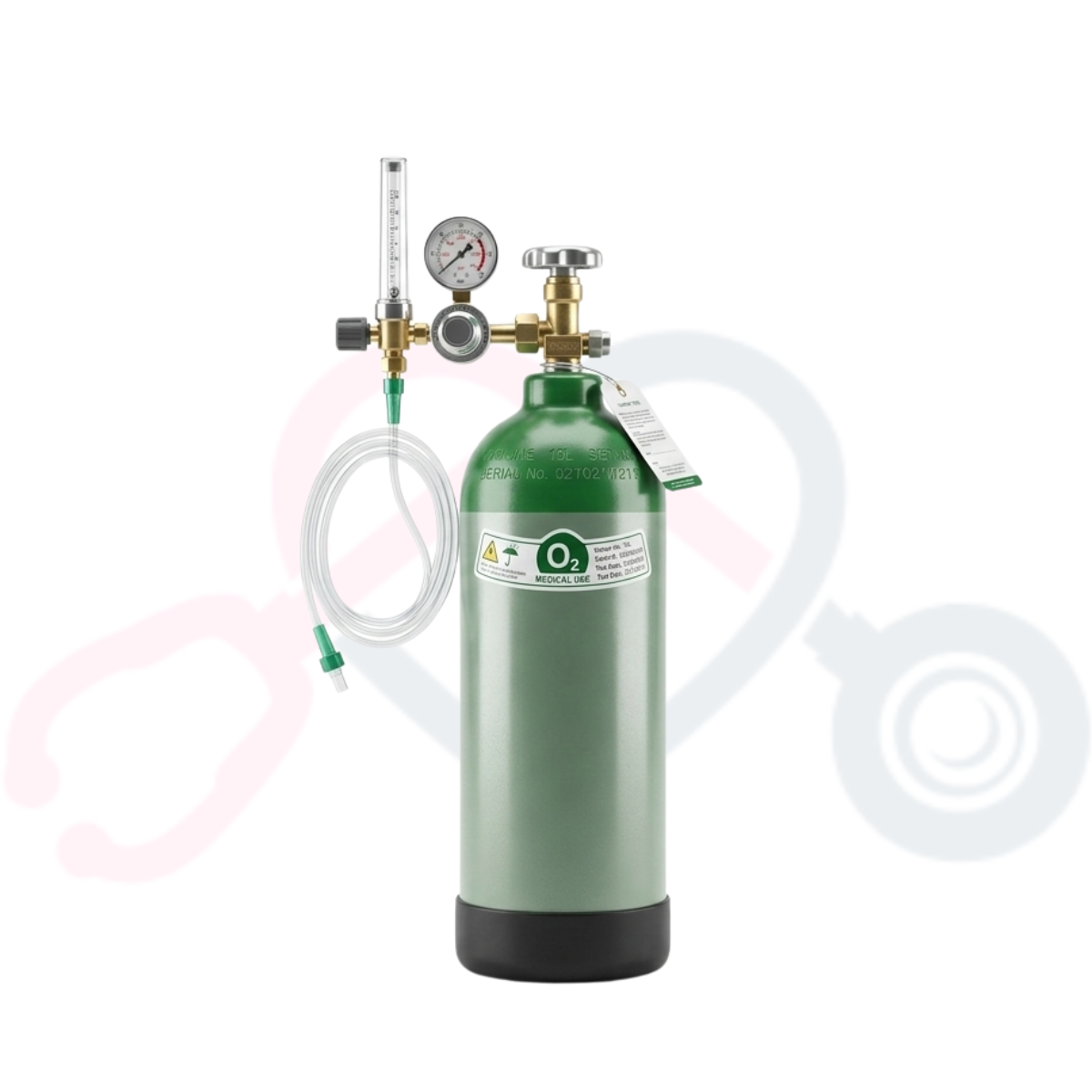
Oxygen Cylinder (20 Liters)
Portable 20L oxygen cylinder provided with a compatible flowmeter and mask. Delivered fully filled for immediate prescribed home use.
Benefits of Oxygen Cylinder Rental in Lahore
Fast availability matters considerably for families who need oxygen support quickly, particularly following an unexpected hospital discharge or a sudden change in a patient's condition. Professional guidance from a rental provider can help families understand practical aspects of using the equipment safely, alongside the medical guidance that should come directly from the treating doctor.
Well-maintained equipment reduces the risk of malfunction during a period when reliable oxygen supply genuinely matters for patient safety. Flexible rental duration means families aren't locked into a fixed timeline that doesn't match the patient's actual recovery pace, and this kind of arrangement suits home care specifically, where equipment needs to integrate into daily life rather than a clinical setting. Reliable support throughout the rental period, including addressing questions or technical issues as they arise, rounds out what a proper rental arrangement should offer.
Different Types of Oxygen Cylinders
- Portable Oxygen Cylinders: Designed for mobility, allowing patients to move around the home or travel to appointments while maintaining their prescribed oxygen support. These are typically lighter and smaller than stationary options.
- Standard Oxygen Cylinders: Offer a middle ground between portability and capacity, suited to patients who need reliable home oxygen without requiring frequent movement between locations.
- Large Capacity Cylinders: Hold more oxygen and reduce how often a cylinder needs replacing, generally suited to patients with higher prescribed flow rates or longer expected treatment duration.
- Emergency Backup Cylinders: Provide a safety reserve for patients whose primary oxygen source — often a concentrator — depends on electricity, ensuring continuity of supply during a power outage.
- Medical Grade Oxygen Cylinders: Meet the specific purity standards required for therapeutic use, distinct from industrial oxygen, and this distinction should never be treated as interchangeable regardless of apparent similarity.
How to Choose the Right Oxygen Cylinder
The doctor's recommendation should always be the starting point, since the appropriate cylinder type and size follow directly from what's actually been prescribed rather than general assumptions about what might work. Flow rate, specifically the rate prescribed by the treating physician, determines how quickly a given cylinder will need replacing and shapes which size makes practical sense.
Duration of use — whether the patient needs oxygen for a few days, several weeks, or an extended period — affects whether a smaller portable option or a larger stationary cylinder fits better. Mobility needs matter too, since a patient who needs to move around frequently has different requirements than one who will primarily remain in one location.
The patient's specific condition shapes all of these decisions, and the home setup itself — available space, who's managing the equipment day to day, and how the household is organized — factors into what's genuinely practical for that family.
- Store cylinders upright in a stable position, never lying flat where they could roll or fall
- Keep oxygen equipment away from open flames, lit candles, and smoking materials entirely
- Secure cylinders properly to prevent tipping, particularly important in households with children or pets
- Have equipment inspected regularly to catch any damage or wear before it becomes a safety issue
- Use only the prescribed flow rate — never adjust this independently based on how the patient seems to be doing
- Keep the area around oxygen equipment well ventilated rather than confined
- Keep electrical appliances and heat sources at a safe distance from the cylinder
- Avoid using oil-based or petroleum-based products near oxygen equipment, since these can pose a fire risk
The MedlinePlus guide on using oxygen at home notes that oxygen therapy is only available through a doctor's prescription, and that different delivery methods and equipment types suit different patient situations — reinforcing that equipment selection should always follow professional medical guidance rather than general assumptions about what a patient needs.
Common Mistakes to Avoid
Buying industrial oxygen instead of medical-grade oxygen is a serious and genuinely dangerous mistake, since industrial oxygen isn't purified to the standard required for safe human therapeutic use. Using an incorrect regulator, one not properly matched to the specific cylinder or prescribed flow rate, can lead to inaccurate oxygen delivery.
Ignoring maintenance — skipping regular equipment checks — increases the risk of malfunction at exactly the moment reliable oxygen supply matters most. Using damaged accessories, including worn tubing or a cracked mask, compromises both the equipment's function and patient safety.
Poor storage, including leaving cylinders in unstable positions or exposed to heat sources, creates unnecessary risk that's easily avoided with proper handling. Not following medical advice — adjusting flow rates independently, skipping prescribed usage schedules, or discontinuing use without consulting the doctor — remains one of the most serious and most avoidable mistakes families make with home oxygen therapy.
Why Choose Shine Medical Equipment?
Shine Medical Equipment provides professional support throughout the rental process, helping families understand practical aspects of the equipment while directing medical questions to the patient's treating doctor where appropriate. Quality equipment, properly maintained and inspected before delivery, reduces the risk of malfunction during a period when reliability genuinely matters.
Clean and inspected cylinders are standard practice, not an exception, and the rental process is designed to be straightforward for families already managing a stressful situation. Customer assistance remains available throughout the rental period for practical questions about the equipment itself, and coverage extends across Lahore for families needing to arrange this kind of support.
Areas We Serve in Lahore
Shine Medical Equipment coordinates oxygen cylinder delivery and rental services across DHA, Johar Town, Model Town, Gulberg, Cantt, Bahria Town, Wapda Town, Valencia, Faisal Town, Garden Town, Barki Road, Bedian Road, Defence, and Askari. If your location falls outside these areas, reach out directly to confirm whether service is available.
Frequently Asked Questions
Conclusion
Renting an oxygen cylinder can be a genuinely practical option for patients who need temporary oxygen support, provided the equipment is selected and used under proper medical supervision rather than general assumption. The right cylinder type, size, and flow rate all follow from what the treating doctor has actually prescribed, and safety considerations — proper storage, careful handling, and consistent maintenance — matter just as much as getting the right equipment in the first place.
If your family needs oxygen cylinder rental in Lahore, contact Shine Medical Equipment for professional guidance on equipment options and to confirm current rental availability for your specific situation.
Contact via WhatsAppThis page is for general information only and does not replace medical advice. Oxygen equipment should be selected and used strictly according to a doctor's prescription, the manufacturer's instructions, and guidance from a qualified healthcare professional.