
Walker on Rent in Lahore:
Price & Buying Guide
A practical guide to choosing, sizing, and safely renting the right walker for post-surgery recovery, stroke rehabilitation, or elderly mobility support at home.
This guide walks families through choosing and renting the right walker — the different types available, how to size one for the patient, how to use it safely, and what to look for in a rental contract. Nothing here replaces the physiotherapist's or treating doctor's advice. If the patient has specific balance or weight-bearing restrictions, follow those first.
What a Walker Does
A walker is a lightweight frame that the patient stands inside or in front of, which provides a four-point base of support. It makes walking safer for someone whose balance is impaired, whose leg is healing, or who is weak from illness or surgery. Unlike a stick (one point of contact) or crutches (two points), a walker gives four points — much more stable.
For most recovering patients and many elderly adults, a walker is the single biggest piece of equipment that keeps them mobile and prevents falls.
Types of Walkers
| Type | How It Works | Best For |
|---|---|---|
| Standard (pick-up) walker | No wheels; patient lifts and places it with each step | Short distances; strong upper body; needs full control |
| Two-wheel walker | Wheels on front legs, rubber tips at back | Most elderly users; smoother than pick-up |
| Four-wheel walker (rollator) | Wheels on all four legs, often with brakes and seat | Patients who walk longer distances; need to rest |
| Hemi walker | Smaller frame used with one hand | Stroke patients with one-sided weakness |
| Knee walker (scooter) | Knee rest with wheels, propelled by the other leg | Patients who cannot bear weight on one lower leg |
Which Walker Fits Which Patient?
Standard Pick-Up Walker
Suits patients with strong arms who need the most stable base. The patient lifts the walker, places it, steps forward, repeats. Slow but very stable. Not ideal for frail elderly who may struggle with the lifting.
Two-Wheel Walker
The most commonly rented walker. Front wheels roll; back legs with rubber tips grip when the patient leans. The flow is more natural. Good for elderly, post-op, and most rehabilitation.
Rollator (Four-Wheel)
Smoother for walking longer distances. Usually comes with hand brakes and a seat so the patient can rest. Less stable than two-wheel for patients with poor balance.
Post-Knee/Hip Surgery
Usually requires a standard two-wheel walker for the first 2 to 6 weeks, then progresses to a stick as the surgeon clears weight-bearing.
Post-Stroke Patient
Hemi walker for one-sided weakness, or standard walker with physio support. Progress depends heavily on active rehabilitation.
Elderly With General Weakness
Two-wheel walker or rollator for daily indoor use. Discuss the long-term plan with the physiotherapist to ensure safety.
Rent or Buy — Which Makes Sense?
| Situation | Rent | Buy |
|---|---|---|
| Post-surgery recovery (weeks to a few months) | Yes | No |
| Post-stroke rehabilitation | Rent while adjusting type | Buy when physio confirms right type |
| Elderly with permanent mobility issues | Rent short-term | Buy for long-term use |
| Short-term after fall or minor injury | Yes | No |
| Palliative or declining mobility | Rent | Only if long-term |
Walkers are not expensive to buy, so for anything beyond 3 to 4 months of use, buying usually makes sense. Renting first lets the family confirm the right type with the physiotherapist before committing.
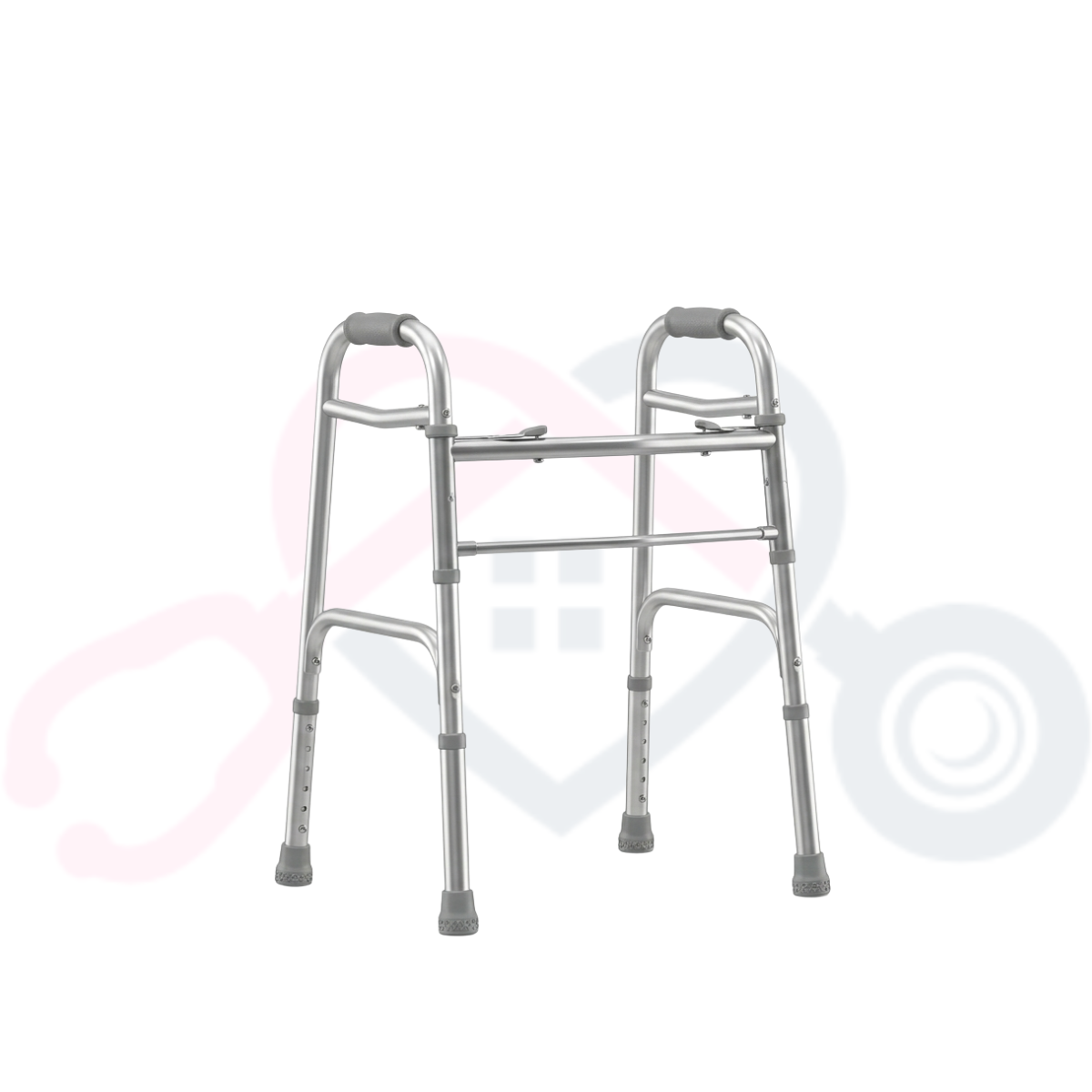
Adjustable Patient Walker
Sturdy aluminum walking frame with anti-slip rubber tips. Adjustable height, foldable design, ideal for safe rehabilitation.
Sizing & Delivery Checklist
Wrong-height walkers cause shoulder pain, poor posture, and falls. Here is what to check when the walker arrives:
- Height Alignment: Patient stands straight with arms relaxed. The walker height should exactly match the crease of the wrist.
- Elbow Bend: When gripping the handles, the patient's elbows should bend about 15 to 30 degrees. No hunching forward or reaching up.
- Rubber Tips: Ensure rubber tips are in good condition. Worn, shiny tips slip easily on tile floors.
- Frame Rigidity: The frame must be completely rigid. A walker that wobbles on day one will wobble worse by week two. Insist on a solid frame.
Red Flags: When to Review the Walker Plan
- Any fall or near-fall while using the equipment
- New shoulder, wrist, or back pain from walker use
- Patient refusing to use the walker (often due to fear or wrong sizing)
- New dizziness or breathlessness during walking
- Rapid loss of ability — may suggest a new medical problem
How to Use a Walker Safely: Step-by-Step
The Golden Rule: Walker first, weak leg second, strong leg third.
Patient stands straight inside or slightly in front of the walker. Both hands grip the handles firmly.
The walker is pushed or placed slightly forward. (Do not place it too far ahead, as the base of support is lost).
The patient shifts their body weight onto their arms, using the walker handles for solid support.
The weak or operated leg steps forward first into the center area of the walker.
The strong leg follows. Repeat the process. When turning, take small steps and pivot gradually rather than swinging the walker widely.
Areas of Lahore We Cover
We dispatch sanitized walkers and mobility equipment to all major residential sectors of Lahore:
Frequently Asked Questions
Get Safe Mobility at Home Today
Don't risk a devastating fall during recovery. Rent or buy a high-quality, sanitized walker in Lahore with same-day delivery.