
Wheelchair price
Rental: PKR 5,000 per month. Delivered and installed at your home in Lahore, Islamabad or Rawalpindi.
Purchase: PKR 16,000.
A lightweight, foldable manual wheelchair with a comfortable seat and durable tyres for indoor and outdoor use. See the wheelchair on rent or sale page for the current models.
Rental includes delivery and setup, with no heavy security deposit — a copy of the renter's CNIC and the first month's advance is all that is required.
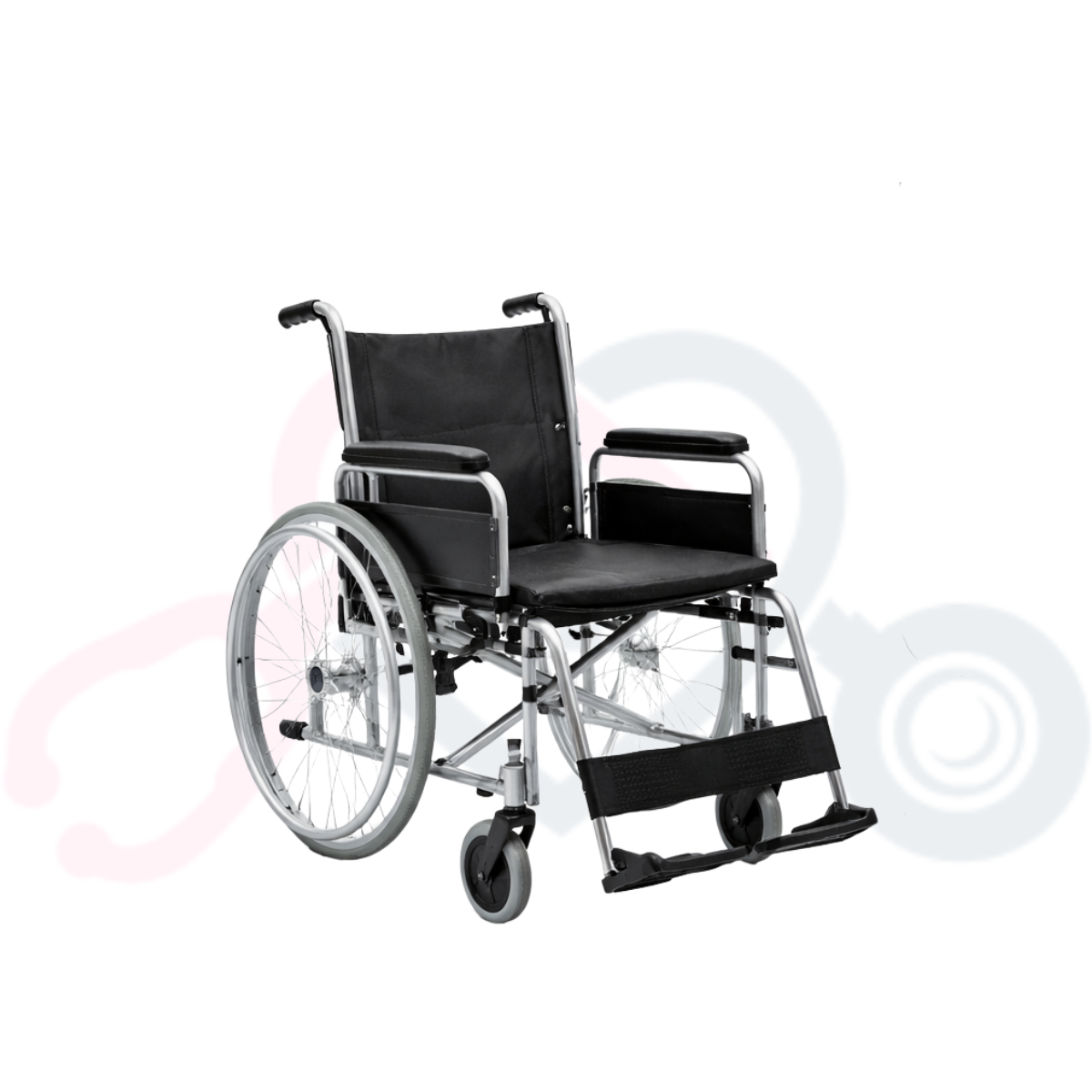
Standard Manual Wheelchair
Lightweight, foldable wheelchair with comfortable seat and durable tires for indoor and outdoor mobility. Easy to transport and store.
The arithmetic nobody does
Look at those two numbers together.
PKR 16,000 to buy. PKR 5,000 a month to rent. The break-even point is a little over three months.
So the honest advice is straightforward:
- Under three months? Rent. You save money and there is nothing to store afterwards
- Over three months, or open-ended? Buy. Beyond about the fourth month you are paying more in rent than the chair costs
Most equipment we rent has a break-even measured in years — a hospital bed at PKR 22,000 a month against PKR 196,000 to buy takes nine months, and a ventilator far longer. A wheelchair is the exception, and families should know that before they commit to a long rental.
We would rather tell you this than take six months of rent for something you should have bought in month one.
When renting is the right call
- After surgery — hip or knee replacement, abdominal surgery, or any procedure with a defined recovery period
- A fracture in a leg, ankle or foot, where mobility returns as it heals
- A visiting relative from abroad who needs one for a few weeks
- A trial — where nobody is sure yet whether the patient will accept or use it
- A short-term illness where weakness is expected to improve
When buying makes more sense
- Progressive conditions — Parkinson's, advanced neurological disease, or long-term after a stroke
- Elderly patients whose mobility is unlikely to return to what it was
- Permanent mobility loss
- Frequent outings — hospital visits, family events, travel
- Anything open-ended. If nobody can say when it will no longer be needed, that is usually a purchase
Size is a clinical decision, not a preference
This is the part families get wrong most often, and the consequences are worse than uncomfortable.
Seat width matters more than anything else. Too narrow, and the patient's hips press against the sides, creating exactly the high-pressure points that cause pressure sores. Too wide, and the patient leans to one side to reach an armrest — which puts uneven pressure on one hip and, over weeks, does the same damage from the opposite direction.
Other measurements that matter:
- Seat depth. There should be a gap of roughly two to three inches between the front edge of the seat and the back of the knees. Too deep and the patient slides forward
- Footplate height. Knees at about 90 degrees, feet flat. Footplates set too low pull the patient forward out of the seat
- Armrest height. Shoulders should sit relaxed, not hunched up or drooping
Tell us the patient's approximate hip width, height and weight when you enquire, and we will advise on the size rather than sending a standard chair and hoping.
A wheelchair seat is a flat surface, and a patient sitting on it for hours is bearing their weight on a small area — the tailbone and the sitting bones.
NICE clinical guidance on pressure redistributing devices lists wheelchair cushions among the recognised means of prevention: either conforming cushions that reduce contact pressure by increasing the surface area in contact, or mechanical cushions that alternate pressure.
In other words, the cushion is prevention equipment, not comfort furnishing. For any patient who will sit in the chair for more than short periods, ask about one.
And the rule that goes with it: a cushion does not remove the need to relieve pressure. A patient sitting for hours should shift their weight, or be helped to shift it, regularly. Ask the treating team how often for this patient.
One practical note: a cushion raises the patient by two to three inches, which changes armrest and footplate positions. Set those up after the cushion is in place, not before.
Self-propelled or attendant-propelled?
Two visibly different chairs, and the wrong choice frustrates everybody.
Self-propelled chairs have large rear wheels with hand rims. The patient moves themselves. This preserves independence and is worth choosing wherever the patient has enough upper body strength — but it needs genuine arm strength, which many elderly and post-stroke patients do not have.
Attendant-propelled chairs have smaller rear wheels and are pushed by somebody else. Narrower, lighter and easier to fit through doorways and into a car boot — but the patient cannot move independently at all.
Ask the physiotherapist or doctor which suits the patient. And be realistic: buying a self-propelled chair for a patient who cannot push it means paying for width and weight you will never use.
The Pakistani house problem
This is where international buying guides are no help at all, and where families discover the real difficulty on day one.
- Measure your doorways before ordering. Many older Lahore and Rawalpindi houses have narrow internal doors, and bathroom doors are usually the narrowest in the house — which is precisely where the patient needs to go
- The threshold step. Almost every bathroom here has a raised lip. A wheelchair will not cross it without a small ramp or two people lifting
- The step at the front door. Two or three steps at the entrance make a wheelchair unusable for outings unless somebody arranges a ramp or there are two able adults available every time
- Courtyards and uneven surfaces. Small front castors catch on broken tiles, gravel and uneven brick. Larger front wheels handle it better — mention your surfaces when ordering
- Footpaths. Pavements outside are frequently uneven, broken or obstructed. Plan realistic routes rather than assuming outings will be straightforward
- Upstairs bedrooms. If the patient's room is on the first floor and there is no lift, arrange a ground-floor room. A wheelchair does not solve stairs
Safety: the four things that cause accidents
- Brakes not applied during transfers. The most common cause of falls involving a wheelchair. Both brakes on, every single time, before the patient moves in or out
- Standing on the footplates. The chair tips forward. Footplates must be swung away or flipped up before the patient stands
- Tipping backwards on a slope or kerb. Going down a kerb or ramp, the attendant reverses down slowly rather than going forwards
- Fingers and clothing in the wheels. Keep loose shawls, dupattas and blankets clear of the spokes
One more that families overlook: never move a wheelchair with the patient's feet dragging on the floor. Feet on the footplates before you move, every time.
Looking after it
- Check tyre pressure if the chair has pneumatic tyres. Soft tyres make pushing far harder and reduce braking
- Test the brakes weekly — they loosen with use
- Wipe the frame and seat regularly, particularly in summer
- Check for loose bolts on armrests and footplates every month
- Keep it out of the rain; store it folded indoors
During a rental, servicing and repair are our responsibility — tell us if anything feels loose or the brakes are not holding.
What usually goes with it
- Walker — PKR 3,000 per month or PKR 6,500 to buy. Many patients use a wheelchair for distance and a walker indoors as strength returns
- Commode chair — PKR 5,500 per month or PKR 12,000 to buy. Often the item that makes the bathroom manageable
- Air mattress — PKR 4,000 per month, for patients also spending long periods in bed
- Manual hospital bed — PKR 13,000 per month, where transfers are difficult
- Bedside table — PKR 5,000 per month
Tell us the patient's condition and we will advise which of these the case actually needs — including what you can leave out.
Delivery
Same-day delivery across Lahore, Islamabad and Rawalpindi where the unit is in stock, with setup and a demonstration at your home.
Coverage includes DHA, Gulberg, Johar Town, Model Town, Bahria Town, Askari, Wapda Town and Cantt in Lahore; the F, G, E, I and H sectors, DHA, Bahria Town and PWD in Islamabad; and Saddar, Satellite Town, Chaklala, Bahria Town and DHA in Rawalpindi. Cantonment addresses need a gate pass arranged in advance.
Frequently asked questions
This page is general information about equipment supply and is not medical advice. Wheelchair size, cushion type and whether a patient should self-propel are decisions best made with the treating doctor or physiotherapist. A wheelchair does not remove the need to relieve pressure regularly, check the skin, or follow the mobility plan the medical team has set. If you notice redness that does not fade when pressed, or broken skin over the tailbone, hips or heels, seek medical advice promptly.