
Commode Chair on Rent Lahore: A Practical Guide for Families
Your mother is home from hospital after a hip fracture. She cannot walk to the bathroom. The toilet is at the far end of the house, up a step, through a narrow door. The family tries using a bedpan for one night and realises how exhausting and undignified it is for everyone involved. By morning, you are searching for a commode chair rental in Lahore.
A commode chair solves one of the most practical problems in home care for bedridden and mobility-limited patients — safe, dignified toileting beside the bed. It is cheap, easy to use, and often the single biggest quality-of-life improvement for a family. This guide walks Lahore families through renting the right commode chair, how to use it correctly, and what makes a good versus a poor rental arrangement. Nothing here replaces the treating doctor's or physiotherapist's advice for the specific patient.
Why a Commode Chair Matters
- Lets a patient who cannot walk to the toilet still use a seated position (far better than a bedpan)
- Preserves dignity — most patients tolerate a commode better than diapers alone
- Reduces skin problems that come from prolonged diaper use
- Allows the patient to urinate and pass stool more completely in a sitting position
- Easier for the caregiver than lifting a patient onto a distant toilet
- Prevents falls that happen when patients try to reach the bathroom themselves
For most bedridden or wheelchair-dependent patients, a commode chair is as important as the bed itself. It is also one of the cheapest pieces of home equipment to arrange.
Types of Commode Chairs
| Type | How It Works | Best For |
|---|---|---|
| Standard fixed commode chair | Chair with a built-in pan under the seat | Most home patients — bedside use |
| Folding commode chair | Collapses for storage and travel | Small rooms; families who need portability |
| Commode with wheels (commode wheelchair) | Rolls to the bathroom or over a toilet | Patients who can be transferred to the chair and wheeled |
| Drop-arm commode | Side arms lift up for easier transfer from bed | Heavier patients or weaker caregivers |
| Height-adjustable commode | Legs adjust for different patient heights | Taller or shorter patients, caregiver comfort |
For most Lahore homes, a standard fixed or drop-arm commode is the sensible choice. For families with a wheelchair-bound patient who could use the same chair in the bathroom, a commode wheelchair saves on buying both.
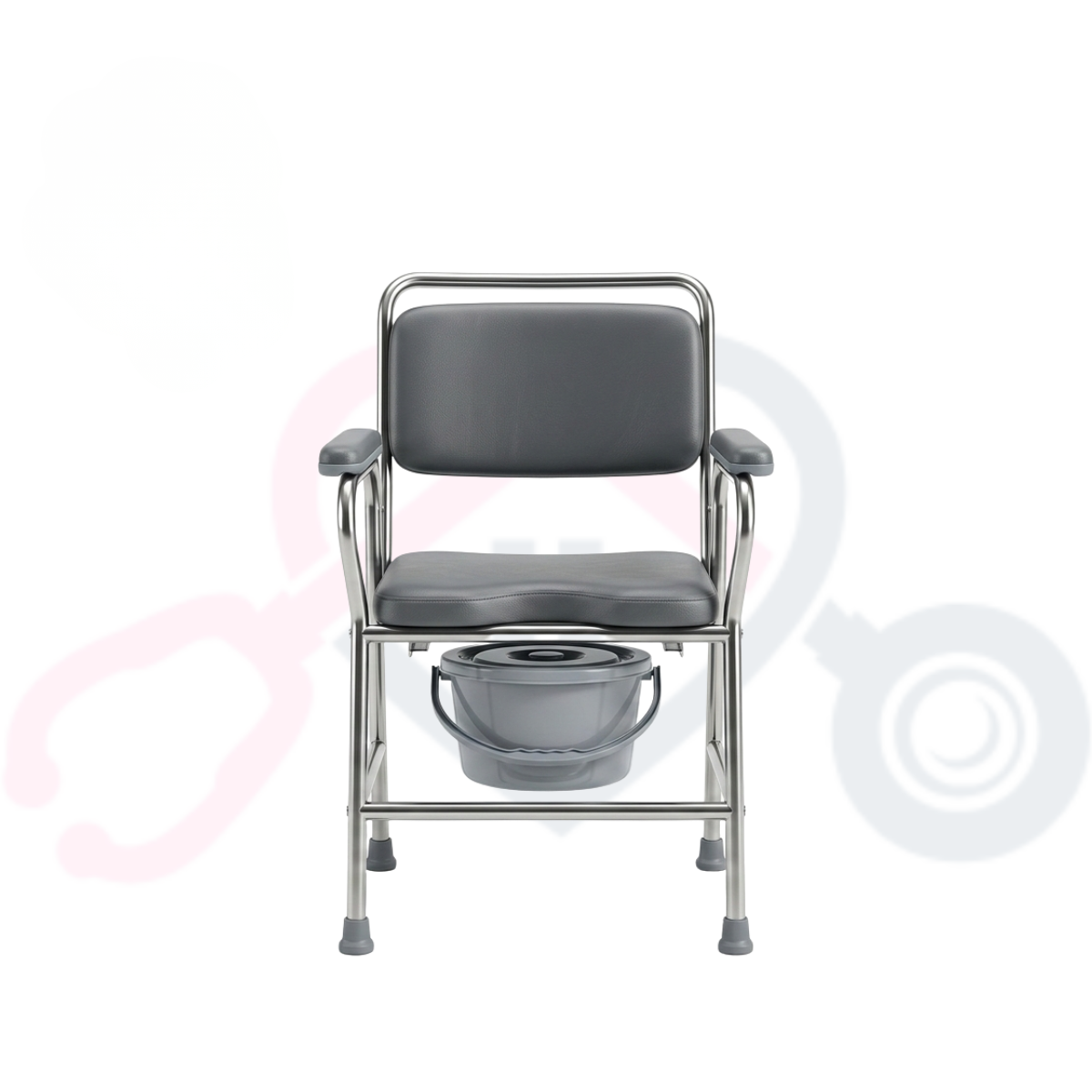
Commode Chair
2-in-1 mobility and bathroom assist chair. Designed with hygiene and patient dignity in mind.
What to Look For When Renting
- Stable base — chair should not wobble when the patient sits
- Weight capacity matching your patient — standard chairs around 100 kg; bariatric for heavier
- Removable pan with a secure fit — easy to lift out for emptying and cleaning
- Easy-clean seat and frame — plastic or epoxy-coated metal
- Secure arm rests the patient can push against to stand
- Backrest that supports the patient during use
- Rubber feet or anti-slip pads on the legs
- Lid for the pan — useful for odour control between uses
Ask the supplier to demonstrate the pan removal and refitting at delivery. A commode where the pan constantly falls off is a commode that becomes unusable within a week.
Rent or Buy — Which Makes Sense
| Situation | Rent | Buy |
|---|---|---|
| Post-surgery recovery (few weeks) | Yes | No |
| Elderly patient with permanent mobility problem | Rent for 1–2 months | Buy after confirming the model works |
| Short-term dementia care at home | Yes | Only if long-term |
| Palliative care | Rent — family should not be left with equipment afterwards | No |
| Advanced long-term bedridden care | Short rental to confirm model | Buy for long-term use |
Commode chairs are not expensive to buy, so for long-term use buying usually makes sense within a few months. Renting first lets you confirm the right model and fit before buying.
Setting Up the Commode in the Room
- Place beside the bed at the end the patient will transfer from
- Enough space around it for the caregiver to assist
- Within reach of a sink or washbowl for immediate hand hygiene
- Clear path from bed to commode — no rugs, cables, or furniture to trip on
- Night light or lamp close by for after-dark use
- Modesty cover or screen if the room is shared
- Toilet paper, wet wipes, hand sanitiser, and a small waste bin within reach
A well-arranged commode station takes under an hour to set up and makes every subsequent use smoother. This is standard practice in good care in the home routines.
How to Use the Commode Correctly
Transfer From Bed to Commode
- Lock the bed brakes
- Lower the bed so the patient's feet can touch the floor
- Help the patient sit on the edge of the bed
- Position the commode a short pivot away
- Have the patient stand with your support (or use a transfer belt)
- Pivot and lower onto the commode seat
- Make sure the patient is centred on the seat
For heavier patients or weaker caregivers, two people doing the transfer safely beats one person doing it dangerously. A trained wheelchair or hoist transfer may be needed for some cases.
During Use
- Give the patient privacy — step out of eye line if possible
- Stay within earshot
- Do not rush — patients often take longer to pass stool or urine, especially on opioids or during recovery
After Use
- Help the patient clean up
- Transfer back to the bed
- Empty and rinse the pan immediately
- Hand hygiene for both patient and caregiver
Cleaning the Commode
After Each Use
- Empty the pan into the toilet
- Rinse the pan with water
- Wipe the seat with a disinfectant wipe or diluted disinfectant
Daily
- Clean the whole chair with disinfectant
- Change any pan lining if used
- Check all screws and joints are tight
Weekly
- Deep clean the whole chair including underneath
- Check rubber feet
- Report any wobble or wear to the supplier
A clean commode is both hygienic and much more acceptable to the patient. Smell, visible residue, or wobbly parts quickly lead to patient refusal.
Combining a Commode With Other Home Care Equipment
For most bedridden patients, the commode fits into a larger setup:
- A proper electric hospital bed at the right height for safe transfers
- An air mattress on the bed to prevent pressure sores
- A wheelchair for trips outside the room
- A bedside table for meals and medications
- A walker for patients who can stand and shuffle
- An oxygen concentrator if prescribed
Ordering the whole set from one supplier simplifies delivery, service, and billing.
Common Mistakes
- Placing the commode too far from the bed, causing a hard transfer
- Buying a chair without arm rests for a patient who needs to push up
- Not emptying the pan between uses — becomes unhygienic quickly
- Leaving the commode on an uneven floor — wobbling worsens fear of falling
- Buying a very expensive electric model when a simple fixed one would do
- Not teaching the caregiver safe transfer technique
- Delaying hand hygiene after assistance — infection risk for both patient and caregiver
Rental Terms Worth Confirming
- Monthly vs weekly rate
- Delivery and pickup included?
- Security deposit and refund timeline
- What happens if the chair breaks or wobbles after a few weeks
- Can you upgrade to a different model if the first does not suit?
- Spare pan included?
- How quickly can the supplier respond to a problem?
A supplier that puts terms in writing is a supplier worth using. Verbal promises are a leading source of disputes.
Patient-Specific Fits
Post-Hip or Knee Surgery Patient
A height-adjustable commode or raised toilet seat works well. The patient should not bend the operated hip or knee too far during use.
Post-Stroke Patient With One-Sided Weakness
Drop-arm commode on the strong side helps the patient push up and transfer. Rails on the weaker side provide safety.
Elderly Dementia Patient
Simple, familiar design — avoid confusing electric features. Place in the same spot every day to build routine.
Palliative or Bedridden Patient
If the patient cannot leave the bed, a bedpan or commode chair for bedside transfers (with full staff help) is needed. Discuss with the treating team.
Patient With a Catheter
Even a catheterised patient often uses the commode for bowel movements. The catheter bag should hang below bladder level during the sit.
Heavy Patient
Bariatric commode rated for 150 kg or more. Standard chairs are not safe for larger patients.
Home Care Help Around the Commode
- A caregiver or patient attendant for every transfer, especially for weak or unstable patients
- Hand hygiene supplies always restocked
- Fresh clothes within reach for after-use clean-up
- A small notebook if bowel/urinary output is being tracked for medical reasons
Good home care help around the commode makes the whole task fast, hygienic, and dignified for the patient.
Red Flags
- New blood in urine or stool — tell the doctor
- Sudden inability to urinate (retention) — needs urgent review
- Severe constipation lasting more than 3 days
- Pain during passing urine or stool
- Patient falling or near-falling during transfer — review technique or equipment
- Chair becoming unstable — swap with supplier
Frequently Asked Questions
Choose a stable, correctly sized chair with arm rests the patient can push against. Place it beside the bed with a clear transfer path. Empty and clean the pan after every use. Teach the caregiver safe transfer technique. Rent short-term, buy long-term. Match the model to the patient — drop-arm for heavy transfers, wheels for bathroom use, bariatric for heavier patients. Do these six things and a commode chair becomes one of the most dignity-preserving pieces of home care equipment in the room.
For more information on equipment for daily living, the NHS guide to care equipment is a reliable reference. Always follow your medical team's specific guidance.