Nebulizer Machine Price in Pakistan: Types, Features and Which One to Buy
Every winter, when the smog settles over Lahore and coughs start in every second house, our phones fill with the same question: "Nebulizer machine ki price kya hai, aur kaun si leni chahiye?"
Prices online vary a lot, and many listings do not tell you what you are actually getting. This guide shows our current price, explains the different types of nebulizers, and helps you decide whether to buy one or simply rent it for a few weeks.
Need it for a short time only? Rent it instead of buying.
Buy Nebulizer Machine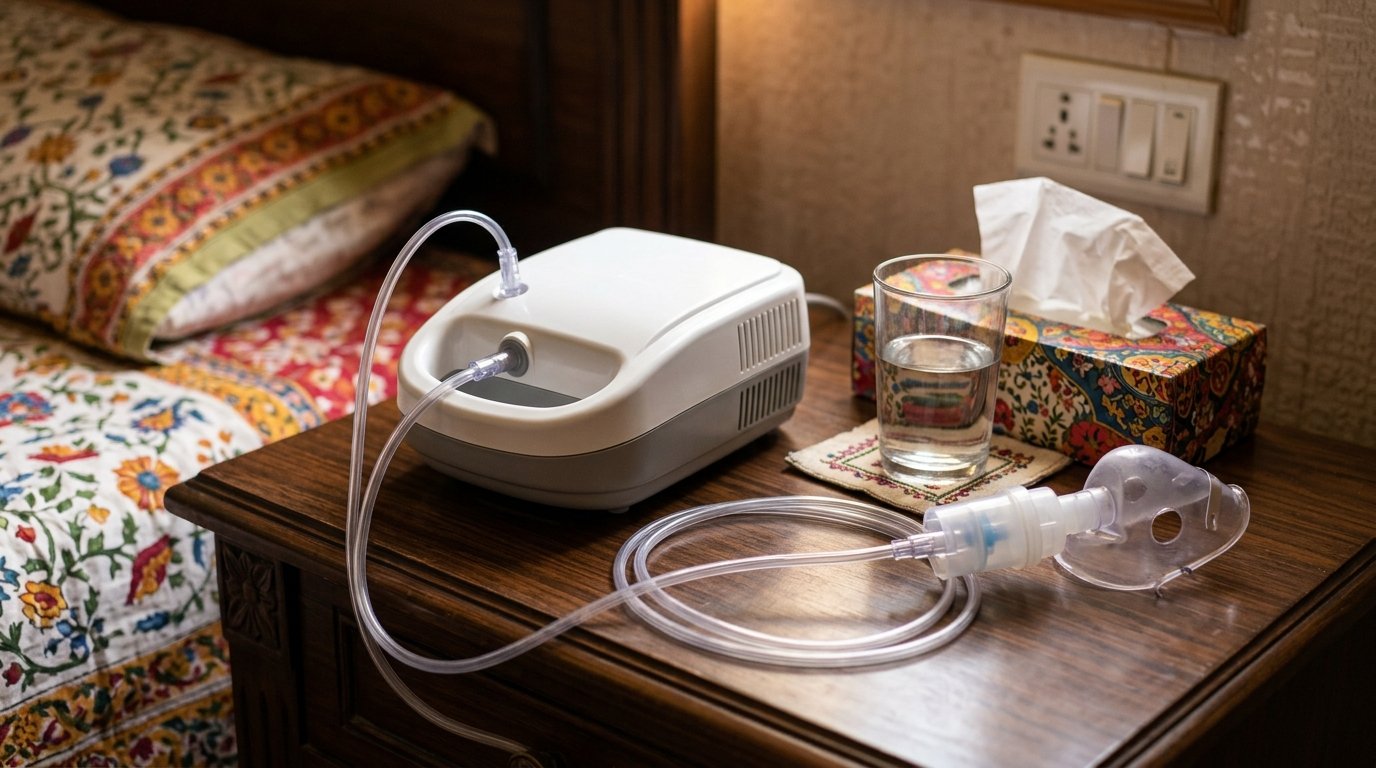
What Is a Nebulizer Machine?
A nebulizer turns liquid medicine into a fine mist that the patient breathes in through a mask or mouthpiece. Because the medicine goes straight to the lungs, it is widely used for asthma, COPD, bronchitis, chest infections and breathlessness during smog season, always as advised by a doctor.
Most home machines have four parts: the compressor (the box that makes air flow), plastic tubing, a small medicine cup, and a mask or mouthpiece. The quality of the compressor decides how fast and how quietly each session runs, which matters a lot when you are treating a crying child at 2 am.
Unlike an inhaler, a nebulizer needs no special breathing technique. That is why it is so common for small children, elderly parents and very breathless patients.
Types of Nebulizers and How They Differ
According to Cleveland Clinic, there are three main types of nebulizer, and jet (compressor) machines are the most common.
Compressor (jet)
Uses compressed air to create mist. Reliable, works with almost all nebulizer medicines, plugs into the wall. Slightly noisy.
Mesh
Uses a vibrating mesh. Small, quiet and often battery powered. Good for travel and load shedding, usually costs more.
Ultrasonic
Uses high frequency vibrations. Quiet and fast, but not suitable for every medicine. Check with your doctor first.
Nebulizer Machine Price in Pakistan by Type
| Type | Best for | Power | Shine Care price |
|---|---|---|---|
| Compressor (jet) | Home use, children and elderly, daily treatments | Wall socket 220V | Rs. 10,000 |
| Mesh (portable) | Travel, load shedding, quiet night use | Battery or USB | Call for current price |
| Ultrasonic | Quick sessions where the doctor allows | Wall socket | Call for current price |
| Rental (any type in stock) | Short illness, smog season, after discharge | As per unit | Weekly and monthly rent available |
Prices in the market change with brand, import costs and season. We update this page when our own price changes, and we do not list prices for models we cannot supply.
What Affects the Price of a Nebulizer?
A very cheap machine on a marketplace may look like a bargain. The common problems we see are weak compressors that take 25 minutes per session, no spare medicine cups or masks, and no warranty when the motor stops in the middle of winter.
Accessories and Running Costs
The machine price is only part of the cost. A nebulizer needs a few parts that wear out or need replacing over time. Keep these in mind when you compare offers:
- Medicine cup (nebulizer kit): replace it when the mist becomes weak or the cup cracks. Families who use the machine daily often keep a spare.
- Masks: an adult mask and a child mask, plus a mouthpiece for older children and adults who can hold it.
- Air filter: the small filter on a compressor machine turns grey with dust, especially in Lahore. A blocked filter slows down every treatment.
- Tubing: replace it if it hardens, cracks or collects moisture that will not dry.
Before you buy, ask whether these parts are available locally. A machine with no spare parts in Pakistan becomes useless the first time a cup breaks.
How to Choose the Right Nebulizer
For a child
Choose a machine that comes with a soft child size mask. A quieter unit helps if your child gets scared. Ask your paediatrician which medicines will be used.
For an elderly parent or COPD patient
A dependable compressor nebulizer for daily use is usually the best value. If your parent also uses oxygen, read our comparison of a nebulizer vs oxygen concentrator, as the two do very different jobs. Our guide on COPD equipment at home covers the full setup.
For homes with long load shedding
Consider a portable mesh nebulizer with a battery, or keep the compressor machine on a UPS socket.
How to Use a Nebulizer at Home
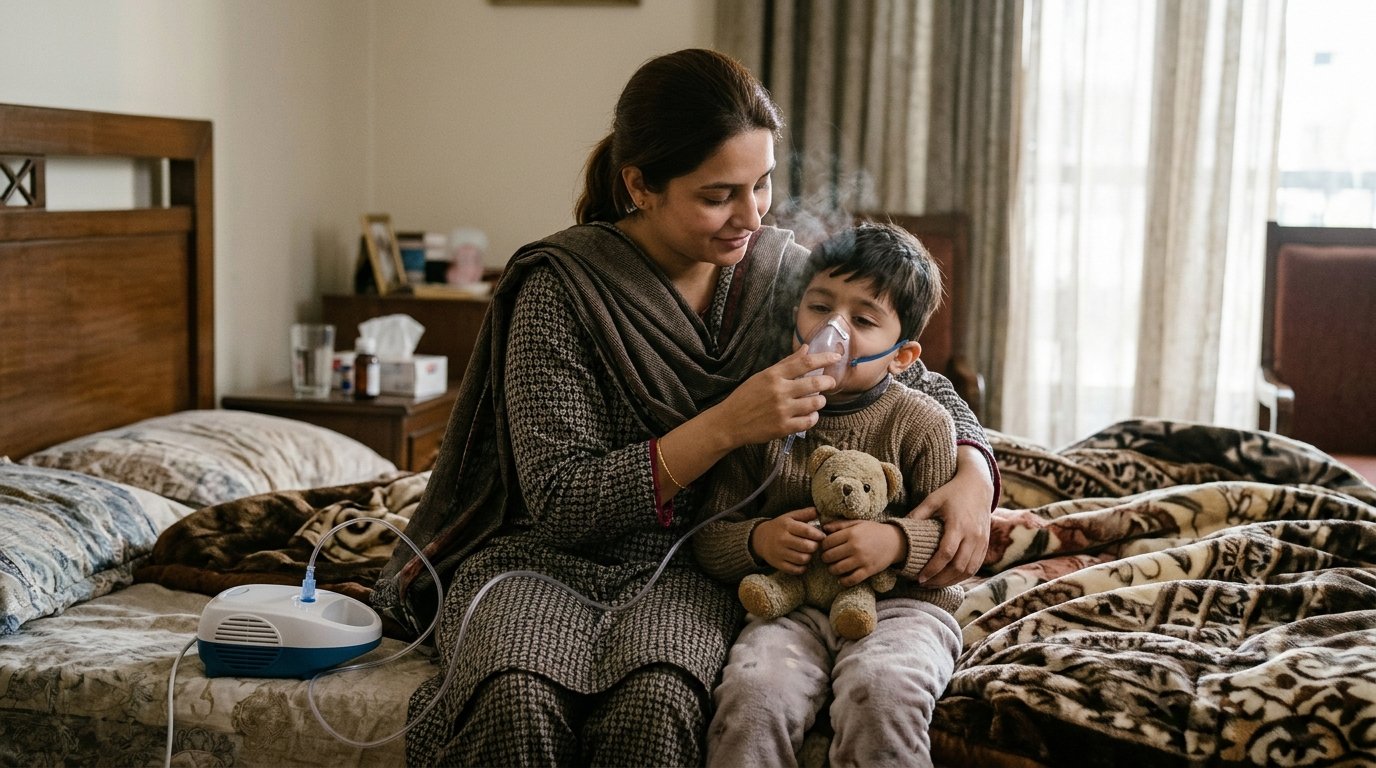
- Wash your hands and place the machine on a flat, firm surface.
- Put the exact medicine prescribed by the doctor into the medicine cup. Do not add extra or mix medicines on your own.
- Attach the cup to the tubing and the mask or mouthpiece, then connect the tubing to the machine.
- Sit the patient upright and switch the machine on.
- Breathe normally through the mouth until the mist stops and the cup is empty, usually 10 to 15 minutes.
- Switch off and unplug the machine, then clean the parts.
For cleaning, the MedlinePlus guide to using a nebulizer advises unplugging the machine first and cleaning it regularly, because bacteria can grow inside and cause a lung infection. Rinse the cup and mask after every use, let them air dry, and do a deeper clean once or twice a week.
Common Problems and Quick Fixes
| Problem | Likely cause | What to try |
|---|---|---|
| Little or no mist | Cup not fitted properly, blocked cup, too little medicine | Refit the cup, clean it, check the tubing is pushed in fully |
| Session takes very long | Dirty air filter or an old medicine cup | Replace the filter and the cup |
| Machine is very loud or hot | Placed on a soft surface, blocked air vents | Use a firm table and keep vents open |
| Water inside the tubing | Tubing washed and not dried | Run the machine for a minute with the tube attached and no medicine |
| Machine stops suddenly | Overheating or power issue | Let it cool, check the socket, contact us if it repeats |
Quick Buying Checklist
- Type matches the patient: compressor for home, mesh if you need portability
- Adult and child masks included, plus a mouthpiece
- Written warranty and a seller you can actually reach
- Spare cups and filters available in your city
- Works on 220V, or has a battery if load shedding is long in your area
- Delivery and a quick demo, especially for elderly users
Should You Buy or Rent a Nebulizer?
Buy if
- A child has asthma and needs treatments every winter
- An elderly parent has COPD and uses it daily
- You want your own machine with personal masks
Rent if
- It is for a chest infection or a few weeks of smog
- The patient was just discharged and needs it short term
- You want to try before deciding to buy
See our nebulizer on rent in Lahore page for rental details, or read why demand jumps in winter in nebulizer use during smog. You can also compare options on nebulizer machine on rent or sale.
Get a Nebulizer Delivered Today
Buy or rent a tested, sanitised nebulizer in Lahore, Islamabad or Rawalpindi.
Buy Now See All Equipment for SaleFrequently Asked Questions
What is the price of a nebulizer machine in Pakistan?
Our compressor nebulizer is Rs. 10,000 as of November 2026. Portable mesh and ultrasonic models cost differently depending on brand, so contact us for the current price of models in stock.
Which nebulizer is best for home use?
For most families, a good compressor (jet) nebulizer is the best choice for home use. It works with almost all nebulizer medicines and is reliable for daily treatments.
Can I use a nebulizer for a baby?
Yes, with a proper infant or child mask and only with medicines prescribed by the child's doctor. Hold the mask gently over the nose and mouth while the baby breathes normally.
Can I use plain water or saline in a nebulizer without a prescription?
Ask your doctor first. Even saline is a treatment and is not right for everyone. Never use tap water in the medicine cup.
Is a nebulizer better than an inhaler?
Not always. For many people with asthma, an inhaler with a spacer works just as well when used correctly. Nebulizers are easier for young children, very breathless patients and some elderly people.
Can I rent a nebulizer instead of buying?
Yes. Shine Care offers nebulizers on rent in Lahore, Islamabad and Rawalpindi, which is often more economical for short illnesses or the smog season.
This guide is for general information. Always use medicines and settings prescribed by your doctor.