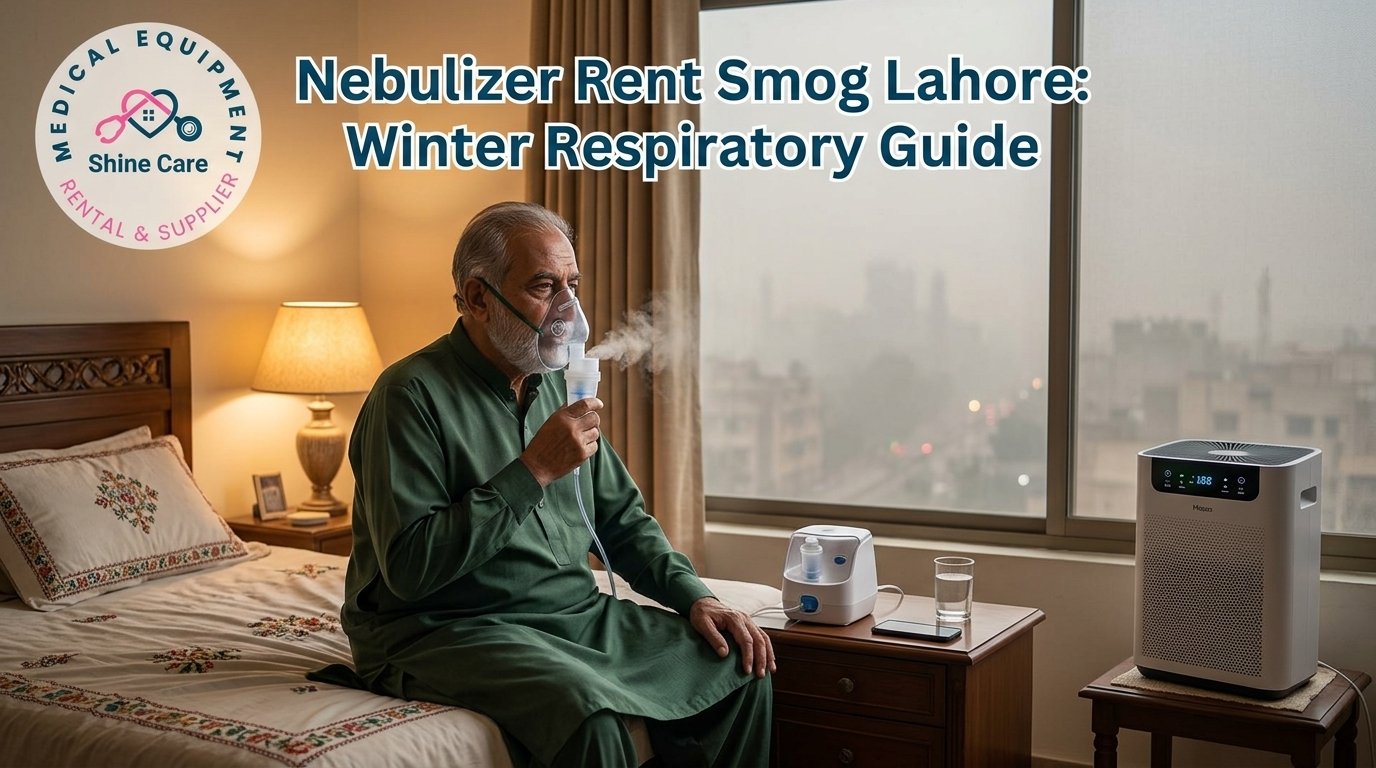
Smog Season: Which Breathing Equipment to Rent in Lahore — A Practical Guide
By late October the sky over Lahore turns grey. The AQI reading on the family's phone climbs above 300 and stays there. The grandmother, who has managed her asthma for twenty years, starts wheezing on ordinary days. The father, whose COPD had been stable, wakes at night gasping. The children develop persistent coughs. And the family, standing in the pharmacy asking about inhalers, quickly realises that ordinary asthma inhalers may not be enough — this is going to be a season where the household needs more than one type of breathing equipment, and quickly.
Lahore's smog season is not a background nuisance. For patients with any respiratory condition, and increasingly for previously-healthy elderly, it is a medical event that repeats every winter. This guide walks families through nebulizer rent smog Lahore realities — which equipment actually helps in smog season, how to decide what your household needs, and how to plan ahead rather than scrambling on the worst AQI days. Nothing here replaces the pulmonologist's specific prescription; this covers the equipment planning side.
Understanding What Smog Does to the Lungs
Smog in Lahore is a mix of small particulate matter (PM2.5 and PM10), nitrogen dioxide, sulphur dioxide, ground-level ozone, and other pollutants. When inhaled, these:
- Irritate airways, causing inflammation and mucus production
- Trigger asthma and COPD attacks
- Reduce oxygen absorption
- Worsen heart conditions
- Increase infection risk
- Cause fatigue and reduced exercise tolerance
- Are particularly damaging for children, elderly, pregnant women, and those with existing respiratory or cardiac disease
Even healthy adults notice reduced lung function during high-smog days. For vulnerable patients, smog season is when many home hospital admissions happen.
Who Should Decide the Equipment Setup
- Pulmonologist / Physician: Prescribes any medication changes or new therapies for smog season. Advises which equipment fits the specific patient's condition.
- Registered Nurse: For patients receiving home care, monitors respiratory status daily during smog season and reports early deterioration.
- Equipment Supplier: Delivers, installs, and demonstrates equipment. Not clinical — do not accept a supplier telling you which equipment your patient medically needs.
- Family: Runs the practical arrangement, tracks AQI, ensures the patient stays indoors during peak smog, monitors symptoms.
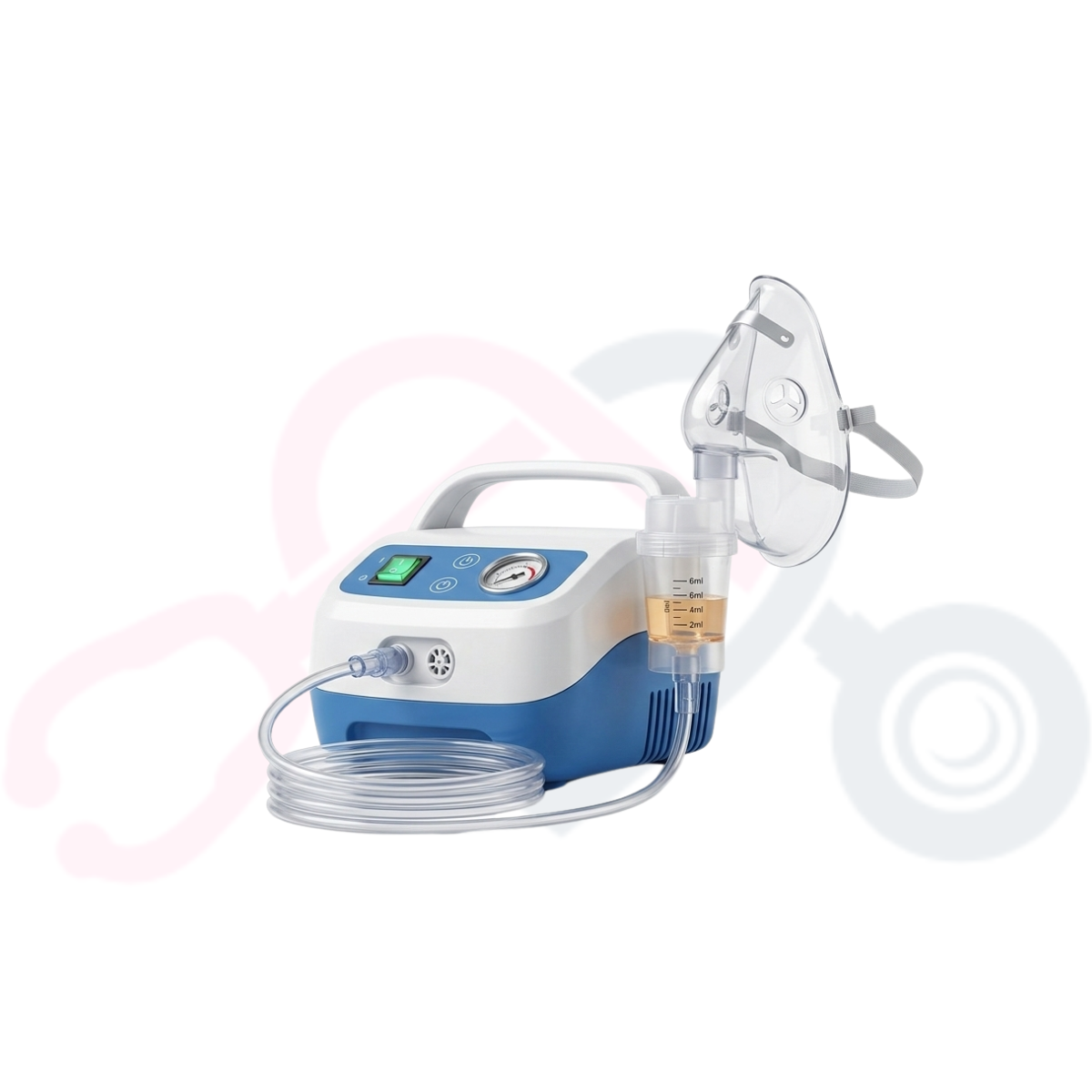
Nebulizer Machine
Compressor nebulizer machine designed to convert prescribed liquid medication into a breathable mist for respiratory relief.
Who Genuinely Needs Extra Equipment for Smog Season
High-Risk Groups
- Asthma patients, especially uncontrolled
- COPD patients
- Bronchiectasis patients
- Elderly with any chronic lung condition
- Recent respiratory infection survivors (post-pneumonia, post-COVID)
- Patients with heart failure
- Bedridden patients
- Children with recurrent respiratory illness
- Pregnant women with respiratory symptoms
- Elderly patients living alone with any respiratory history
For these patients, planning equipment for smog season before it starts is much better than emergency arrangements at 2 AM when the AQI has spiked and the patient is short of breath.
The Key Equipment Options
Nebuliser
A device that turns liquid medications into a fine mist the patient inhales through a mask or mouthpiece. During smog season, patients whose airways are inflamed often benefit from more frequent bronchodilator delivery (like salbutamol) than during other seasons. Renting a nebulizer machine on rent specifically for the smog months is a common practical arrangement.
Oxygen Concentrator
Delivers concentrated oxygen from room air. For patients whose oxygen saturation drops during smog season, an oxygen concentrator on rent becomes essential. Not for everyone — only for patients the doctor has confirmed need supplemental oxygen.
Oxygen Cylinder Backup
For patients on concentrators, cylinder backup handles load-shedding and equipment failures. A full oxygen cylinder on rent beside the bed as backup is standard for any patient on continuous oxygen.
Pulse Oximeter
Small fingertip device measuring oxygen saturation. Every household with a respiratory patient should have one. Cheap and hugely valuable for spotting deterioration early.
BiPAP Machine
For selected patients — sleep apnoea with COPD overlap, some respiratory failure situations. A BiPAP machine on rent for smog season is not for casual use — only when the pulmonologist has prescribed it.
Suction Machine
For patients with weak cough, tracheostomies, or persistent secretion issues that worsen during smog. A suction machine on rent may be needed for the season.
Air Purifier
Not medical equipment in the traditional sense but often the most valuable single intervention during smog. HEPA-filter air purifiers in the bedroom reduce indoor particulate matter substantially. Not usually rented from medical suppliers but worth including in the smog-season plan.
Hospital Bed With Head Elevation
For patients whose breathing improves in a semi-upright position. An electric hospital bed allows the patient to sleep with the head elevated, easing nocturnal breathing during smog periods.
Matching Equipment to Patient
Stable Asthma Patient Whose Symptoms Worsen in Smog
Nebuliser for scheduled or as-needed bronchodilator use. Pulse oximeter for monitoring. Pulmonologist may adjust inhaled medications for the season. Usually does not need oxygen equipment.
Moderate COPD Patient
Nebuliser. Pulse oximeter. Oxygen concentrator if saturation drops during smog. Cylinder backup for concentrator. Air purifier in the bedroom.
Severe COPD Patient
All of the above plus possibly BiPAP if prescribed. Hospital bed with adjustable head. Suction machine if secretions are a problem.
Post-COVID Recovery Patient
Depends on residual lung function. Nebuliser for prescribed medications. Oxygen concentrator if still requiring supplemental oxygen. Pulse oximeter continuously.
Bedridden Elderly Patient
Nebuliser for prescribed inhaled medications. Oxygen concentrator if needed. Suction machine if weak cough. Structured coordinated care matched to the patient's respiratory status.
Child With Recurrent Asthma
Paediatric nebuliser mask. Prescribed medications. Portable if the child moves between family members' homes. Pulse oximeter with paediatric sensor.
Setting Up Before the Season Starts
- Doctor Visit in October: Review the patient's current medications, adjust for the coming season if needed, confirm what emergency medications should be at home.
- Equipment Ordering by Mid-October: Suppliers get busy as smog worsens. Ordering equipment in advance ensures availability.
- Consumables Stock: Nebuliser masks, fresh cups, prescribed medications, spare oxygen tubing, and air purifier filter replacements.
- Backup Power: UPS for essential equipment. Load-shedding during smog season combined with respiratory emergency is a bad combination.
Daily Practice During Smog Season
- Track AQI: Free apps show current AQI. On days above 200, extra precautions. Above 300, essentially indoor days for vulnerable patients.
- Windows Closed at Peak Smog: Ventilation is normally healthy, but during high-AQI hours, closed windows reduce indoor particulate load. Keep the Air purifier running.
- Monitor Symptoms: Increased cough, breathlessness, wheezing, chest tightness — early signs the smog is affecting the patient.
- Indoor Air Quality: Avoid indoor smoke — no cooking on wood or coal in the patient's area, no incense, no cigarettes.
Using a Nebuliser Correctly
Wash hands and assemble the nebuliser with a fresh sterile medication cup for each treatment. Use only prescribed medications with the correct diluent. The patient should be sitting upright rather than lying down for better medication delivery. Ensure a well-fitting mask or lips sealed around the mouthpiece. A typical session lasts 10–15 minutes until the medication cup is empty; do not stop early. Clean daily with warm soapy water and air dry.
Common Mistakes Families Make
- Waiting for Emergency Before Getting Equipment: Suppliers are busy in November. Ordering in October is much easier.
- Buying Rather Than Renting for Seasonal Use: Nebulisers used only during smog season are more economical to rent for the specific months.
- Adjusting Medications or Oxygen Flow Without Doctor Advice: Sometimes worsens the situation. Contact the doctor for medication changes.
- Skipping the Air Purifier: Reducing indoor particulate load is one of the most effective single interventions for respiratory patients during smog.
- Reusing Nebuliser Cups and Masks Without Cleaning: Bacterial growth introduces infections into airways already inflamed by smog.
Red Flags: When to Get Emergency Help
Contact the doctor or take to the emergency room / call 1122 for any of the following:
- Severe shortness of breath at rest not improving with prescribed treatments
- Bluish colour around lips or fingertips
- Oxygen saturation dropping and not recovering
- Chest pain or coughing up blood
- New confusion or drowsiness in a respiratory patient
- Inability to speak in full sentences due to breathlessness
- Wheeze severe and not responding to nebuliser
- High fever with respiratory symptoms
- Complete equipment failure without backup
For patient-friendly background on air pollution and health, the WHO guide to air pollution and health is a reliable reference. For your patient's specific plan during smog season, always follow the treating doctor's advice.
Frequently Asked Questions
This page is general information about equipment rental and is not medical advice. Respiratory treatment should be prescribed by a doctor, and equipment should be used strictly according to the treating medical team's instructions.