Medical Equipment Rental Terms Pakistan: What Happens When the Equipment Breaks Down
The air mattress pump stops at 11 pm. The oxygen concentrator throws an alarm at 3 am. The hospital bed motor refuses to raise the head end on Sunday morning. Every family renting medical equipment eventually faces a moment when the machine that is keeping the patient safe stops working — and the family needs to know exactly what happens next.
Most families never read the rental agreement they signed. When something breaks, they call the supplier, hope for the best, and often lose hours of critical time. This guide walks through the rental terms that matter in Pakistan — what a good contract covers, what to ask before you sign, what to do when something fails, and how to avoid the disputes that happen after the fact.
Legal Note
This is not legal advice. Every rental contract is different. Read yours carefully and ask your supplier to clarify anything you do not understand before you sign.
The Six Rental Terms That Actually Matter
| Term | Why It Matters | What to Confirm in Writing |
|---|---|---|
| Replacement time | Determines how long the patient is without the equipment | Hours (not "as soon as possible") |
| Repair vs swap | Repair keeps a broken machine; swap gives you a working one | Immediate swap for critical equipment |
| Emergency support hours | 3 am failure needs 3 am response | 24/7 helpline number |
| Delivery and pickup charges | Some add fees for each visit | Included in monthly rate or separate |
| Security deposit and refund | Deposits often get "adjusted" for imaginary damage | Amount, refund timeline, condition for full refund |
| Liability for damage | Who pays if the family accidentally breaks something | Insurance coverage, damage waiver options |
Get these six items answered in writing before paying anything. A WhatsApp confirmation is fine if you keep the screenshot. Verbal promises made during a friendly delivery visit are rarely honoured when there is a problem.
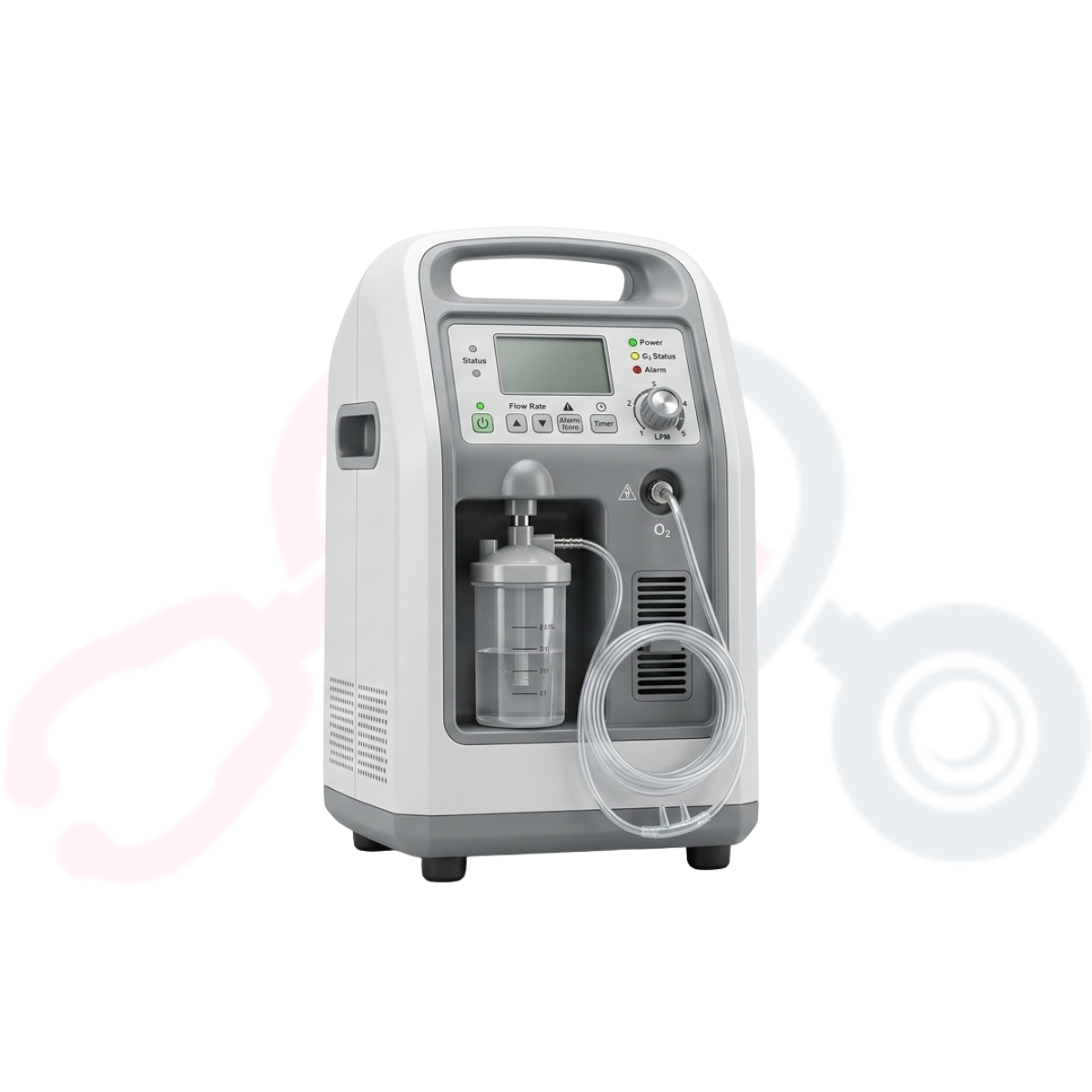
Oxygen Concentrator (5 Liters)
Rent our fully-serviced 5L oxygen concentrators with clear, written replacement guarantees. If it stops, we swap it — fast.
Critical vs Non-Critical Equipment — Different Rules Apply
Not all equipment failures are the same. A wheelchair that breaks means the patient stays in bed for a few hours. A ventilator that fails is life-threatening. Your response time expectation should match.
Life-Support / Critical (Response: within 30–60 minutes)
- Ventilator
- BiPAP
- Oxygen concentrator
- Suction machine for tracheostomy patients
- Cardiac monitor for unstable patients
Important but Not Life-Threatening (Response: 4–8 hours)
Convenience Equipment (Response: 24 hours)
- Electric hospital bed (a broken motor is inconvenient, not dangerous)
- Wheelchair
- Commode chair
- Bedside table
Confirm with your supplier which category each of your rented items falls into and what their guaranteed response time is for each. Do it in writing, before the equipment leaves their shop.
Backup Options for Critical Equipment
For any life-support equipment, always have a backup plan for the first 30 minutes of failure. This is the family's responsibility, not the rental company's.
- Ventilator Backup: A manual Ambu bag with mask, kept in the room, that a trained nurse or family member can use to hand-ventilate the patient. Everyone in the room should know where it is.
- Oxygen Concentrator Backup: An oxygen cylinder with a regulator ready to use — no matter how reliable your concentrator seems. Concentrators fail; cylinders do not depend on electricity.
- Suction Machine Backup: A manual suction pump (hand-powered) for tracheostomy patients. Cheap, does not depend on power, easy to use.
- Feeding Pump Backup: Manual gravity feed with syringes and tubing. Any nurse trained on the patient will know how.
- Air Mattress Backup: If the pump fails and the mattress deflates, the family manually turns the patient every hour until repair. Set phone alarms.
What to Do When Something Breaks — A Simple Order
- Switch to the backup (manual bag, cylinder, whatever applies) — never try to fix a critical machine while the patient is on it.
- Call the rental company's emergency number.
- Note the exact time you called and who you spoke to.
- Ask specifically: swap or repair? Estimated arrival time? Their name?
- If they cannot commit to a time that keeps the patient safe, call your backup supplier.
- If nothing can be arranged quickly and the patient's condition is at risk, call an ambulance.
Do not spend an hour trying to fix a ventilator yourself. Machines fail. That is why backups exist and why rental contracts include a replacement clause.
What Every Good Rental Contract Should Cover
Ask for the following in writing, either in the contract or as a WhatsApp confirmation:
- Description of the exact machine — model, serial number where possible
- Rental period, start date, end date, and how to extend
- Monthly (or daily) rate, what is included
- Delivery and pickup — free or charged
- Deposit amount, when it is refunded, and any conditions
- Response time commitment for equipment failure
- Repair versus swap policy
- What counts as damage the family must pay for
- What consumables (filters, tubes, masks) are included
- How to end the rental early — notice period, prorated refunds
- Emergency contact number, active 24/7 for critical equipment
What "Included" vs "Extra" Usually Means
| Item | Usually Included | Usually Extra |
|---|---|---|
| Hospital bed | Frame, mattress, side rails | Air mattress on top, IV pole, overbed table |
| Wheelchair | Chair, footrests | Cushion, seat belt, larger outdoor wheels |
| Oxygen concentrator | Machine, standard cannula, humidifier | Backup cylinder, extra tubing, water refills |
| Suction machine | Machine, one bottle, one tubing | Suction catheters (per use), spare tubing |
| Ventilator | Machine, one circuit | HME filters, spare circuits, mask, humidifier |
| Feeding pump | Machine, one giving set | Additional giving sets, feed bags |
Consumables (filters, tubing, catheters, masks) usually cost more over months of use than the equipment rental itself. Ask for a monthly consumables estimate before signing.
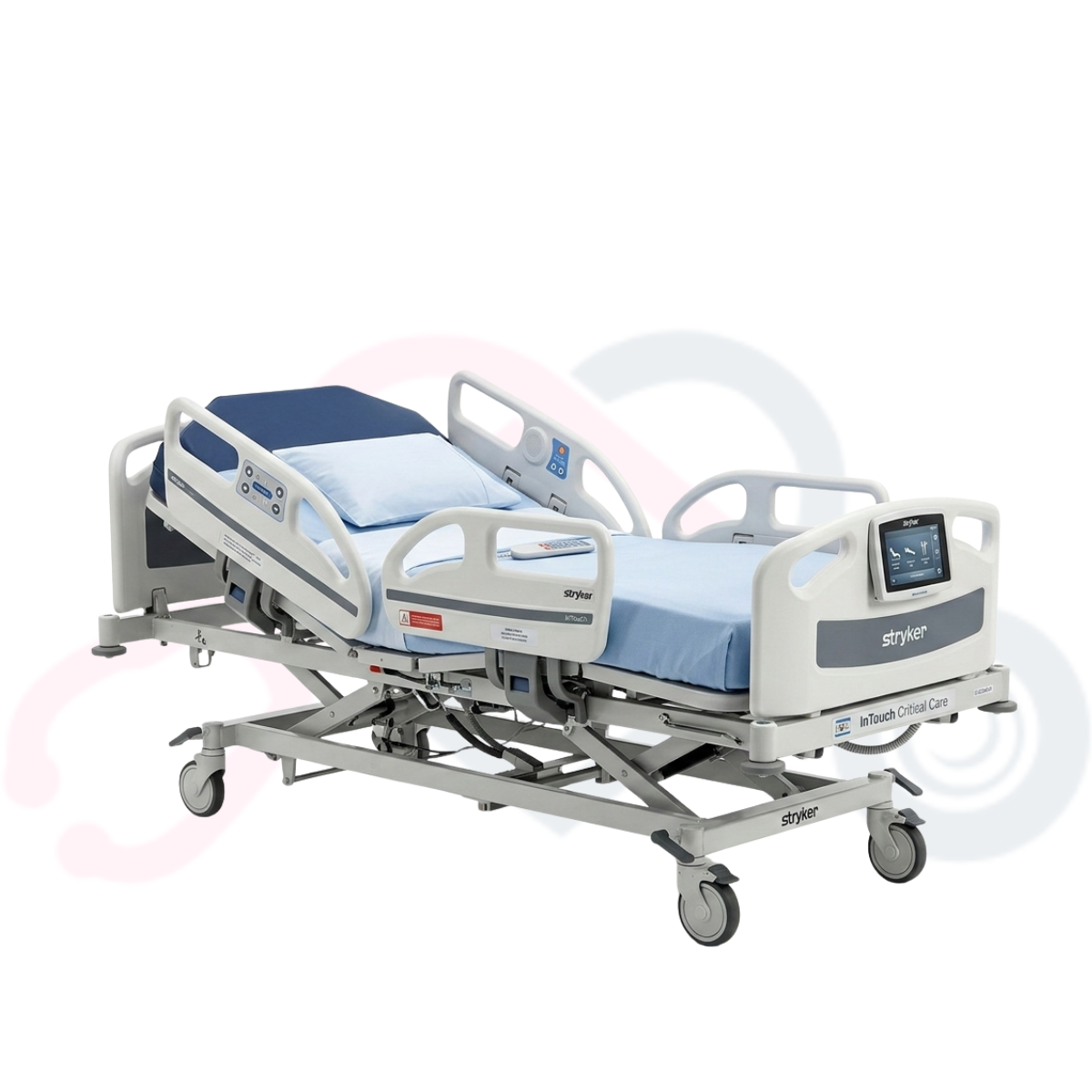
Electric Hospital Bed
Clear rental terms, no hidden charges. Our electric hospital beds come with fair wear-and-tear policies and same-day maintenance support.
The Security Deposit Trap
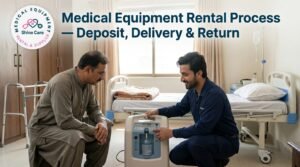
Most equipment rental companies in Pakistan take a security deposit at delivery. The deposit is refundable — in theory — when you return the equipment in good condition. In practice, some suppliers deduct amounts for imaginary scratches, missing accessories, or "wear and tear."
Protect yourself:
- Photograph the equipment from all angles on delivery. Timestamp the photos.
- Note any existing scratches or damage on the delivery slip in writing.
- Save the delivery slip and any receipt for the deposit payment.
- Return the equipment with the same photos, and get a signed acknowledgment of good condition.
- Ask specifically when the deposit will be refunded — often it takes days or weeks.
Most legitimate providers refund deposits fairly. A few do not. The photos and paperwork settle disputes fast.
Who to Contact When Something Goes Wrong
Have three numbers saved before an emergency happens:
- Main supplier's emergency line — usually a WhatsApp number that works 24/7.
- Backup supplier — one you have vetted and know delivers quickly.
- Ambulance and treating hospital — for when the failure is bad enough to move the patient.
Stick these on the wall next to the patient's bed. The middle-of-the-night moment is not when to be searching your phone contacts.
Damage by the Family — Who Pays?
Accidents happen. A wheel breaks off a wheelchair when someone pushes it hard over a step. A child pulls out a knob on the hospital bed. The family accidentally spills tea on a cardiac monitor. Who pays depends on the contract.
- Normal wear and tear: Included in the rental — the supplier absorbs the cost of a worn cushion, a scratched frame, a dulled brake.
- Accidental damage: Family may be liable for a percentage of the repair or replacement cost. Some contracts offer a damage waiver for a small extra fee.
- Wilful damage or negligence: Family fully liable. Rare but possible.
Ending the Rental Early
Patients recover and no longer need equipment. Sometimes patients pass away and equipment is no longer needed. Sometimes the family switches provider. In each case, check the notice period and refund terms.
- Most monthly rentals require 2–7 days notice for pickup.
- Some prorate the refund for unused days; some do not.
- Deposit refund timing is separate from equipment pickup — clarify both.
Red Flags That Suggest a Supplier to Avoid
- Refusal to put terms in writing
- Delivery of equipment that looks visibly old, dirty, or worn out
- No visible model or serial number on the machine
- Reluctance to demonstrate the machine at delivery
- No 24/7 emergency contact number for critical equipment
- Vague answers about deposit refund policy
- Suppliers who cannot provide a spare part sample or backup unit info
Choosing a Rental Provider That Actually Delivers
Some questions to ask other families or a good home care help provider:
- Have you used this supplier for the same equipment?
- What was their response time when something broke?
- Did they honour the swap-versus-repair clause?
- Was the deposit refunded in full?
- Any surprise charges at the end?
A supplier with a good reputation among home nursing agencies and hospital discharge teams is usually the safer choice for critical equipment, even if their monthly rate is slightly higher.
Roles Around Equipment Rental
- Doctor: Prescribes the type and specification of equipment needed.
- Home nurse: Uses the equipment daily; reports any problems early; teaches the family how to spot failures.
- Family: Signs the contract, pays, keeps the paperwork, and is the point of contact when something breaks.
- Equipment supplier: Delivers, installs, demonstrates, and provides the ongoing service and replacement.
- Caretaker or attendant: First person to notice a machine is not working correctly during a shift.
When these roles are clear, small equipment issues get flagged early and fixed before they become emergencies.
The Simple Version
Read the contract before you sign. Get the six key terms in writing. For life-support equipment, always have a backup — Ambu bag, oxygen cylinder, manual suction. Photograph equipment at delivery and return. Save every WhatsApp with the supplier. When something breaks, switch to the backup first, then call. Choose suppliers with a good reputation over ones with the lowest monthly rate. Do these seven things and rental failures stay inconvenient rather than dangerous — an essential part of any long-term home health setup.